Is My Car Overheating Here Is How To Tell Right Now
Is my car overheating? This guide shows you exactly how to tell right now using simple signs like steam, strange smells, and warning lights. You will learn the top causes, what to do in the moment, and how to prevent it from happening again. Knowing these overheating engine symptoms could save you hundreds in repairs.
You are driving down the road, and suddenly you notice something is off. The temperature gauge on your dashboard is climbing. Maybe you see steam creeping up from under the hood. Your heart drops because you wonder, is my car overheating?
This is a scary moment for any driver. But here is the good news. You do not need to be a mechanic to understand what is happening. Knowing the signs of an overheating engine can save you from a breakdown, expensive repairs, or even a totaled car.
In this guide, we will walk you through everything you need to know. We will cover how to tell right now if your car is overheating, the most common causes, what to do in the moment, and how to keep it from happening again. Whether you are a new driver or have been on the road for years, this article will give you the confidence to handle an overheating car with ease.
Key Takeaways
- Steam or smoke from the hood: This is the most obvious sign that your engine is overheating and needs immediate attention.
- Check your temperature gauge: A needle moving into the red zone means your car is running too hot and you should act fast.
- Common causes include coolant leaks, a broken radiator fan, and thermostat failure: Identifying the root cause helps you fix it properly.
- Turn off the AC and turn on the heater: This simple trick can pull heat away from the engine in an emergency.
- Never open the radiator cap when hot: Scalding coolant can cause serious burns and injuries.
- Regular maintenance prevents overheating: Checking coolant levels and inspecting hoses keeps your cooling system in top shape.
- Pull over safely if you notice warning signs: Continuing to drive can cause catastrophic engine damage.
📑 Table of Contents
- Understanding Why Cars Overheat
- Common Signs Your Car Is Overheating
- Top Causes of Car Overheating
- What To Do When Your Car Overheats
- How To Prevent Your Car From Overheating
- How Mechanics Diagnose Overheating Problems
- Overheating Damage: What You Risk
- Quick Tips for Hot Weather Driving
- When To See a Mechanic
- Conclusion
Understanding Why Cars Overheat
Before we dive into the warning signs, let us talk about why cars overheat in the first place. Your engine generates a lot of heat. Think about it. Thousands of tiny explosions happen inside your engine every single minute. That produces a tremendous amount of thermal energy.
Your cooling system is designed to manage that heat. It uses a mix of water and coolant, a radiator, a water pump, hoses, and a thermostat to keep the engine at a safe temperature. When any part of this system fails, the engine can quickly overheat.
The normal operating temperature for most cars is between 195 and 220 degrees Fahrenheit. When the temperature climbs above that range, you are in the danger zone. An overheating engine can warp metal parts, crack the head gasket, or even seize the engine entirely. That is why catching the problem early matters so much.
How the Cooling System Works
Here is a simple way to think about it. The coolant flows through channels in the engine block. It absorbs heat as it moves. Then it travels to the radiator, where air flowing through the fins cools it down. The water pump pushes the coolant in a continuous loop. The thermostat opens and closes to regulate the flow based on temperature.
When one of these components fails, the whole system suffers. A small leak, a stuck thermostat, or a dead radiator fan can all lead to serious overheating problems. Understanding this basic setup helps you make sense of the warning signs.
Common Signs Your Car Is Overheating
So how do you know for sure? Is my car overheating? Here are the clearest signs to watch for. These symptoms are your car’s way of telling you something is wrong.
Steam or Smoke Coming From the Hood
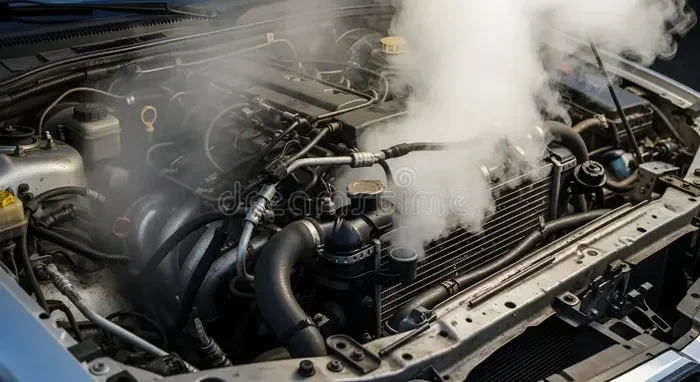
This is the most dramatic and obvious sign. If you see white steam or smoke billowing from under the hood, your engine is likely overheating. The coolant is getting so hot that it turns into vapor and escapes through the radiator cap or overflow tank.
Do not panic. Pull over safely and turn off the engine. Never try to open the hood while steam is actively pouring out. You risk serious burns from the hot steam and coolant.
Temperature Gauge in the Red Zone
Your dashboard has a temperature gauge or a warning light. When the needle moves into the red zone, that is a clear signal. Some modern cars also display a warning message on the dashboard screen.
Pay attention to this gauge at all times. Many drivers ignore it until it is too late. A rising temperature gauge is your first and best early warning system.
Unusual Smells Coming From the Engine
Your nose can be a powerful diagnostic tool. A sweet, syrupy smell often means coolant is leaking and hitting hot engine parts. A burning or acrid smell might indicate oil overheating or electrical components melting.
Both smells are serious warnings. If you notice anything unusual, find a safe place to pull over and investigate.
Loss of Power or Strange Engine Sounds
An overheating engine often loses power. You might notice the car feels sluggish or unresponsive. Some engines make a knocking or pinging sound when they run too hot.
These sounds happen because the fuel-air mixture ignites at the wrong time. Any change in how your engine sounds or feels deserves your immediate attention.
Coolant Leaks Under the Car
If you see a puddle of green, orange, or pink fluid under your car, that is likely coolant. A coolant leak means your system is losing the fluid it needs to stay cool.
Check the ground where you park regularly. A small puddle of coolant is an early sign of a problem that can quickly turn into an overheating emergency.
Top Causes of Car Overheating
Now that you know the signs, let us talk about what actually causes a car to overheat. Understanding the root cause helps you fix the problem and prevent it from coming back.
Low Coolant Levels
This is the most common reason cars overheat. Coolant can leak out over time through worn hoses, a loose radiator cap, or a small hole in the radiator. When the level drops too low, there is not enough fluid to absorb and carry away heat.
Check your coolant reservoir regularly. If the level is consistently low, you have a leak somewhere in the system. Catching a small leak early can save you from a major repair bill.
Thermostat Failure
The thermostat controls the flow of coolant through the engine. When it opens and closes at the right temperatures, everything works smoothly. But when it gets stuck closed, the coolant cannot circulate. The engine heats up fast.
Thermostat failure is a common and relatively inexpensive fix. But if you ignore it, the overheating can cause much bigger problems.
Broken Radiator Fan
The radiator fan pulls air through the radiator to cool the coolant down. When you are driving slowly or sitting in traffic, this fan becomes essential. If it stops working, the engine can overheat quickly, especially in hot weather.
Signs of a failing radiator fan include the engine heating up more when you are stopped and cooling down when you start moving again. If you notice this pattern, get the fan checked right away.
Water Pump Failure
The water pump is the heart of your cooling system. It pushes coolant through the engine and radiator. When it fails, the coolant stops moving. Heat builds up fast.
Water pump failure often happens due to worn bearings or a broken impeller. It is a more expensive repair, but driving with a failed water pump will destroy your engine.
Clogged Radiator
Over time, rust and debris can build up inside the radiator. This blocks the flow of coolant and reduces its ability to release heat. An old radiator that has never been flushed can become clogged.
Flushing the radiator as part of regular maintenance helps prevent this. A clean radiator is a happy radiator.
Head Gasket Failure
The head gasket sits between the engine block and the cylinder head. It keeps coolant and oil where they belong. When it fails, coolant can leak into the combustion chambers or oil passages.
A blown head gasket is one of the most serious and expensive repairs. Signs include white smoke from the exhaust, a milky residue under the oil cap, and the engine overheating repeatedly. If you suspect a head gasket issue, see a mechanic immediately.
What To Do When Your Car Overheats
So your car is overheating right now. What do you do? Stay calm and follow these steps. Your actions in the first few minutes can make all the difference.
Step 1: Turn Off the Air Conditioning
The AC puts extra load on the engine, which generates more heat. Turn it off immediately. This gives your engine a small break and helps reduce the temperature.
Step 2: Turn On the Heater
This sounds counterintuitive, but it works. Crank the heater to full blast and open the windows. The heater core acts as a small radiator. It pulls heat away from the engine and into the cabin.
You might get a little sweaty and uncomfortable, but it could save your engine from serious damage. This is one of the best quick tricks every driver should know.
Step 3: Pull Over Safely
If the temperature gauge keeps rising, find a safe spot to pull over. Turn on your hazard lights and stop the engine. Let the car idle for a minute or two before shutting it off completely.
Do not keep driving if the needle is in the red. Continuing to drive can cause the head gasket to blow, warp the engine block, or seize the engine. These repairs cost thousands of dollars.
Step 4: Wait and Let It Cool
Do not open the hood or the radiator cap right away. The cooling system is under pressure and the contents are extremely hot. Wait at least 15 to 20 minutes for everything to cool down.
Once it is safe, check the coolant reservoir. If it is empty, you likely have a leak. Never just fill it up and keep driving without finding the source of the leak.
Step 5: Call for Help
If you cannot identify the problem or the car will not start again, call a tow truck or roadside assistance. It is always better to be safe than sorry.
How To Prevent Your Car From Overheating
The best way to deal with an overheating car is to stop it from happening in the first place. Prevention is simple and saves you a lot of stress and money.
Check Coolant Levels Regularly
Make it a habit to check your coolant reservoir once a month. The car should be cool when you check it. If the level is low, top it off with the right type of coolant for your vehicle.
Keep an extra bottle of coolant in your trunk, especially during summer months. A simple check takes five minutes and can prevent a major breakdown.
Inspect Hoses and Belts
Look under your hood for cracked, swollen, or brittle hoses. The rubber hoses that carry coolant can wear out over time. Squeeze them gently. If they feel hard or spongy, it is time to replace them.
Also check the serpentine belt that drives the water pump. A loose or worn belt can cause the pump to fail. A quick visual inspection goes a long way.
Flush the Cooling System
Old coolant loses its effectiveness over time. It can become acidic and corrode the inside of the radiator and engine passages. Flushing the system and replacing the coolant keeps everything flowing smoothly.
Most manufacturers recommend a flush every 30,000 to 50,000 miles. Check your owner’s manual for the exact schedule. Staying on top of this simple service can prevent overheating and extend the life of your engine.
Keep the Radiator Clean
Debris like leaves, bugs, and dirt can block airflow through the radiator. This reduces its ability to cool the coolant. Rinse the radiator fins gently with a hose from the front of the car.
Do not use a pressure washer directly on the fins. They are delicate and can bend easily. A clean radiator keeps your engine cooler.
Monitor the Temperature Gauge While Driving
Get in the habit of glancing at your temperature gauge during your drive. It takes just a second and keeps you aware of what is happening under the hood. Early detection is your best defense against overheating.
Address Small Problems Immediately
Do not ignore small warning signs. A slight coolant smell, a tiny puddle under the car, or the gauge creeping a little higher than normal. These are early signals that something is off.
Fixing a small problem early is always cheaper than fixing a big one later. Be proactive about your car’s health.
How Mechanics Diagnose Overheating Problems
When you take your car to a mechanic for an overheating issue, they follow a systematic process. Understanding this can help you feel more confident when you visit the shop.
First, they will check the coolant level and look for visible leaks. Then they will inspect the radiator fan, thermostat, and water pump. They may also run a pressure test on the cooling system to find hidden leaks.
In some cases, they will check the head gasket with a chemical test that detects exhaust gases in the coolant. A thorough diagnosis ensures the right fix the first time.
Common Diagnostic Tests
- Coolant pressure test: Checks for leaks in the system
- Thermostat test: Verifies the thermostat opens and closes at the right temperature
- Radiator fan test: Confirms the fan kicks on at the right temperature
- Compression test: Checks for a blown head gasket
- Visual inspection: Looks for worn hoses, belts, and corrosion
Knowing what to expect can make the process smoother. Good communication with your mechanic leads to better results.
Overheating Damage: What You Risk
Driving an overheating car is risky. The longer you ignore the problem, the worse the damage gets. Here is what can happen when you push an overheating engine too far.
- Warped cylinder head: The head can distort from the heat, leading to loss of compression and poor engine performance.
- Blown head gasket: Coolant leaks into the cylinders or oil passages. This causes white smoke, overheating, and potential engine failure.
- Cracked engine block: Extreme heat can crack the block itself. This is often a terminal problem requiring a full engine replacement.
- Damaged pistons and rings: Excessive heat causes metal to expand and seize. Pistons can crack or weld to the cylinder walls.
- Ruined catalytic converter: Overheating can damage the exhaust system component, which is expensive to replace.
The cost of these repairs ranges from hundreds to thousands of dollars. That is why responding quickly to overheating signs is so important.
Quick Tips for Hot Weather Driving
Summer heat makes overheating more likely. Here are some quick tips to keep your car cool during the hottest months of the year.
- Park in the shade whenever possible
- Use a windshield sunshade to reduce interior heat
- Check your coolant level before long road trips
- Keep an eye on the temperature gauge during traffic jams
- Carry extra coolant and water in your trunk
- Avoid heavy braking, which generates extra heat
- Plan rest stops on long drives to let the engine cool down
These small habits add up. They keep your engine running smoothly even on the hottest days.
When To See a Mechanic
Some overheating problems are simple to fix. But others require professional help. Here are signs that it is time to see a mechanic.
- The temperature gauge keeps climbing even after you turn off the AC and turn on the heater
- You see steam or smoke from under the hood
- You notice a sweet smell or a puddle of coolant under the car
- The engine makes knocking or pinging sounds
- Your car has overheated more than once
- The check engine light comes on along with the temperature warning
Do not wait until the problem gets worse. A timely visit to the mechanic can prevent a small issue from becoming a major disaster.
Conclusion
Is my car overheating? Now you know exactly how to tell and what to do about it. From recognizing the warning signs like steam, strange smells, and a rising temperature gauge to understanding the common causes, you are better equipped to handle this situation.
Remember the key steps. Turn off the AC, turn on the heater, pull over safely, and let the engine cool. And for the long term, regular maintenance is your best friend. Check your coolant, inspect your hoses, and never ignore the warning signs.
Your car depends on you to take care of it. Stay alert, stay informed, and keep your engine running cool. The few minutes you spend paying attention can save you hours of trouble and thousands of dollars in repairs.
Drive safely, and do not let an overheating engine catch you off guard. You have the knowledge now. Use it wisely.
Frequently Asked Questions
Can I keep driving if my car is overheating?
No. Driving an overheating car can cause serious and permanent engine damage. Pull over safely, turn off the engine, and wait for the car to cool down. If you cannot fix the problem, call for a tow.
How much does it cost to fix an overheating car?
The cost depends on the cause. A simple coolant top-off or thermostat replacement might cost between $100 and $300. But a blown head gasket or cracked engine block can cost $1,000 to $4,000 or more. Early detection keeps costs low.
What should I do if I see steam coming from my hood?
Turn off the engine immediately and pull over to a safe location. Do not open the hood right away. Wait at least 15 to 20 minutes for the steam and heat to dissipate before checking anything.
How often should I check my coolant level?
Check your coolant reservoir once a month and before any long road trips. Always check it when the engine is cool to avoid burns from hot pressurized fluid.
Can low oil cause a car to overheat?
Yes. Oil helps lubricate the engine and carry away heat. When oil levels are low, friction increases and heat builds up. Keeping your oil at the proper level is an important part of preventing overheating.
Is it safe to add coolant while the engine is hot?
No. Adding coolant to a hot engine is dangerous. The system is under pressure and the fluid is extremely hot. It can spray out and cause severe burns. Always wait for the engine to cool before opening the radiator cap or coolant reservoir.