Everything You Need to Check BMW Engine Temperature
Checking your BMW engine temperature is one of the simplest yet most important maintenance tasks you can do. A healthy BMW engine runs between 195°F and 220°F, and staying within this range prevents costly damage. This guide walks you through every method to monitor your BMW engine temperature, from the dashboard gauge to advanced diagnostic tools, so you can keep your car running smoothly and avoid expensive repairs.
Your BMW is a precision machine. Every component works together to deliver performance, comfort, and safety. But there is one thing that can ruin all of that in minutes: overheating. BMW engine temperature management is not just a mechanic’s job. Every owner should know how to check it, understand what the numbers mean, and act fast when something goes wrong.
Whether you drive a BMW 3 Series, 5 Series, or an X Series SUV, the principles remain the same. Your engine generates enormous heat during combustion. Without proper cooling, that heat builds up fast. The BMW cooling system handles this job quietly behind the scenes — until it cannot. That is why knowing how to check BMW engine temperature is an essential skill for every BMW owner.
If you are also shopping for a car in the 7 to 8 lakh car range in India, understanding engine temperature matters even more. Budget cars often have simpler cooling systems, and knowing how they work helps you pick a reliable vehicle. But for BMW owners, this guide gives you everything you need to keep your engine healthy.
Key Takeaways
- Normal BMW engine temperature sits between 195°F and 220°F — anything above that needs attention.
- The dashboard temperature gauge is your first and easiest tool for monitoring BMW engine temperature.
- Low coolant levels are the most common cause of overheating in BMW vehicles.
- Regularly checking the coolant reservoir and radiator hose condition takes just minutes but prevents big problems.
- Using an OBD-II scanner gives you precise BMW coolant temperature readings beyond what the dashboard shows.
- Ignoring warning signs like steam from the hood or a rising temperature gauge can lead to engine failure.
- Prevention is cheaper than repair — simple habits like checking coolant levels save thousands over time.
📑 Table of Contents
- Why BMW Engine Temperature Matters
- Understanding the Normal BMW Engine Temperature Range
- How to Check BMW Engine Temperature Step by Step
- Common BMW Engine Temperature Problems
- BMW Engine Temperature Warning Signs You Should Never Ignore
- Tips to Keep Your BMW Engine at the Right Temperature
- When to See a Mechanic for BMW Engine Temperature Issues
- Conclusion
Why BMW Engine Temperature Matters
Engine temperature is not just a number on a dial. It tells you the health of your entire BMW cooling system. When the temperature stays normal, your engine runs efficiently. Fuel economy improves. Emissions stay low. And the engine lasts longer.
When the temperature climbs too high, things go wrong fast. Here is what happens when you ignore BMW engine temperature:
- Warped cylinder heads — Excessive heat causes metal to expand unevenly. This can warp the cylinder head, leading to compression loss and expensive repairs.
- Blown head gasket — The head gasket seals the engine block and cylinder head. Too much heat weakens this seal, allowing coolant to leak into combustion chambers.
- Cracked engine block — In severe cases, extreme overheating cracks the engine block itself. This often means a full engine replacement.
- Damaged catalytic converter — High engine temperatures affect exhaust components. The catalytic converter can fail, which is an expensive repair.
- Reduced engine life — Even minor overheating events shorten your engine’s overall lifespan. Repeated episodes cause cumulative damage.
On the other hand, running too cold is also a problem. An engine that never reaches operating temperature burns more fuel, produces more emissions, and wears out faster. This is why the BMW thermostat and cooling system must work together perfectly to maintain the right BMW engine temperature at all times.
Understanding the Normal BMW Engine Temperature Range
Every BMW has a specific normal operating temperature. Most BMW engines run between 195°F and 220°F (90°C to 105°C). This is the sweet spot where the engine performs best. The BMW coolant temperature sensor monitors this range constantly and sends data to the dashboard gauge and the engine control unit (ECU).
What the Temperature Gauge Shows
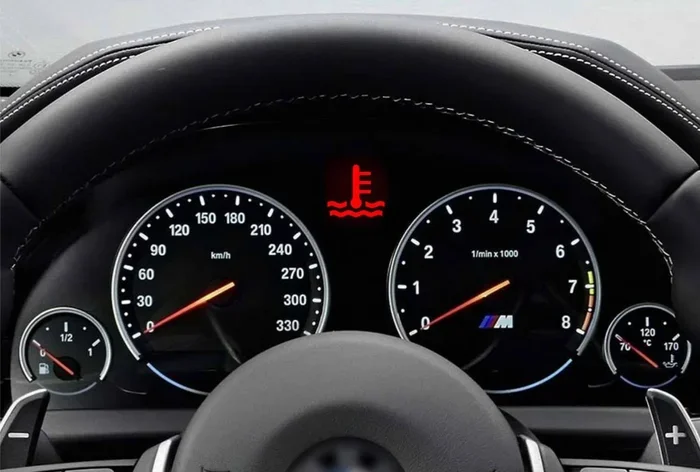
The BMW dashboard has a temperature gauge or a warning light system. In most modern BMWs, you see a thermometer icon on the instrument cluster. Here is what it means:
- Cold zone — The needle sits on the left side when you start the engine. This is normal for the first few minutes. The engine needs time to warm up.
- Normal zone — The needle settles in the middle or slightly below the center mark. This means your BMW engine temperature is right where it should be.
- Hot zone — If the needle moves toward the right or the red zone appears, your engine is overheating. Pull over safely and turn off the engine immediately.
Some newer BMW models use a digital display instead of a traditional needle gauge. You can access the engine temperature through the iDrive system. Check your owner’s manual to find the exact location for your specific model.
Normal vs. Abnormal Temperature Ranges
| Temperature Range | Status | Action Needed |
|---|---|---|
| Below 190°F (88°C) | Too Cold | Let engine warm up; check thermostat |
| 195°F – 220°F (90°C – 105°C) | Normal | No action needed; monitor regularly |
| 220°F – 230°F (105°C – 110°C) | Slightly High | Monitor closely; check coolant level |
| 230°F+ (110°C+) | Overheating | Pull over immediately; turn off engine |
Knowing these ranges helps you react quickly. If you notice the needle creeping up while driving, do not ignore it. Even a few minutes in the hot zone can cause serious damage. This is especially important if you own a 5 to 8 lakh car where repair costs matter more and preventive care saves money.
How to Check BMW Engine Temperature Step by Step
Checking your BMW engine temperature is straightforward. You can use several methods, from the simple dashboard gauge to advanced diagnostic tools. Here is every method explained in detail.
Method 1: Using the Dashboard Temperature Gauge
This is the easiest and most accessible method. Every BMW has a temperature gauge or warning system on the dashboard. Here is how to use it:
- Start the engine and let it idle for 2-3 minutes. Do not drive off immediately.
- Watch the temperature gauge or the thermometer icon on the instrument cluster.
- Wait for the needle to stabilize in the normal zone. This usually takes 3-5 minutes.
- Monitor while driving. Keep an eye on the gauge, especially during hot weather or heavy traffic.
- Note any movement toward the hot zone. Even slight movement deserves attention.
The dashboard gauge gives you a general idea of your BMW engine temperature. It is not the most precise tool, but it is the first line of defense. If the gauge behaves strangely — jumping around, staying in the cold zone too long, or creeping into the hot zone — something needs checking.
Method 2: Checking the Coolant Reservoir Level
The coolant reservoir holds the liquid that absorbs heat from the engine. Low coolant means poor temperature regulation. Here is how to check it:
- Make sure the engine is cool. Never open the radiator cap or coolant reservoir when the engine is hot. Scalding coolant can cause serious burns.
- Locate the coolant reservoir. In most BMWs, it is a translucent plastic tank near the radiator. Check the cap for markings.
- Check the fluid level against the MIN and MAX markings on the side of the tank.
- Top up if needed with the correct BMW-approved coolant. Using the wrong coolant type can damage the cooling system.
- Inspect the coolant color. Healthy coolant is typically green, blue, or pink. If it looks rusty, brown, or oily, you may have a deeper problem.
Checking the coolant reservoir should be part of your regular BMW engine maintenance routine. Do this at least once a month, and always before long road trips. If you find yourself frequently topping up the coolant, there may be a leak somewhere in the system. This is a sign to visit a mechanic promptly.
Method 3: Using an OBD-II Diagnostic Scanner
For a more precise reading, use an OBD-II scanner. This tool plugs into the diagnostic port under your BMW’s dashboard and reads real-time data from the engine control unit. Here is how:
- Locate the OBD-II port. In BMWs, it is usually under the dashboard on the driver’s side, near the steering column.
- Plug in the scanner and turn the ignition to the ON position (do not start the engine).
- Follow the scanner prompts to connect to the vehicle’s ECU.
- Navigate to the coolant temperature sensor data. This is often labeled “ECT” or “Engine Coolant Temperature.”
- Read the value. It should be between 195°F and 220°F when the engine is at operating temperature.
OBD-II scanners range from basic code readers to advanced multi-function tools. A basic scanner costs under $30 and gives you immediate temperature readings. More advanced scanners from brands like Autel, Launch, or BMW-specific tools like ISTA provide deeper diagnostic data. If you want to learn more about car electronics and power accessories, you might find our guide on 12V to 230V car inverters helpful for understanding your BMW’s electrical system.
Method 4: Using an Infrared Thermometer
This is a non-invasive method that gives you surface temperature readings. You point the thermometer at the engine block or radiator and get an instant reading.
- Aim at the upper radiator hose — it should feel warm but not burning hot when the engine is at normal temperature.
- Check the thermostat housing — this is where the coolant flows through the engine. A significant temperature difference between the inlet and outlet can indicate a stuck thermostat.
- Measure the radiator fan — the fan should activate when the engine reaches the hot zone. If it does not, your BMW cooling fan may be faulty.
An infrared thermometer is a great tool for quick checks. It is especially useful when you hear a strange noise from the engine bay but cannot tell if it is temperature-related. Just remember that surface readings are not as accurate as the internal sensor data from an OBD-II scanner.
Common BMW Engine Temperature Problems
Even well-maintained BMWs can develop temperature issues. Here are the most common problems and how to spot them early.
1. Low Coolant Level
This is the number one cause of BMW overheating. Coolant leaks can happen at any point in the cooling system:
- Radiator hoses — These rubber hoses crack and weaken over time. Check them for soft spots, cracks, or coolant residue.
- Water pump — The water pump circulates coolant through the engine. A failing pump causes poor circulation and rising temperatures.
- Radiator — The radiator itself can develop leaks, especially at the seams or where the hoses connect.
- Head gasket — A blown head gasket allows coolant to enter the combustion chamber. Look for white smoke from the exhaust or coolant mixed with engine oil.
- Heater core — A leaking heater core can cause a coolant puddle on the passenger floor. You may also notice a sweet smell inside the cabin.
2. Faulty Thermostat
The thermostat regulates coolant flow based on engine temperature. When it fails, it can either stay closed (causing overheating) or stay open (causing the engine to run too cold). A stuck thermostat is one of the most common reasons for BMW engine temperature fluctuations.
Signs of a bad thermostat include:
- Temperature gauge reading higher than normal after warming up
- Engine taking too long to reach operating temperature
- Inconsistent temperature readings that jump around
- Coolant leaks near the thermostat housing
3. Cooling Fan Failure
The cooling fan kicks in when the engine needs extra cooling, especially at low speeds or when idling. If the fan fails, your BMW can overheat even on a normal drive. Common causes of fan failure include:
- Blown fuse — A simple fix, but easy to overlook.
- Faulty fan relay — The relay controls power to the fan. A bad relay means the fan never gets the signal to turn on.
- Wiring issues — Corroded or damaged wiring connections can interrupt the fan circuit.
- Motor failure — The fan motor itself can burn out over time, especially in older BMWs.
4. Clogged Radiator
Over time, rust, sediment, and debris can clog the radiator’s internal passages. This restricts coolant flow and reduces cooling efficiency. If you notice your BMW running hotter than usual, especially in traffic, a clogged radiator could be the culprit. Regular coolant flushes help prevent this problem.
BMW Engine Temperature Warning Signs You Should Never Ignore
Your BMW gives you several warning signs before a serious overheating event. Learning to recognize these signs early can save you from a breakdown and expensive repairs.
The Temperature Warning Light
Most BMWs have a red thermometer warning light on the dashboard. When this light illuminates, your engine temperature has exceeded the safe range. Do not ignore this light. Pull over safely, turn off the engine, and let it cool down for at least 15 minutes before checking anything.
Steam or Smoke from the Hood
If you see steam or smoke coming from under the hood, your engine is overheating. This is one of the most obvious and alarming signs. Do not open the hood immediately — hot steam can cause burns. Pull over, turn off the engine, and wait for the temperature to drop before investigating.
Unusual Smells
A sweet, syrupy smell inside or around the car often indicates a coolant leak. A burning smell could mean an oil or electrical issue. Both are serious and warrant immediate attention. Trust your nose — it can detect problems before the gauge even moves.
Heating System Malfunctions
If the heater inside your BMW starts blowing cold air when it should be warm, the coolant level may be too low. The heater core relies on hot coolant to produce warm air. A sudden change in heater performance can be an early sign of cooling system trouble.
Engine Performance Changes
Overheating affects engine performance. You may notice reduced power, rough idling, or the check engine light coming on. These symptoms often appear because the ECU adjusts engine timing to protect the engine from heat damage. If you experience these issues, check your BMW engine temperature as a first diagnostic step.
Tips to Keep Your BMW Engine at the Right Temperature
Prevention is always better than cure. Here are practical tips to keep your BMW engine temperature in the healthy range every day.
1. Check Coolant Levels Regularly
Make it a habit to check the coolant reservoir once a month. This takes less than two minutes and catches problems early. Always use the BMW-recommended coolant type for your specific model. Mixing different coolant types can cause chemical reactions that damage the cooling system.
2. Inspect Hoses and Belts
Walk around your BMW engine bay once a month and visually inspect the hoses and belts. Look for cracks, swelling, or soft spots. A hose that looks fine on the outside can be failing on the inside. Replace any hose that shows signs of wear. This is a cheap repair that prevents expensive overheating damage.
3. Flush the Coolant on Schedule
BMW recommends flushing and replacing the coolant every 30,000 miles or every two years, whichever comes first. Old coolant loses its effectiveness and can become acidic, which corrodes internal components. Fresh coolant keeps the cooling system working at peak efficiency.
4. Monitor the Temperature While Driving
Keep an eye on the temperature gauge during your drives, especially in summer or during long highway trips. If you notice the needle creeping up, take action immediately. Pull over safely, turn off the air conditioning, and turn the heater to maximum. This helps draw heat away from the engine temporarily while you find a safe place to stop.
5. Keep the Radiator Clean
Debris like leaves, bugs, and dirt can block airflow through the radiator. This reduces cooling efficiency, especially at low speeds. Periodically clean the front of the radiator with a soft brush or compressed air. If you drive in dusty conditions, do this more frequently.
6. Address Leaks Immediately
If you notice any coolant puddles under your BMW or see coolant residue around hoses and connections, address it immediately. Even a small leak can lead to low coolant levels and overheating. Use a coolant stop-leak product as a temporary fix, but get the leak properly repaired by a qualified mechanic.
When to See a Mechanic for BMW Engine Temperature Issues
Not every temperature problem requires a DIY fix. Some situations call for professional help. Here is when you should take your BMW to a mechanic:
- The temperature gauge consistently reads high even after topping up the coolant.
- You see coolant leaking from anywhere under the car.
- The temperature warning light comes on frequently or stays illuminated.
- You hear unusual noises from the engine bay, such as gurgling or boiling sounds.
- The thermostat replacement or water pump repair is beyond your skill level.
- The OBD-II scanner shows error codes related to the coolant temperature sensor or ECT.
- Steam or smoke appears from the engine bay while driving.
If you own a 12V car socket to 3-pin adapter and use it to power cooling fans or other accessories, make sure those devices do not overload your BMW’s electrical system. An overloaded electrical system can affect the cooling fan and other temperature-related components.
A qualified BMW mechanic has the right tools, diagnostic equipment, and expertise to identify and fix temperature problems correctly. For complex issues like a head gasket replacement or water pump failure, professional service is always the best choice. Do not attempt these repairs unless you have the proper experience and tools.
Conclusion
Checking BMW engine temperature is a simple habit that pays off enormously. It protects your engine, saves money on repairs, and keeps your BMW running at its best. Whether you use the dashboard gauge, check the coolant reservoir, or invest in an OBD-II scanner, each method adds a layer of protection against overheating.
Remember the normal range: 195°F to 220°F. Watch for warning signs like the temperature light, steam, or unusual smells. Perform regular maintenance like coolant checks, hose inspections, and scheduled flushes. And when in doubt, consult a professional mechanic.
Your BMW is an investment. Taking a few minutes each month to monitor BMW engine temperature ensures that investment stays protected for years to come. Start today — your engine will thank you.
Frequently Asked Questions
What is the normal BMW engine temperature?
The normal operating temperature for a BMW engine is between 195°F and 220°F (90°C to 105°C). The temperature gauge needle should sit in the middle or slightly below center when the engine is fully warmed up. If the needle moves into the hot zone, pull over safely and turn off the engine.
Can I drive my BMW if the temperature gauge is in the red zone?
No. Driving with the temperature gauge in the red zone can cause serious engine damage within minutes. The red zone indicates that the engine is overheating. Pull over immediately, turn off the engine, and let it cool down. Check the coolant level and look for visible leaks before attempting to drive again.
How often should I check my BMW coolant level?
Check your BMW coolant level at least once a month. Also check it before any long road trip. Always check the coolant when the engine is completely cool to avoid burns from hot pressurized coolant. If you find yourself needing to top up frequently, there may be a leak that needs professional attention.
What causes a BMW engine to overheat quickly?
The most common causes are low coolant levels, a faulty thermostat, a failed cooling fan, or a clogged radiator. Less common causes include a blown head gasket, water pump failure, or a stuck thermostat. If your BMW overheats quickly, stop driving, let the engine cool, and investigate the cooling system before restarting.
Is it safe to open the radiator cap when the engine is hot?
No. Never open the radiator cap when the engine is hot. The cooling system is pressurized, and opening the cap while hot can cause scalding coolant to spray out, causing severe burns. Always wait at least 15-20 minutes for the engine to cool down before checking or adding coolant.
What type of coolant does my BMW need?
BMW specifies a specific coolant type for each model and year. Most modern BMWs require a coolant that meets the BMW Longlife specification (LL-01 or LL-17 FE+). Check your owner’s manual or consult a BMW dealer to confirm the correct coolant type for your vehicle. Using the wrong coolant can damage the cooling system and void your warranty.