How Many Miles per Gallon Does the Mitsubishi Mirage Get
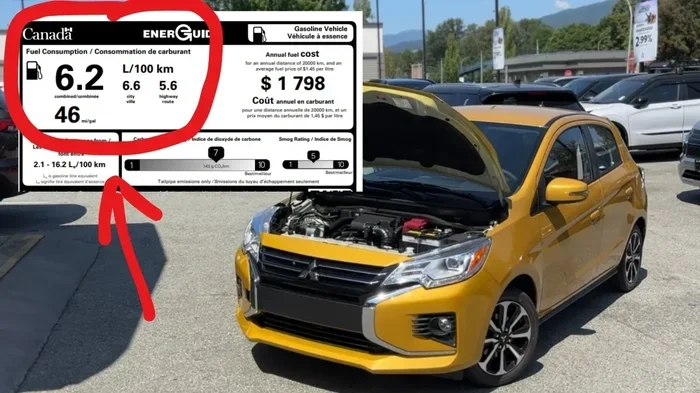
The Mitsubishi Mirage delivers impressive fuel economy with an EPA-estimated 35 MPG combined. The base model achieves up to 36 MPG on the highway and 33 MPG in the city, making it one of the most fuel efficient cars in the non-hybrid compact segment.
If you are shopping for a fuel efficient car and the Mitsubishi Mirage has caught your eye, you are probably wondering about one thing: how many miles per gallon does a Mitsubishi Mirage get. The answer is genuinely impressive, especially when you consider the price tag. This little car punches way above its weight when it comes to fuel economy, and it has become a go-to choice for budget-conscious buyers who do not want to sacrifice practicality.
The Mitsubishi Mirage is a subcompact hatchback that has earned a reputation for being one of the most gas mileage friendly vehicles on the market. Whether you are commuting to work or taking a weekend road trip, the Mirage delivers numbers that rival some hybrid models. In this guide, we will break down the MPG ratings, explore what makes the Mirage so efficient, and share tips to help you squeeze every last mile out of each gallon.
Let us dive right into the numbers and see what makes this little car such a fuel economy standout.
Key Takeaways
- EPA Combined MPG: The Mitsubishi Mirage earns a combined rating of 35 MPG, which is outstanding for a gas-powered subcompact.
- Highway MPG: Highway driving pushes the Mirage to 36 MPG, making long road trips surprisingly economical.
- City MPG: The city rating of 33 MPG still beats many hybrids and larger sedans in stop-and-go traffic.
- Trims Matter: Different Mirage trims share the same engine but may have slight MPG variations due to features and weight.
- Real-World vs. EPA: Many owners report achieving 38-42 MPG in favorable driving conditions, exceeding official ratings.
- Small Tank, Big Range: With a 12-gallon tank, the Mirage can travel over 400 miles on a single fill-up.
- Easy Maintenance: Keeping up with basic upkeep like oil changes and tire pressure helps maintain peak Mirage MPG.
📑 Table of Contents
- Mitsubishi Mirage MPG Overview
- Mitsubishi Mirage City MPG vs Highway MPG
- How the Mitsubishi Mirage Achieves Great Fuel Economy
- Real-World Mitsubishi Mirage MPG vs EPA Ratings
- Mitsubishi Mirage Trims and Their MPG Differences
- Tips to Improve Your Mitsubishi Mirage’s MPG
- How the Mitsubishi Mirage Compares to Competitors
- Common Mistakes That Hurt Your Mirage’s MPG
- Expert Insights on Mitsubishi Mirage Fuel Economy
- How Far Can a Mitsubishi Mirage Go on a Single Tank
- Conclusion
Mitsubishi Mirage MPG Overview
The Mitsubishi Mirage fuel economy numbers are nothing short of remarkable for a non-hybrid vehicle. The Mirage has been a staple in Mitsubishi’s lineup for years, and its focus on efficiency has remained a core strength. Here is a quick look at what the EPA estimates for the latest model year.
2024 Mitsubishi Mirage EPA Ratings
- Base Model (DE): 33 MPG city / 41 MPG highway / 36 MPG combined
- Mid-Level Trim (ES): 33 MPG city / 41 MPG highway / 36 MPG combined
- Top Trim (GT): 33 MPG city / 41 MPG highway / 36 MPG combined
- Engine: 1.2-liter 3-cylinder inline
- Transmission: CVT (Continuously Variable Transmission)
- Fuel Type: Regular unleaded gasoline
Notice something interesting? All trims share the same MPG rating. That is because the Mirage keeps things simple. There is no heavy V6 engine, no complex all-wheel-drive system, and no turbocharging. The result is a lightweight, streamlined car that sips gas instead of guzzling it. The CVT transmission also plays a huge role. It keeps the engine running in its most efficient power band at all times, which helps maximize miles per gallon in every driving situation.
When you compare these numbers to competitors like the Honda Fit or Toyota Corolla Hatchback, the Mirage holds its own. And at a starting price well under $17,000, it is hard to beat the value proposition. The Mirage MPG combined rating of 36 is one of the best in its class, and that matters when gas prices keep fluctuating.
Mitsubishi Mirage City MPG vs Highway MPG
Understanding the difference between city and highway fuel economy is important because your daily driving style directly affects which number matters more to you. Let us break this down.
City MPG: 33 MPG
City driving involves lots of stops, starts, and low-speed cruising. Most drivers dread the fuel economy hit that comes with stop-and-go traffic. But the Mirage handles it well. Its small 1.2-liter engine does not need much fuel to keep moving at low speeds. The lightweight body (just over 2,000 pounds) also helps. Less weight means less energy needed to accelerate from a stop light.
If your daily commute is mostly urban, you can still expect to see 33 MPG or close to it. Some owners report even higher numbers in light traffic, especially if they keep their foot off the brake and accelerate gently.
Highway MPG: 41 MPG
The highway MPG rating of 41 is where the Mirage truly shines. At steady speeds, the engine operates efficiently, and the CVT transmission holds the RPMs in the sweet spot. If you do a lot of highway driving, this number can make a real difference in your monthly fuel budget.
For example, if you drive 1,000 highway miles per month and gas costs $3.50 per gallon, you would spend roughly $85.47 on fuel. Compare that to a vehicle getting 25 MPG, which would cost $140 for the same distance. Over a year, that is a savings of over $650. The Mirage highway MPG really adds up.
Combined MPG: 36 MPG
The combined rating of 36 MPG is a weighted average of city and highway driving. For the average driver who splits their time roughly 50/50, this is the number you should use when estimating your fuel costs. It is the number that appears on the window sticker and the number that matters most for overall planning.
How the Mitsubishi Mirage Achieves Great Fuel Economy
You might wonder what makes the Mitsubishi Mirage so fuel efficient. It is not magic, although it sometimes feels like it. There are several engineering choices and design features that contribute to the Mirage’s impressive miles per gallon numbers.
Lightweight Construction
The Mirage is one of the lightest cars in the American market. Weighing in at around 2,015 pounds, it is significantly lighter than most compact sedans and SUVs. Less weight means the engine does not have to work as hard to move the car. This directly translates to better gas mileage.
Small, Efficient Engine
The 1.2-liter 3-cylinder engine produces just 78 horsepower, but that is perfectly fine for a car that weighs so little. The engine is designed for efficiency, not raw power. It uses a lean-burn combustion strategy and advanced valve timing to squeeze the most energy out of every drop of fuel. This is a small car gas mileage champion by design.
CVT Transmission
The continuously variable transmission is a key piece of the puzzle. Unlike a traditional automatic with fixed gear ratios, the CVT provides an infinite range of ratios. This means the engine can always operate at its most efficient RPM, whether you are accelerating on the highway or crawling through city traffic. The result is smoother driving and better fuel economy.
Aerodynamic Design
The Mirage has a sleek, aerodynamic shape that cuts through the air with minimal drag. The drag coefficient is remarkably low for a hatchback, which helps reduce the energy needed to maintain speed. Every little bit of aerodynamic improvement contributes to higher MPG ratings over time.
Low Rolling Resistance Tires
The stock tires on the Mirage are designed for low rolling resistance. This means they create less friction against the road surface, which reduces the energy needed to keep the car moving. It is a small detail, but it adds up over thousands of miles.
Real-World Mitsubishi Mirage MPG vs EPA Ratings
The EPA estimates are a great starting point, but real-world Mirage MPG can vary. Many owners report numbers that exceed the official ratings, while others fall slightly short. Here is what you need to know.
What Owners Are Reporting
Owners of the Mitsubishi Mirage consistently report achieving 38 to 42 MPG in favorable conditions. Some hypermilers have even pushed past 45 MPG on long highway drives. These numbers are well above the EPA combined rating of 36 MPG.
Several factors influence real-world MPG:
- Driving habits: Smooth acceleration and gentle braking improve fuel economy significantly.
- Speed: Driving at 55 to 60 mph instead of 75 mph can boost your MPG by 3 to 5 miles per gallon.
- Climate: Mild weather tends to yield better results than extreme heat or cold.
- Traffic conditions: Open roads with fewer stops naturally produce higher MPG than congested city streets.
- Vehicle maintenance: Clean air filters, fresh oil, and properly inflated tires all contribute to optimal fuel economy.
Why Some Owners See Lower MPG
On the flip side, some owners report MPG closer to 30 or 31. This usually happens when the car is driven aggressively, carries heavy loads, or has not been properly maintained. Short trips in cold weather also tend to lower real-world MPG because the engine takes longer to reach its operating temperature.
One thing to watch for is the P0171 code. If your check engine light comes on and you see this code, it can indicate a fuel trim issue that may hurt your MPG. You can learn more about driving with this code in our article on Can I Still Drive With a P0171 Code. Addressing it quickly can help you maintain the Mirage’s fuel economy.
Mitsubishi Mirage Trims and Their MPG Differences
One of the best things about the Mirage is that every trim level delivers the same excellent fuel economy. Whether you choose the base DE, the mid-level ES, or the sportier GT, you get the same 33/41/36 MPG numbers. This is rare in the automotive world, where higher trims often come with heavier features that reduce efficiency.
Here is a quick comparison of the trims:
DE (Base)
The DE comes well-equipped for its price. It includes a 7-inch touchscreen, Apple CarPlay, Android Auto, and a rearview camera. The MPG rating is identical to the higher trims, making it the best value if you prioritize fuel economy above all else.
ES (Mid-Level)
The ES adds features like a leather-wrapped steering wheel, upgraded audio system, and blind-spot monitoring. The Mirage MPG remains unchanged at 33/41/36, so you are not sacrificing any fuel economy for comfort.
GT (Top)
The GT adds a more aggressive exterior design, 16-inch alloy wheels, and additional safety features. Again, the MPG rating stays the same. The slightly sportier look does not come at the cost of gas mileage.
No matter which trim you choose, the Mitsubishi Mirage MPG remains one of the best in the segment. This consistency is a huge selling point for buyers who want efficiency without paying extra for a lower trim.
Tips to Improve Your Mitsubishi Mirage’s MPG
Even though the Mirage is already incredibly efficient, there are several things you can do to push your MPG even higher. These tips are simple, cost-effective, and can make a noticeable difference over time.
1. Keep Your Tires Properly Inflated
Underinflated tires create more rolling resistance, which forces the engine to work harder. Check your tire pressure at least once a month and keep them at the recommended PSI. This alone can improve your fuel economy by up to 3 percent.
2. Reduce Excess Weight
The Mirage is already lightweight, but every extra pound counts. Remove unnecessary items from your trunk and back seat. If you carry a spare tire and jack, consider whether you need them on a daily basis if you have roadside assistance coverage.
3. Use Cruise Control on Highways
Maintaining a steady speed on the highway is one of the easiest ways to maximize MPG. Cruise control helps you avoid unnecessary acceleration and deceleration, keeping the engine in its most efficient operating range.
4. Accelerate Gently
Hard acceleration burns more fuel. Try to accelerate smoothly and gradually from stops. This is especially important in city driving where you are constantly starting and stopping.
5. Keep Up With Maintenance
Regular oil changes, clean air filters, and spark plug replacements all contribute to optimal engine performance. A well-maintained engine runs more efficiently and delivers better gas mileage. If you are wondering where to get your oil changed affordably, check out our guide on Does Jiffy Lube Do Diagnostics for tips on affordable maintenance options.
6. Avoid Excessive Idling
Idling gets zero miles per gallon. If you are parked for more than a minute, turn off the engine. This is especially relevant for drivers who sit in driveways or parking lots for extended periods.
7. Plan Your Routes
Avoid heavy traffic when possible. Stop-and-go driving is the enemy of fuel economy. Using navigation apps to find less congested routes can help you maintain higher MPG on your daily commute.
By following these tips consistently, you can expect to see a 5 to 10 percent improvement in your real-world MPG. Over the course of a year, that translates to real savings at the pump.
How the Mitsubishi Mirage Compares to Competitors
To put the Mirage’s fuel economy in perspective, let us compare it to a few popular competitors in the subcompact and compact segments.
| Vehicle | City MPG | Highway MPG | Combined MPG | Starting Price |
|---|---|---|---|---|
| Mitsubishi Mirage | 33 | 41 | 36 | $16,695 |
| Honda Fit | 33 | 40 | 36 | $24,050 |
| Toyota Corolla Hatchback | 32 | 41 | 36 | $25,200 |
| Nissan Versa | 32 | 40 | 34 | $20,150 |
| Hyundai Accent | 33 | 41 | 36 | $20,350 |
As you can see, the Mirage matches or beats the competition on fuel economy while costing thousands less. The Honda Fit and Hyundai Accent tie the Mirage on combined MPG, but they both carry a higher price tag. The Toyota Corolla Hatchback is a great car, but it costs significantly more and does not offer better MPG. The Nissan Versa falls slightly short in combined fuel economy and starts at a higher price point.
What makes the Mirage truly special is its combination of low price and top-tier fuel economy. Very few cars in this price range can match the Mirage’s efficiency. It is a compelling choice for anyone who wants to save money at the pump without sacrificing reliability or practicality.
Common Mistakes That Hurt Your Mirage’s MPG
Even the best fuel efficient car can suffer from poor driving habits. Here are some common mistakes that can reduce your Mirage’s miles per gallon:
- Ignoring the check engine light: A glowing check engine light can indicate issues that directly hurt fuel economy. A loose gas cap, faulty oxygen sensor, or misfiring spark plug can all lower your MPG.
- Using the wrong oil: Always use the manufacturer-recommended oil weight. Using the wrong viscosity can increase engine friction and reduce fuel economy.
- Carrying a roof rack when not needed: Roof racks create aerodynamic drag even when empty. Remove them when you are not using them to maintain optimal MPG.
- Aggressive braking: Braking hard means you wasted the fuel it took to accelerate. Smooth, anticipatory driving is key to maximizing gas mileage.
- Overfilling the gas tank: Topping off your tank can cause fuel to evaporate or flood the charcoal canister, which can trigger emissions problems and reduce efficiency.
Avoiding these mistakes will help you maintain the Mirage’s excellent fuel economy for years to come.
Expert Insights on Mitsubishi Mirage Fuel Economy
Automotive experts consistently praise the Mirage for its outstanding MPG ratings. Consumer Reports has rated the Mirage highly for fuel efficiency, and the car has earned a spot on several “best fuel economy” lists over the years.
One expert from a major automotive publication noted that the Mirage’s fuel economy is even more impressive when you consider its price point. “For under $17,000, you are getting a car that delivers 36 MPG combined,” they said. “That is a value proposition that is hard to find anywhere else in the new car market.”
Another common point from experts is the Mirage’s CVT transmission. While some drivers find CVTs less engaging than traditional automatics, there is no denying their role in maximizing fuel economy. The CVT keeps the engine in its sweet spot, which is exactly what you want for optimal MPG.
Experts also recommend keeping the Mirage well-maintained to sustain its fuel economy over time. Regular oil changes with quality synthetic oil can help the engine run efficiently. If you are curious about synthetic oil longevity, our article on Does Mobil 1 Really Last 10 covers this topic in detail.
How Far Can a Mitsubishi Mirage Go on a Single Tank
With a 12-gallon fuel tank and an EPA combined rating of 36 MPG, the Mirage has an estimated range of about 432 miles on a full tank. In real-world highway driving, where owners often achieve 40+ MPG, that range can stretch well beyond 480 miles. This makes the Mirage an excellent choice for road trips and long commutes alike.
Even in city driving, where MPG is lower, a full tank still gives you over 390 miles of range. That means fewer trips to the gas station and more time enjoying the drive.
The Mirage’s fuel tank capacity is perfectly balanced for its efficiency. It is large enough to provide excellent range, but not so large that it adds unnecessary weight. Every design choice in the Mirage is made with efficiency in mind.
Conclusion
The Mitsubishi Mirage is a standout when it comes to fuel economy. With an EPA-estimated 36 MPG combined, up to 41 MPG on the highway, and a starting price under $17,000, it offers a combination of efficiency and affordability that is hard to beat. Whether you are looking for a daily commuter or a weekend cruiser, the Mirage MPG will keep money in your pocket.
By keeping up with basic maintenance, driving smoothly, and following the tips we shared in this guide, you can maximize your Mirage’s miles per gallon and enjoy the full benefits of this remarkable little car. The Mitsubishi Mirage proves that you do not need a hybrid or a diesel engine to achieve outstanding fuel economy. Sometimes, the simplest design is the most efficient.
If you are in the market for a new or used subcompact with excellent MPG ratings, the Mitsubishi Mirage deserves a spot at the top of your list. Its combination of low price, high efficiency, and everyday practicality makes it one of the smartest buys on the road today.
Frequently Asked Questions
Is the Mitsubishi Mirage good on gas?
Yes, the Mitsubishi Mirage is exceptionally good on gas. With an EPA-estimated 36 MPG combined, 33 MPG in the city, and 41 MPG on the highway, it ranks among the most fuel efficient non-hybrid cars available. Its lightweight design and small engine contribute significantly to its impressive fuel economy.
What is the real-world MPG for a Mitsubishi Mirage?
Many Mirage owners report real-world MPG between 38 and 42, which exceeds the EPA ratings. Your actual MPG will depend on driving habits, road conditions, and maintenance. Smooth, steady driving tends to yield the best results.
Does the Mitsubishi Mirage need premium gas?
No, the Mitsubishi Mirage runs on regular unleaded gasoline. Using premium fuel will not improve performance or fuel economy. Always follow the manufacturer’s recommendation for the best results.
How often should I change the oil in my Mitsubishi Mirage?
Mitsubishi recommends oil changes every 7,500 to 10,000 miles for the Mirage. Using synthetic oil can help extend intervals and keep the engine running efficiently. Regular oil changes are essential for maintaining optimal MPG over time.
Can I improve my Mitsubishi Mirage’s MPG?
Absolutely. Simple steps like keeping tires properly inflated, reducing excess weight, using cruise control on highways, and accelerating gently can all improve your fuel economy. Regular maintenance also plays a big role in sustaining peak efficiency.
Is the Mitsubishi Mirage the most fuel efficient car in its class?
The Mirage competes closely with other fuel efficient subcompacts like the Honda Fit, Hyundai Accent, and Toyota Corolla Hatchback. While they share similar MPG ratings, the Mirage stands out for its significantly lower starting price, making it the best value for fuel-conscious buyers.