How Do I Turn Off Push Button Start On My Modern Car
Knowing how to turn off push button start is essential for every modern car owner. Whether you drive a Toyota, Honda, Ford, or BMW, the process is simpler than you think — but it varies by brand and model. This guide walks you through every method, common mistakes, and safety tips to shut down your engine the right way every single time.
You slide behind the wheel of your push button start car, ready to go. You press the button, the engine roars to life, and you’re on your way. But then comes the part that confuses a lot of people: how do you actually turn the thing off? It seems simple, right? Yet many drivers find themselves sitting in the parking lot pressing a button that does nothing. Or worse, they turn the car off incorrectly and deal with warning lights on the dashboard the next morning. If you have ever wondered about how to turn off push button start properly, you are in the right place.
This guide covers everything you need to know about shutting down your modern vehicle. We will look at the basic steps, brand-specific differences, common problems, and safety tips. By the end, you will feel confident every time you need to shut off your engine with a push button ignition system. No more guessing. No more dashboard warnings. Just clear, simple steps that work.
Key Takeaways
- Press and hold the start/stop button: This is the most common way to turn off push button start on nearly all modern vehicles.
- Your foot must be on the brake: Most cars require a pressed brake pedal to shut off the engine safely.
- Different brands use different methods: Toyota, Honda, Ford, and BMW each have slightly unique shutdown procedures.
- Emergency shutdown is possible: You can force the engine off by pressing and holding the button for several seconds.
- Common mistakes cause problems: Driving off with the key fob removed or forgetting to shift to park can lead to shutdown issues.
- Smart key systems add convenience: Your car can detect the fob and allow shutdown without a physical key insertion.
- When in doubt, consult your manual: Every vehicle model has specific instructions that override general advice.
📑 Table of Contents
Understanding Push Button Start Systems
Before we dive into the “how,” let’s talk about the “why.” Modern cars with push button ignition use a system called smart key technology. Instead of a traditional mechanical ignition switch, your car reads a signal from your key fob. The car’s computer system confirms the fob is nearby and allows the engine to start or stop. This is called a passive keyless entry and start system. It is convenient, modern, and mostly foolproof.
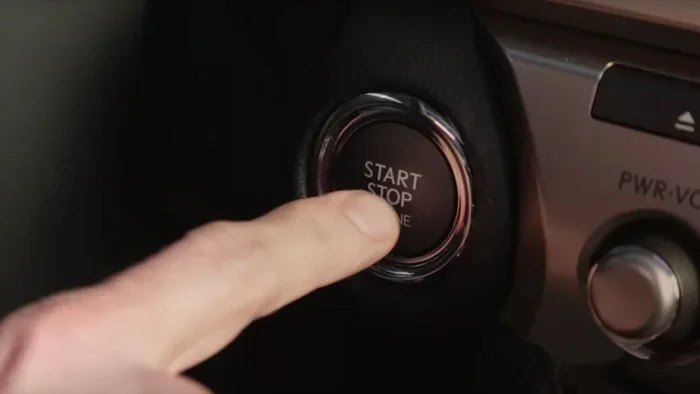
But here is the thing — convenience does not mean you should ignore the basics. Understanding how your car start system works helps you troubleshoot when something goes wrong. The engine start stop button is the central control point. It tells the car’s computer to turn the ignition on or off. When you press it, the computer checks several conditions before allowing shutdown.
How the System Works
When you press the push to start button, the car checks a few things. First, it confirms the smart key fob is inside the vehicle. Second, it checks whether the transmission is in park or neutral. Third, it verifies the brake pedal is pressed. If all conditions are met, the engine responds. If any condition fails, the car will not shut down properly.
This system is designed for safety. It prevents you from accidentally turning off the engine while driving. It also stops the car from starting if the fob is not detected. So when you go to turn off your car, the same safety checks apply in reverse. The car wants to make sure it is safe to shut down before it complies.
How to Turn Off Push Button Start on Different Car Brands
The basic process is similar across most vehicles. But every manufacturer has small differences. Let us walk through the standard method first, and then look at brand-specific details.
The Standard Shutdown Process
Follow these steps to turn off push button start on most modern cars:
- Bring the car to a complete stop. Make sure you are parked safely.
- Press the brake pedal firmly. Keep your foot on the brake throughout the process.
- Shift the gear selector to Park. This is essential for most automatic transmissions.
- Press and release the engine start stop button. A single press should shut off the engine.
- Remove the key fob from the vehicle. This ensures the car is fully powered down.
That is it. In most cases, one press of the button with your foot on the brake and the car in park is all you need. The engine goes quiet, the dashboard lights dim, and your vehicle is officially off.
Brand-Specific Shutdown Methods
Now let us look at how different brands handle the push button start off process.
Toyota and Lexus: Toyota vehicles are straightforward. Press the brake, shift to park, and press the engine button Toyota once. The engine shuts off immediately. Some Toyota models with the smart key system will also let you turn off the engine without pressing the brake, but this is not recommended for regular use.
Honda: Honda follows a similar process. Press the brake pedal, put the car in park, and press the Honda ignition button once. Honda vehicles sometimes display a reminder on the dashboard if you try to turn off the car without the fob inside. Always make sure your smart key is in the cabin.
Ford: Ford vehicles with Ford push button start work in much the same way. Press the brake, shift to park, and press the Ford start button. Some Ford models have a feature where pressing the button once puts the car in accessory mode, and pressing it again fully shuts off the engine. Check your specific model.
BMW: BMW uses a slightly different approach. The BMW start button is often integrated into the ignition area. Press the brake, shift to park, and press the BMW engine button. BMW vehicles also have an auto start-stop feature that shuts the engine off at stops. This is different from manually turning the car off, so do not confuse the two.
Chevrolet and GMC: General Motors vehicles follow the standard process. Press the brake, put the car in park, and press the Chevy push button start. The engine shuts off cleanly. Some GM trucks and SUVs have additional dashboard notifications that confirm the engine is off.
Common Problems When Trying to Shut Off Your Engine
Sometimes, things do not go as planned. You press the button, but the engine keeps running. Or the car will not start again after you turned it off. These issues are more common than you might think, and most of them have simple fixes.
The Engine Will Not Turn Off
If your car will not turn off with button, the first thing to check is the brake pedal. Did you press it firmly enough? Most vehicles require a solid brake press to register the shutdown command. If the brake sensor is faulty, the car may not accept the shutdown signal.
Another common cause is the transmission not being fully in park. If the gear selector is in neutral or even slightly out of park position, the car will refuse to shut down. This is a safety feature. Push the gear selector firmly into park and try again.
The Car Turns Off but Will Not Restart
This can be scary, especially if you are in traffic or a dangerous location. The most likely culprit is the key fob battery. If the fob’s battery is dead, the car cannot read the signal. Even though you just drove the car, the fob may not have enough charge to restart the engine. Try replacing the fob battery with a fresh CR2025 or CR2032 cell, depending on your model.
Another possibility is that the car is in accessory mode instead of fully off. Press the button once more with your foot on the brake. This should fully power down the electrical system and allow a normal restart.
Warning Lights Appear After Shutdown
Seeing a warning light after you shut off the engine can be unsettling. A yellow or red dashboard light that stays on after shutdown often indicates a system reminder. It might be a reminder to service the vehicle, or it could signal that the smart key system did not fully power down. Try removing the fob from the vehicle entirely and closing all doors. This forces a full system shutdown in most cases.
Push Button Start Stops Working After Battery Dies
If your car battery dies or gets disconnected, the push button ignition system may need a reset. This is normal and not a sign of a serious problem. To reset, reconnect the battery, sit in the driver’s seat, and press the brake pedal. Then press the start button. The system should reinitialize and work normally again.
Safety Tips for Shutting Down Your Vehicle
Turning off your car seems like the simplest thing in the world. But there are important safety considerations you should always keep in mind. These tips will protect you, your passengers, and your vehicle.
Always Shift to Park Before Shutting Off
This cannot be stressed enough. Never try to turn off the engine while the car is in drive or reverse. The vehicle’s safety systems are designed to prevent shutdown in gear for a reason. Shifting to park first ensures the transmission is locked and the car cannot roll.
Keep Your Foot on the Brake
Your brake pedal is the gateway to engine shutdown. Without pressing it, most cars will not respond to the start button command. This prevents accidental shutdowns while the vehicle is moving. Always keep firm pressure on the brake when turning the car off.
Remove the Key Fob When Leaving the Vehicle
Some drivers leave the fob in the car out of habit. This is fine for short stops, but when you leave the vehicle, always take the fob with you. It prevents theft and ensures the car is fully powered down. A car with the fob inside can sometimes stay in standby mode, draining the battery over time.
Do Not Turn Off the Engine While Driving
This is a critical safety rule. Never press the engine stop button while the car is in motion unless it is a genuine emergency. Turning off the engine while driving disables power steering and power brakes. You will still have some steering and braking ability, but it requires much more physical effort. Only use emergency shutdown while driving if there is a serious mechanical failure or safety risk.
Let the Engine Cool Before Shutting Off After Hard Driving
If you have been towing, racing, or driving hard up a steep hill, let the engine idle for a minute before shutting it off. This allows the turbocharger and engine components to cool down. Turning off a hot engine immediately after heavy use can cause unnecessary wear over time.
When to See a Professional About Your Start Button
Most push button start issues are simple and easy to fix. But some problems need professional attention. If you experience any of the following situations, it is time to visit a mechanic or dealership.
- The start button does not respond at all, even after replacing the fob battery.
- The engine shuts off unexpectedly while driving.
- Warning lights stay on continuously after shutdown.
- The car will not start again after a normal shutdown.
- You hear clicking sounds when pressing the button but the engine does not respond.
- The ignition switch feels loose or unresponsive.
These symptoms could indicate a problem with the starter motor, the brake light switch, the transmission position sensor, or the car’s main computer module. A qualified technician can diagnose the issue quickly and get you back on the road safely.
Do not ignore persistent issues with your push button ignition system. What starts as a minor inconvenience can become a serious safety problem if left unaddressed. Regular maintenance and prompt attention to warning signs keep your vehicle running reliably for years.
Key Takeaways
- Press and hold the start/stop button: This is the most common way to turn off push button start on nearly all modern vehicles.
- Your foot must be on the brake: Most cars require a pressed brake pedal to shut off the engine safely.
- Different brands use different methods: Toyota, Honda, Ford, and BMW each have slightly unique shutdown procedures.
- Emergency shutdown is possible: You can force the engine off by pressing and holding the button for several seconds.
- Common mistakes cause problems: Driving off with the key fob removed or forgetting to shift to park can lead to shutdown issues.
- Smart key systems add convenience: Your car can detect the fob and allow shutdown without a physical key insertion.
- When in doubt, consult your manual: Every vehicle model has specific instructions that override general advice.
Conclusion
Turning off your car with a push button start system is easy once you know the steps. Press the brake, shift to park, and press the button. That is the core process that works across nearly every modern vehicle on the road today. The small differences between brands are easy to learn, and most drivers pick them up within a few days of regular use.
Remember to always follow the safety tips we covered. Keep your foot on the brake. Shift to park first. Never turn off the engine while driving unless it is an emergency. These habits protect you and your passengers every time you get behind the wheel.
If you run into problems with your push button ignition, start with the simple fixes. Check the brake pedal. Make sure the car is in park. Replace the fob battery. Most issues resolve quickly with these basic steps. And when they do not, a professional mechanic can help you get to the bottom of it.
Now you have everything you need to confidently turn off push button start on your modern car. You understand how the system works, you know the brand-specific differences, and you are equipped to handle common problems. Drive safe, and enjoy the convenience of your smart key system.
Frequently Asked Questions
Can I turn off my car without pressing the brake pedal?
On most vehicles, you must press the brake pedal to turn off the engine with a push button start system. This is a safety feature that prevents accidental shutdowns. Some vehicles allow shutdown without the brake only when the car is already completely stopped and in park, but this varies by model and manufacturer.
What happens if I turn off the engine while driving?
Turning off the engine while driving disables power steering and power brakes. You will still have some control, but it requires significantly more effort to steer and stop the vehicle. Only do this in a genuine emergency, such as a mechanical failure or brake malfunction. Otherwise, pull over safely and turn off the car the normal way.
Why does my push button start car not turn off?
The most common reasons are a faulty brake pedal sensor, the transmission not being fully in park, or a dead key fob battery. Check that your foot is firmly on the brake and the gear selector is in park. If the problem persists, try replacing the fob battery or consult your owner’s manual for model-specific troubleshooting steps.
How do I know if my push button start car is fully off?
When your car is fully off, the engine sound stops, the dashboard lights dim or turn off, and the ready indicator light disappears. You should also see no active warning lights related to the engine or hybrid system. If you are unsure, check that the accessory power is off and the key fob is removed from the vehicle.
Can a dead key fob battery prevent my car from turning off?
A dead fob battery usually affects the ability to start the car, not to turn it off. However, some vehicles may display warnings or behave unpredictably if the fob signal is lost during shutdown. Replacing the fob battery with a fresh CR2025 or CR2032 cell typically resolves this issue quickly and affordably.
Is it safe to leave my push button start car running while parked?
It is not recommended to leave your car running while parked for extended periods. It wastes fuel, produces emissions, and can drain the battery over time. Modern vehicles with start stop technology automatically shut off the engine at long stops, but manually turning the car off when parked is always the safer and more fuel-efficient choice.