How Bugattis Quad-Turbo Engine Layout Impacts Performance
Bugatti’s quad-turbo engine layout is a masterclass in forced induction engineering. This unique W16 configuration uses four turbochargers to deliver insane horsepower and instant torque. The layout reduces turbo lag, improves power delivery, and sets Bugatti supercars apart from the competition. Understanding this engine design helps car enthusiasts appreciate why these machines perform the way they do.
Bugatti has built some of the most powerful cars ever made. At the heart of every Bugatti supercar sits a massive W16 engine with four turbochargers. This quad-turbo engine layout is not just about making noise. It is a carefully engineered system that shapes how the car accelerates, handles, and delivers power on the road. When you understand how this layout works, you start to see why Bugatti cars feel the way they do.
The quad-turbo setup is different from a standard twin-turbo or single-turbo arrangement. Instead of two or one turbochargers, Bugatti uses four. Each turbo handles a specific group of cylinders. This means the engine gets boost faster, stays responsive at low speeds, and still has plenty of power at top speed. It is a brilliant solution to a very hard engineering problem.
In this article, we will break down exactly how Bugatti’s quad-turbo engine layout impacts performance. We will look at the W16 architecture, how the four turbochargers work together, and why this design reduces turbo lag. We will also explore how the engine stays cool under extreme conditions and what this means for real-world driving. Whether you are a car enthusiast or just curious about supercar tech, this guide covers it all.
Key Takeaways
- Four turbochargers work together: The quad-turbo setup minimizes lag and maximizes power across the entire RPM range.
- The W16 engine is unique: Its narrow 60-degree angle fits four valves per cylinder in a compact layout that fits inside a car.
- Power delivery is seamless: Twin-pair turbo pairing ensures smooth, linear acceleration without sudden surges.
- Thermal management is critical: Advanced intercooling and cooling systems keep the engine performing at extreme speeds.
- Real-world performance is staggering: The Chiron hits 0 to 60 mph in under 2.5 seconds thanks to this layout.
- Maintenance matters: Proper care of the turbo system and cooling components keeps these engines running at peak condition.
📑 Table of Contents
- What Makes Bugatti’s Quad-Turbo Engine Layout So Special
- How the Quad-Turbo Layout Delivers Massive Power
- Reducing Turbo Lag for Instant Response
- Thermal Management and Engine Cooling
- Real-World Performance: What the Numbers Show
- Maintaining a Quad-Turbo Bugatti Engine
- Expert Insights: Why the Quad-Turbo Layout Is a Game Changer
- Key Takeaways
- Conclusion
What Makes Bugatti’s Quad-Turbo Engine Layout So Special
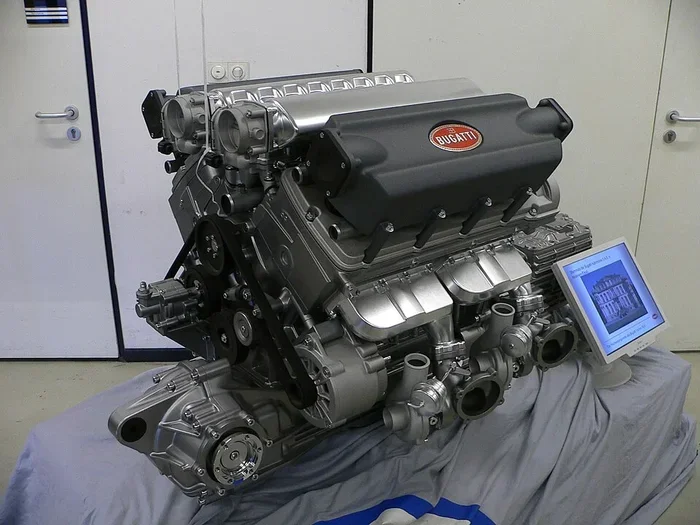
Most cars use a four-cylinder or six-cylinder engine. Bugatti went a completely different route. The W16 engine has 16 cylinders arranged in a unique shape that looks like two V8 engines joined at a narrow angle. This configuration fits inside the engine bay while still delivering massive displacement. The quad-turbo engine layout takes this already impressive design and adds forced induction to extract every last bit of power.
The W16 Architecture Explained
The W16 engine is the reason Bugatti can fit so much power into a single car. Each bank of cylinders has its own set of turbochargers. The engine displacement sits at 8.0 liters, which is huge by any standard. This large displacement combined with four turbochargers creates an engine that produces over 1,500 horsepower in the latest models.
What makes the W16 special is its compact size. Despite having 16 cylinders, the engine is surprisingly narrow. The 60-degree angle between the two cylinder banks keeps the engine from being too wide. This allows engineers to place the engine low in the chassis, which improves the car’s center of gravity. A lower center of gravity means better handling and more stability at high speeds.
Why Four Turbochargers Instead of Two
You might wonder why Bugatti does not just use two bigger turbochargers. The answer comes down to response and efficiency. A single large turbocharger tends to spool up slowly. This creates turbo lag, which is that delay you feel before power kicks in. By using four smaller turbochargers, each one handles fewer cylinders. This means they spin up faster and deliver boost almost instantly.
The quad-turbo engine layout also improves exhaust scavenging. Each turbo gets a cleaner, more direct exhaust pulse from its assigned cylinders. This helps the turbos spin more efficiently and reduces wasted energy. The result is a smoother power curve and more consistent performance across the entire RPM range.
How the Quad-Turbo Layout Delivers Massive Power
Numbers alone do not tell the full story. But they help. Bugatti’s quad-turbo engine layout produces figures that are hard to believe. The current Chiron Super Sport produces 1,578 horsepower and 1,180 pound-feet of torque. That is more power than most hypercars produce from two turbochargers. The secret lies in how the four turbos work together to feed the engine.
Horsepower and Torque Numbers
Horsepower and torque are the two numbers everyone looks at. Horsepower tells you how fast the engine can do work. Torque tells you how much twisting force is available. In a Bugatti, both numbers are enormous. The quad-turbo setup makes sure that torque is available from low RPM all the way to the redline.
Here is why this matters. When you step on the gas pedal, you want instant response. A single-turbo engine might have a gap between pressing the pedal and feeling the push. The quad-turbo layout eliminates that gap. Each turbo takes over a portion of the workload, so the engine never feels starved for boost. This is what gives Bugatti cars their explosive off-the-line acceleration.
Power Delivery Across All Cylinders
One of the biggest advantages of the quad-turbo engine layout is how evenly power is spread. Each pair of turbos serves a specific set of cylinders. This balanced approach means no single turbo is overworked. The engine stays cool, the boost stays consistent, and the driver gets a smooth, linear power delivery.
Think of it like a team of four runners instead of two. Each runner carries a lighter load but they all finish the race together. The result is a car that pulls hard from a standstill and keeps pulling hard at top speed. There are no flat spots or sudden drops in power. The delivery is seamless, which is exactly what you want in a car that can go over 250 miles per hour.
Reducing Turbo Lag for Instant Response
Turbo lag is the enemy of performance. It is that frustrating pause between pressing the accelerator and feeling the engine respond. Bugatti engineers spent years solving this problem. The quad-turbo engine layout is their answer. By splitting the workload across four smaller turbos, they dramatically reduced lag.
Twin-Pair Turbo Configuration
The way Bugatti pairs the turbochargers is clever. Two turbos handle the front cylinders and two handle the rear cylinders. This twin-pair setup means each turbo is sized perfectly for its group of cylinders. A smaller turbo can spool up faster because it does not need to move as much exhaust gas.
At low speeds, only the smaller turbos are doing most of the work. As engine speed rises, the larger cylinders demand more air, and the system adjusts. This dynamic response is what makes Bugatti engines feel so lively. The car feels eager and ready to go at any RPM.
Wastegate and Boost Control
Each turbocharger has its own wastegate. The wastegate is a valve that releases excess boost pressure. It prevents the turbo from over-spinning and protects the engine. Bugatti’s system uses electronic wastegate control to manage boost pressure with precision.
This level of control means the engine stays within safe limits while still producing maximum power. The driver gets a predictable, reliable power delivery every time they push the pedal. It also means the engine can handle extreme conditions, like sustained high-speed driving, without overheating or losing performance.
Thermal Management and Engine Cooling
All that power creates all that heat. When you push 1,500 horsepower through an engine, the temperatures rise fast. Bugatti’s quad-turbo engine layout includes sophisticated cooling systems to keep everything in check. Without proper thermal management, the engine would overheat and lose power.
Intercooling Systems
Turbochargers compress air, and compressed air gets hot. Hot air is less dense, which means less oxygen enters the cylinders. Less oxygen means less efficient combustion. Bugatti solves this with large intercoolers that cool the intake air before it enters the engine.
The intercoolers in a Bugatti are massive. They are designed to handle the heat generated by four turbochargers running at full boost. Some models use water-to-air intercooling, which is even more effective at reducing intake air temperatures. This means the engine can maintain peak power for longer periods without detonation or knock.
Heat Dissipation at High Speeds
When a Bugatti is cruising at top speed, airflow through the engine bay is significant. The car’s aerodynamic design channels air directly to the radiators and intercoolers. This passive cooling effect works alongside the active cooling systems to keep temperatures stable.
Engine oil and coolant circulation also play a big role. Bugatti uses high-capacity oil coolers and a sophisticated coolant circuit. These systems work together to pull heat away from the engine block, turbochargers, and transmission. The result is an engine that can sustain maximum output for extended periods without thermal throttling.
Real-World Performance: What the Numbers Show
Theory is great, but real-world numbers tell the real story. Bugatti’s quad-turbo engine layout has been proven on the road and on the track. Let us look at how this design translates into actual performance figures.
Bugatti Chiron vs Veyron Comparison
The Bugatti Veyron was the first production car to use the W16 quad-turbo layout. It produced 1,001 horsepower and set records when it arrived in 2005. The Chiron came later and pushed those numbers even further. The standard Chiron produces 1,479 horsepower, and the Super Sport version goes all the way to 1,578 horsepower.
Here is a quick comparison of the two models:
- Bugatti Veyron 16.4: 1,001 horsepower, 0 to 60 mph in 2.5 seconds, top speed of 253 mph
- Bugatti Chiron: 1,479 horsepower, 0 to 60 mph in 2.4 seconds, top speed of 261 mph
- Bugatti Chiron Super Sport: 1,578 horsepower, 0 to 60 mph in 2.3 seconds, top speed of 273 mph
As you can see, each generation improved on the last. The quad-turbo engine layout was the foundation for all of these gains. Better turbo sizing, improved intercooling, and refined engine management all contributed. But the core layout remained the same because it works so well.
Acceleration and Top Speed
Bugatti cars are famous for their acceleration. The Chiron Super Sport goes from 0 to 60 mph in just 2.3 seconds. That is faster than almost any production car ever made. The quad-turbo layout makes this possible by delivering massive torque from a standstill.
At top speed, the engine does not just make power. It sustains it. The quad-turbo system keeps boost pressure high even at extreme RPM. The intercoolers keep intake air temperatures in check. And the engine block itself is strong enough to handle the stress of sustained full-throttle operation. This is why Bugatti can claim a top speed of over 270 mph and still be reliable enough for daily driving.
Maintaining a Quad-Turbo Bugatti Engine
Owning a Bugatti comes with responsibility. The quad-turbo engine layout is complex, and it needs proper care to keep running at its best. Regular maintenance is essential for preserving the performance and longevity of these engines.
Common Maintenance Tips
Keeping a Bugatti in top shape requires attention to detail. Here are some key maintenance tips every owner should follow:
- Change the oil regularly: The W16 engine holds a large volume of oil. Follow the manufacturer’s recommended intervals and use the correct grade of synthetic oil.
- Inspect the turbochargers: Check for oil leaks, unusual noises, or reduced boost pressure. Early detection of turbo issues can prevent costly repairs.
- Monitor coolant levels: The cooling system works hard in these engines. Low coolant can lead to overheating and engine damage.
- Replace air filters: Clean air filters ensure the turbochargers receive the proper amount of intake air. Dirty filters reduce performance and efficiency.
- Keep the intercooler clean: Debris and bugs can block the intercooler fins, reducing cooling efficiency. Regular cleaning helps maintain optimal performance.
Common Mistakes Owners Make
Even passionate Bugatti owners can make mistakes that hurt the engine over time. Here are a few to avoid:
- Skipping warm-up periods: These engines need time to reach operating temperature before hard driving. Cold starts put extra stress on the turbochargers and oil system.
- Ignoring warning lights: The dashboard warning system on a Bugatti is designed to protect the engine. Ignoring alerts can lead to serious damage.
- Using low-quality fuel: High-performance engines require high-octane fuel. Lower octane fuel can cause detonation and reduce engine life.
- Neglecting cooling system service: Coolant breaks down over time and loses its effectiveness. Regular coolant flushes keep the thermal management system working properly.
Expert Insights: Why the Quad-Turbo Layout Is a Game Changer
Engine designers around the world have studied Bugatti’s quad-turbo approach. Many agree that it represents a gold standard in forced induction engineering. The layout balances complexity with performance in a way that few other configurations can match.
One of the key reasons the quad-turbo engine layout works so well is the pairing strategy. By grouping cylinders into pairs and assigning each pair to a turbo, Bugatti achieved a balance of response and power that single or twin-turbo setups cannot match. The exhaust pulses are cleaner, the turbos spool faster, and the power delivery is smoother.
Another factor is the engine’s modularity. The W16 is essentially two narrow-angle VR8 engines joined together. Each half can be serviced somewhat independently, which simplifies maintenance. This design philosophy shows that Bugatti engineers thought about the entire ownership experience, not just peak performance numbers.
The quad-turbo layout also gives Bugatti room to evolve. Future iterations could use variable turbine geometry or electric turbo assist to push performance even further. The foundation is strong, and the layout is flexible enough to accommodate new technologies as they emerge.
Key Takeaways
- The W16 architecture is compact yet powerful: Its narrow 60-degree design fits 16 cylinders in a manageable engine bay while keeping the center of gravity low.
- Four turbochargers eliminate turbo lag: Smaller, paired turbos spool faster and deliver boost more responsively than larger single or twin setups.
- Power delivery is smooth and linear: The balanced turbo assignment ensures consistent performance from low RPM to the redline.
- Thermal management is world-class: Advanced intercooling, oil cooling, and aerodynamic airflow keep the engine performing at extreme speeds.
- Real-world performance is exceptional: Bugatti cars achieve 0 to 60 mph times under 2.5 seconds and top speeds over 270 mph thanks to this layout.
- Maintenance is essential: Regular oil changes, turbo inspections, and cooling system service keep the quad-turbo engine running at its best.
Conclusion
Bugatti’s quad-turbo engine layout is more than just an engineering novelty. It is a carefully designed system that directly impacts every aspect of the car’s performance. From the way the four turbochargers work together to reduce lag, to the sophisticated cooling systems that keep the engine stable at top speed, every detail serves a purpose.
The W16 engine with its quad-turbo configuration has set the standard for hypercar performance. It delivers staggering horsepower, instant torque, and smooth power delivery in a package that is surprisingly compact and manageable. Whether you are looking at the original Veyron or the latest Chiron Super Sport, the quad-turbo engine layout remains the heart of what makes Bugatti cars so extraordinary.
If you own a Bugatti or are considering one, understanding this engine layout helps you appreciate what is happening under the hood every time you press the accelerator. It also reminds you that proper maintenance is the key to keeping this incredible machine performing at its peak for years to come. The quad-turbo engine layout is not just about going fast. It is about going fast with control, precision, and engineering excellence.
Frequently Asked Questions
What is the quad-turbo engine layout in Bugatti cars?
The quad-turbo engine layout refers to Bugatti’s use of four turbochargers in their W16 engine. Each turbo is assigned to a specific group of cylinders, which helps reduce turbo lag and improve power delivery. This setup allows Bugatti engines to produce over 1,500 horsepower while remaining responsive at all speeds.
How does the quad-turbo layout reduce turbo lag?
By using four smaller turbochargers instead of one or two large ones, each turbo spools up faster. The twin-pair configuration means less exhaust gas is needed to spin each turbo, resulting in quicker response. This eliminates the delay you typically feel in single-turbo setups and gives Bugatti cars instant power when you press the accelerator.
What makes the W16 engine different from a standard V12?
The W16 engine is narrower than a V12 because it essentially combines two narrow-angle cylinder banks into a single block. This allows Bugatti to fit 16 cylinders in a compact space. The quad-turbo engine layout then adds four turbochargers to this already powerful configuration, resulting in far more power than a typical V12 could produce.
How does Bugatti keep the quad-turbo engine cool at high speeds?
Bugatti uses a combination of large intercoolers, water-to-air cooling systems, and high-capacity oil coolers. The car’s aerodynamic design also channels airflow directly to the engine’s cooling components. Together, these systems manage the extreme heat generated by the W16 engine, especially during sustained high-speed driving.
Is maintaining a Bugatti quad-turbo engine expensive?
Yes, maintaining a Bugatti is costly due to the complexity of the W16 engine and the four turbochargers. Regular oil changes, turbo inspections, coolant flushes, and air filter replacements are all essential. However, proper maintenance is critical to preserving the engine’s performance and preventing expensive repairs down the road.
Can the quad-turbo engine layout be used in other cars?
The concept of using four turbochargers can be applied to other engines, but Bugatti’s W16 configuration is unique. The narrow 60-degree angle and compact size make it particularly well-suited for the quad-turbo layout. Other manufacturers have explored similar setups, but Bugatti remains the most prominent example of this technology in production cars.