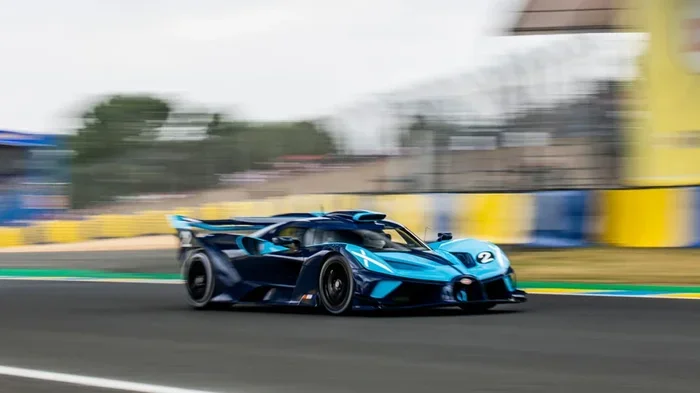
How Bugatti Balances Speed and Control on Every Track
Bugatti achieves the perfect balance between raw speed and precise control through advanced aerodynamics, hybrid powertrains, and intelligent electronic systems. The brand’s engineering team focuses on every detail, from tire grip to braking technology, ensuring each car handles like a dream at any velocity. Understanding how Bugatti balances speed and control reveals why these machines remain the gold standard in the supercar world.
When most people think of Bugatti, they picture jaw-dropping top speeds and headline-grabbing acceleration numbers. But there is so much more to these machines than just going fast. How Bugatti Balances Speed and Control is a question that defines the brand’s entire engineering philosophy. Every curve, every component, and every electronic system is designed with one goal in mind: giving the driver confidence at any velocity. The French automaker has spent decades perfecting the art of making extreme power feel manageable and thrilling at the same time.
The secret lies in a combination of cutting-edge aerodynamics, advanced hybrid technology, and intelligent electronic systems that work together seamlessly. These cars are not just about raw horsepower. They are about precision, stability, and control. In this article, we will break down exactly how Bugatti achieves this remarkable balance on every track and road. You will learn about the technology, the engineering decisions, and the practical details that make these machines truly special.
Bugatti has built a reputation that few brands can match. From the legendary Veyron to the modern Chiron and Bolide, each model pushes the boundaries of what a car can do. Yet every single one feels composed and predictable, even at speeds that would terrify most drivers. This is no accident. It is the result of thousands of hours of testing, refinement, and obsessive attention to detail.
Key Takeaways
- Advanced aerodynamics keep Bugatti cars stable at extreme speeds through active downforce management.
- Hybrid powertrains deliver massive power while maintaining smooth, predictable control.
- Active aerodynamic systems adjust in real time for optimal performance in any driving condition.
- Precision braking technology ensures safe stopping at velocities that would overwhelm most cars.
- Torque vectoring distributes power to each wheel individually for superior grip and handling.
- Carbon fiber construction keeps the chassis light yet incredibly strong for track performance.
- Electronic stability systems act as a virtual co-pilot, giving drivers confidence at the limit.
📑 Table of Contents
The Engineering Philosophy Behind Bugatti
At the heart of every Bugatti lies a simple but powerful idea: speed should never come at the cost of safety. The engineers at Bugatti approach each new model with a clear mission. They want to create high-performance vehicles that feel natural and responsive. This means balancing brute force with finesse in every single decision they make.
The philosophy starts with the chassis. A carbon fiber chassis provides the perfect mix of rigidity and light weight. This foundation allows the car to handle tight corners and high-speed straights with equal confidence. Without a solid base, all the power in the world would not matter. The chassis also absorbs road imperfections, keeping the tires in consistent contact with the surface for better tire grip.
Precision Engineering at Its Finest
Bugatti’s approach to precision engineering sets it apart from other luxury sports car makers. Each component is designed, tested, and refined multiple times before it ever reaches the production line. The team pays attention to details that most manufacturers would overlook. For example, the placement of every bolt and the angle of every seam matters for airflow and structural integrity.
This level of care extends to the drivetrain as well. The way power travels from the engine to the wheels affects handling more than most people realize. Bugatti engineers spend countless hours fine-tuning this connection. The result is a car that feels like an extension of the driver’s body. This commitment to supercar handling is what separates Bugatti from the competition.
The Pursuit of Perfection
Bugatti does not settle for good enough. The pursuit of perfection drives every decision in the design studio and on the test track. This mindset has produced some of the most advanced racing technology ever seen in a road-legal car. Technologies developed for competition often find their way into production models, giving everyday drivers access to world-class engineering.
The team constantly studies how drivers interact with the car. Feedback from professional test drivers and real-world track sessions shapes every update. This iterative process ensures that each new model is better than the last. It also means that Bugatti stays ahead of the competition in terms of both speed and control. The brand’s commitment to high-performance vehicles has earned it a loyal following among enthusiasts and collectors alike.
Aerodynamics: Shaping Speed and Stability
Aerodynamics plays a huge role in how a car handles at high speeds. Air resistance increases dramatically as velocity goes up. Without proper aerodynamic design, even the most powerful car will struggle to stay stable. Bugatti solves this problem with some of the most sophisticated aerodynamic systems in the industry.
The shape of the car is carefully sculpted to manage airflow efficiently. Every vent, wing, and diffuser serves a specific purpose. These elements work together to reduce drag while increasing the downforce that keeps the car pressed to the road. The balance between drag reduction and downforce generation is what makes Bugatti cars so remarkably stable at any speed.
Active Aerodynamic Systems
Modern Bugatti models use active aerodynamics that adjust in real time based on driving conditions. These systems can change the angle of spoilers, open or close vents, and alter the car’s ride height. The goal is simple: provide the right amount of downforce at any given moment.
For example, at lower speeds, the system might reduce downforce to minimize drag and maximize top speed. At higher speeds or in tight corners, it increases downforce to improve grip and stability. This dynamic adjustment is what separates a great sports car from an exceptional one. The system reacts faster than a human driver could ever react, making constant micro-corrections that keep the car perfectly balanced.
Interestingly, the principles behind active aerodynamics share similarities with how 2.4 GHz RC car transmitter and receiver technology manages real-time signal adjustments for responsive control. Just as an RC system processes input and adjusts output instantly, Bugatti’s aerodynamic systems react to changing conditions in milliseconds. Both systems rely on rapid signal processing to maintain optimal performance.
Downforce and Drag Management
Downforce is the invisible force that pushes a car down onto the road. More downforce means more tire contact and better grip. But too much downforce creates drag, which slows the car down. Bugatti engineers have mastered the art of finding the sweet spot between these two competing forces. This balance is critical for achieving both high top speeds and confident cornering.
The front splitter, rear wing, and underbody diffuser all contribute to the overall aerodynamic profile. Each element is calibrated with mathematical precision. Wind tunnel testing and computer simulations help refine these designs before a single car is built. The result is a vehicle that slices through the air with minimal resistance while maintaining maximum grip. This level of chassis dynamics understanding is what makes Bugatti a leader in the supercar world.
The Hybrid Powertrain That Drives Control
Bugatti has embraced hybrid technology in its latest models, and for good reason. A hybrid powertrain offers the best of both worlds: massive power from combustion and instant response from electric motors. This combination gives drivers unparalleled control over acceleration and speed. The transition between electric and combustion power is seamless, creating a driving experience that feels effortless.
The quad-turbocharged engine combined with electric motors creates a smooth delivery of torque. There are no noticeable gaps or delays when pressing the accelerator. Power builds steadily and predictably, which makes the car much easier to control during aggressive driving. This is a key reason why Bugatti speed and control go hand in hand. The powertrain is designed not just for power, but for usable, manageable power.
Quad-Turbocharged Power Meets Electric Precision
The quad-turbocharged engine is the heart of most Bugatti models. These engines produce staggering amounts of horsepower, but the real magic is in how that power is delivered. The turbochargers are designed to minimize lag and provide consistent boost across the entire RPM range. This means the car accelerates smoothly from low speeds all the way to its top speed.
Adding electric motors to the mix changes everything. Electric motors deliver maximum torque from zero RPM. This fills in any gaps that the combustion engine might have. The hybrid system also allows for regenerative braking, which recovers energy and feeds it back to the battery. This not only improves efficiency but also enhances overall vehicle dynamics. The electric motors act as a buffer, smoothing out the power delivery and making the car more controllable.
How Power Delivery Affects Handling
Raw power means nothing if it cannot be controlled. The way power reaches the wheels has a direct impact on handling. Bugatti uses an all-wheel-drive system that distributes torque intelligently to each wheel. This ensures that the car remains stable even when launching hard or navigating tight corners. The system constantly monitors traction and adjusts power delivery accordingly.
The electronic control unit monitors wheel slip, throttle position, and steering input hundreds of times per second. It adjusts power delivery instantly to maintain optimal traction. This level of responsiveness is what makes Bugatti cars feel so composed at the limit. Drivers can push harder with confidence, knowing the car will stay planted. This intelligent power delivery system is a key reason why Bugatti models perform so consistently on both the street and the track.
Braking and Tire Technology
Speed means nothing if you cannot stop safely. Bugatti places enormous emphasis on its braking system and tire technology. These components are just as important as the engine when it comes to balancing speed and control. A car that can accelerate to incredible speeds but cannot stop is a danger, not a luxury. Bugatti engineers take stopping power just as seriously as acceleration.
The braking system on a Bugatti is designed to handle extreme temperatures and repeated hard stops. Carbon-ceramic brake rotors provide consistent performance even under the most demanding conditions. Paired with high-performance brake pads and advanced multi-piston calipers, the car can shed speed quickly and confidently. The system is engineered to work in harmony with the car’s electronic stability programs for maximum effectiveness.
Carbon-Ceramic Brakes
Carbon-ceramic brakes are a hallmark of high-performance vehicles. They resist fade better than traditional steel brakes, which means they maintain stopping power even after repeated hard braking. This is critical on a track where lap after lap generates enormous heat. Steel brakes would fade and lose effectiveness, but carbon-ceramic rotors stay consistent.
Bugatti’s brake system is engineered to work seamlessly with the car’s electronic stability programs. The system predicts when braking force is needed and applies it with millisecond precision. This proactive approach gives drivers a sense of security, especially during emergency maneuvers. The brakes also work in tandem with regenerative braking in hybrid models, which helps recharge the battery while slowing the car down.
Tire Grip and Contact Patch
Tires are the only part of the car that actually touches the road. The size of the contact patch and the quality of the rubber compound determine how much grip the car has. Bugatti uses specially developed tires that are designed for its specific models. These tires are engineered to handle the unique weight, power, and speed characteristics of each Bugatti.
Wider tires provide a larger contact patch, which translates to more grip. But wider tires also add weight and rolling resistance. Bugatti engineers find the optimal balance by considering the car’s overall weight, power output, and intended use. The result is tires that deliver exceptional grip without sacrificing too much efficiency. The tire grip is further enhanced by the car’s aerodynamic downforce, which presses the tires harder into the road surface.
The tire pressure monitoring system also plays a role. Maintaining the correct pressure ensures consistent performance across different temperatures and driving conditions. Even small changes in pressure can affect how the car handles, so Bugatti pays close attention to this detail. The system alerts the driver if pressure drops, ensuring safe driving at all times.
Electronic Systems That Keep You in Command
Modern Bugatti models are packed with electronic systems that assist the driver in maintaining control. These systems work behind the scenes, making constant adjustments to keep the car stable and predictable. Understanding how these systems work helps drivers appreciate the incredible level of driver assistance available in these machines. The electronic systems are essentially the brain of the car, processing information faster than any human could.
The electronic systems in a Bugatti are constantly processing data from multiple sensors. They monitor wheel speed, steering angle, yaw rate, and acceleration. Based on this information, they make split-second decisions to adjust power delivery, braking force, and suspension settings. This network of sensors and processors acts as a second set of eyes for the driver, watching for potential problems before they develop.
Torque Vectoring Explained
Torque vectoring is one of the most important technologies for maintaining control at high speeds. This system distributes power to individual wheels based on driving conditions. If the car is understeering, torque vectoring can send more power to the outer rear wheel to help rotate the car into the turn. If the car is oversteering, it can send power to the inner wheel to correct the slide.
The system works by using sensors to detect the car’s trajectory and comparing it to the driver’s intended path. When a discrepancy is detected, the system adjusts torque delivery to individual wheels. This subtle intervention happens so quickly that the driver barely notices it. But the effect is significant, especially during aggressive cornering. Torque vectoring makes the car feel more agile and responsive, giving the driver greater confidence when pushing the limits.
The same principle of precise signal transmission and response is also seen in technologies like 2.4 GHz RC car transmitter and receiver technology, where signals are sent and processed to control direction and speed with remarkable accuracy. Bugatti applies similar principles at a much larger and more complex scale. Both systems rely on fast, accurate signal processing to maintain control and responsiveness.
Stability Control as a Virtual Co-Pilot
Bugatti’s electronic stability control system acts as a virtual co-pilot. It constantly monitors the car’s behavior and intervenes when it detects a loss of traction or stability. This system is not designed to take over driving. Instead, it provides a safety net that allows drivers to push the car closer to its limits without fear of losing control.
The stability control system can reduce engine power, apply individual brakes, and adjust torque distribution. All of this happens in fractions of a second. The driver can focus on steering and throttle input, knowing that the car will correct itself if things start to slip. This confidence is what makes Bugatti cars feel so manageable despite their enormous power output.
For drivers who want even more control, the system offers different modes. Sport mode allows more wheel slip and a more aggressive driving feel. Race mode pushes the limits even further, disabling some interventions for experienced drivers. This flexibility ensures that Bugatti cars work for both beginners and seasoned professionals. The electronic stability control system adapts to the driver’s skill level, making the car accessible and safe for everyone.
Why This Balance Matters for Every Driver
The balance between speed and control is not just important for professional drivers or track enthusiasts. It matters for anyone who gets behind the wheel of a Bugatti. These cars are designed to be driven on public roads as well as on tracks. That dual purpose demands a level of versatility that only careful engineering can achieve. A car that is only fast but not controllable is dangerous. A car that is only controllable but not fast is boring. Bugatti delivers both.
When a car can go fast and still feel safe, it opens up new possibilities for the driver. You can explore the limits of performance without fear of losing control. This is the true value of Bugatti engineering. It is not just about setting records. It is about creating a driving experience that is both exhilarating and trustworthy. Every element of the car is designed to serve this dual purpose.
The lessons learned from Bugatti’s approach to speed and control extend beyond the automotive world. The principles of aerodynamics, electronic management, and precision design apply to many fields of engineering. Studying how Bugatti achieves this balance gives us insight into the broader world of high-performance design and luxury sports car development. The technology trickles down into other industries, improving everything from aircraft design to robotics.
Every time a Bugatti hits the track, it demonstrates what is possible when speed and control work in perfect harmony. The car does not just go fast. It goes fast with purpose. Each lap is a testament to the engineers who designed it and the technology that powers it. This is why Bugatti remains the benchmark for high-performance vehicles around the world. The brand continues to set new standards for what a car can achieve.
For anyone who appreciates the art of driving, understanding how Bugatti balances speed and control adds a new layer of appreciation. The next time you see one of these machines on the road or at a track day, you will know exactly what is happening beneath the surface. It is a symphony of engineering, technology, and human skill working together in perfect balance. The result is a car that is not just fast, but truly extraordinary in every way.
Conclusion
How Bugatti Balances Speed and Control is a story of relentless innovation, precision engineering, and an unwavering commitment to excellence. From the aerodynamics that keep the car planted to the hybrid powertrain that delivers power smoothly, every element works in harmony. The braking system, tire technology, and electronic stability programs all play their part in creating a driving experience that is both thrilling and safe.
Bugatti has proven time and again that speed and control are not opposites. They are partners. When balanced correctly, they create something truly extraordinary. The next generation of Bugatti models will undoubtedly continue this tradition, pushing the boundaries of what is possible even further. For car enthusiasts and engineers alike, the journey of Bugatti speed and control is far from over. It is an exciting road ahead, and the destination promises to be even more impressive than what came before.
The principles that Bugatti uses to achieve this balance are accessible to any car owner. Regular maintenance, quality tires, proper alignment, and attention to aerodynamic components all contribute to better speed and control in any vehicle. By applying even a fraction of Bugatti’s philosophy to your own car, you can enjoy a safer, more confident driving experience every time you hit the road.
Understanding the technology behind these incredible machines gives us a deeper appreciation for the art of automotive engineering. Bugatti has shown us that the future of high-performance driving lies in the seamless integration of power and control. As technology continues to evolve, we can only imagine what the next chapter holds. One thing is certain: Bugatti will continue to lead the way in how speed and control are balanced on every track.
For more insights into how electronic control systems work in vehicles, check out our detailed guide on 2.4 GHz RC car transmitter and receiver technology, which explores the fundamentals of signal transmission that underpin modern car control systems.
Frequently Asked Questions
What makes Bugatti cars so stable at high speeds?
Bugatti achieves high-speed stability through advanced aerodynamics, a rigid carbon fiber chassis, and active downforce systems. These elements work together to keep the car planted on the road, even at extreme velocities. The combination of aerodynamic design and electronic stability control ensures that the car remains predictable and safe at any speed.
How does Bugatti’s hybrid powertrain improve control?
The hybrid powertrain delivers instant torque from electric motors, which fills in gaps from the combustion engine. This creates smooth, predictable power delivery that is much easier to control. The electric motors also support regenerative braking and help manage traction, giving the driver greater confidence during aggressive driving.
Why is torque vectoring important for Bugatti cars?
Torque vectoring distributes power to individual wheels based on driving conditions. This helps the car rotate smoothly through corners and maintain stability during aggressive maneuvers. It makes the car feel more agile and responsive, which is essential for a vehicle with this much power.
What role do tires play in Bugatti’s speed and control balance?
Tires are the only connection between the car and the road. Bugatti uses specially developed tires with optimal contact patch size and rubber compounds for maximum grip. Proper tire pressure and quality tires ensure consistent handling, safe braking, and confident cornering at any speed.
Can regular drivers benefit from Bugatti’s electronic stability systems?
Yes, absolutely. Bugatti’s electronic stability control acts as a safety net, intervening when the car detects a loss of traction. The system offers different driving modes that adapt to the driver’s skill level. This means even less experienced drivers can enjoy the incredible performance of a Bugatti safely and confidently.
How does aerodynamics affect a car’s top speed and handling?
Aerodynamics reduces drag, which allows the car to go faster with less effort. At the same time, aerodynamic elements like spoilers and diffusers generate downforce, which improves grip and stability. Bugatti’s active aerodynamic systems adjust in real time to optimize both top speed and handling for any driving situation.