Car Crash Test Ratings In India Everything You Need
Car crash test ratings in India have become a hot topic among buyers who want to know how safe their vehicles really are. Global NCAP and Bharat NCAP test cars using strict methods like frontal crashes and side impacts to give them safety scores. This guide covers everything from how tests work to which cars earned top marks, so you can make a smart, safe choice.
Car crash test ratings in India have changed the way people buy vehicles. A few years ago, most buyers only cared about mileage, looks, and price. Today, safety sits right at the top of the priority list. This shift did not happen by accident. It happened because organizations started testing cars in controlled crash environments and sharing the results with the public.
When you hear the phrase car crash test ratings in India, it usually refers to two main bodies. One is Global NCAP, which is an independent international organization. The other is Bharat NCAP, which is India’s own government-backed safety rating program. Both test vehicles in similar ways but serve different audiences and purposes.
Understanding these ratings is not just for car enthusiasts. It is for every family that wants to protect their loved ones on Indian roads. India has some of the busiest and most unpredictable traffic in the world. Having a safe car can make a real difference when it matters most.
In this article, we will walk you through everything you need to know about car crash test ratings in India. We will explain how the tests work, which cars scored well, what safety features to look for, and how to choose the right vehicle for your family.
Key Takeaways
- Global NCAP drives safety standards: Independent crash testing in India has pushed automakers to improve vehicle safety significantly.
- Bharat NCAP is the new official program: India launched its own rating system to set local safety benchmarks for all cars sold in the market.
- Ratings directly impact buying decisions: More Indian buyers now check safety scores before purchasing a new vehicle.
- Top-rated cars offer superior protection: Vehicles with five-star ratings perform much better in real-world crash scenarios.
- Safety features matter more than price: Airbags, ABS, and electronic stability control are essential, not luxury add-ons.
- Used car buyers should check ratings too: Older models may lack modern safety equipment that newer cars provide.
- India’s safety landscape is improving fast: Stricter norms and consumer awareness are raising the bar for every automaker.
📑 Table of Contents
What Are Car Crash Test Ratings In India?
Car crash test ratings in India give consumers a clear picture of how well a vehicle protects its occupants during a collision. These ratings come from controlled tests conducted by safety organizations. Each test simulates real-world crash scenarios and measures how much damage the car and its passengers would absorb.
The rating system is simple. Cars receive scores based on how well they protect adults, children, and even pedestrians. The final result is usually shown as a star rating. A five-star rating means the car offers excellent protection. A zero-star rating means the vehicle provides very little safety in a crash.
Why Do Crash Test Ratings Matter?
Crash test ratings matter because they give you honest, unbiased information. Car manufacturers can claim their vehicles are safe. But crash test results prove it. When you check car crash test ratings in India before buying, you are making a data-driven decision instead of relying on marketing promises.
Here is why these ratings are so important:
- Real-world crash data: Tests simulate actual accident conditions that happen on Indian roads every day.
- Consumer awareness: Ratings help buyers compare vehicles side by side on safety alone.
- Manufacturer accountability: Public test results push automakers to build safer cars.
- Family protection: A higher rating means better chances of survival and fewer injuries in a crash.
- Insurance and resale value: Safer cars sometimes get better insurance rates and hold their value longer.
When you look at car crash test ratings in India, you are not just reading numbers. You are reading a story about what would happen to you and your family in a real accident. That is why these ratings have become one of the most looked-up facts before any car purchase today.
How Do Crash Tests Work In India?
Understanding how car crash test ratings in India are determined helps you trust the results. The testing process is detailed, scientific, and carefully controlled. No guesswork is involved.
The Testing Process Explained
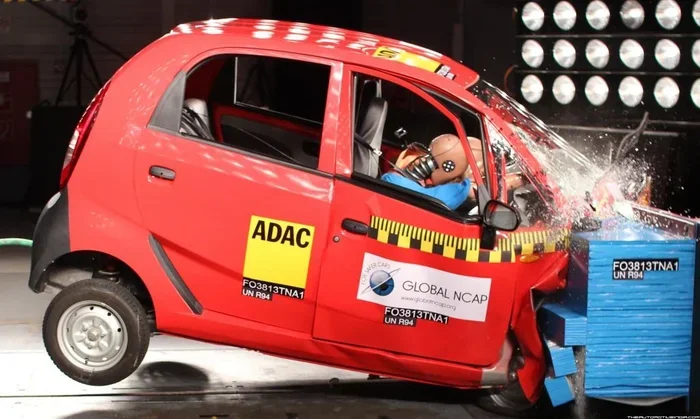
Crash tests typically happen in specialized facilities. A car is mounted on a sled or driven directly into a rigid or deformable barrier. Sensors are placed throughout the vehicle to measure what happens during impact. Crash test dummies, which mimic the human body, are placed in the driver and passenger seats.
These dummies have sensors inside them that record data about force, acceleration, and movement. After the crash, experts analyze this data to determine how likely occupants are to suffer injuries. The entire test takes only a few seconds but generates thousands of data points.
Types Of Crash Tests Conducted
Several types of crash tests are used to evaluate car crash test ratings in India. Each test focuses on a different kind of collision scenario.
- Frontal Offset Test: The front corner of the car hits a barrier at a specific speed. This is the most common and most important test.
- Side Impact Test: A moving barrier strikes the side of the car to simulate a T-bone collision at an intersection.
- Pedestrian Protection Test: This test checks how much injury a car might cause to a pedestrian during a collision.
- Child Occupant Protection: Tests evaluate how well the car protects children using child restraint systems.
- Roof Strength Test: Measures how well the roof holds up in a rollover scenario.
Each test category contributes to the overall car crash test ratings in India. A car that performs well in frontal crashes but poorly in side impacts will not get a perfect score. The rating reflects the vehicle’s overall safety profile across all scenarios.
What Speed And Conditions Are Used?
Most frontal offset tests are conducted at around 64 kilometers per hour. This speed represents a typical urban collision where two vehicles meet head-on or a car hits a solid object. Side impact tests are usually done at lower speeds but with significant force concentrated on a small area of the vehicle.
The conditions are designed to replicate the most common crash types seen on Indian roads. This includes urban driving, highway speeds, and intersection collisions. By using realistic conditions, the car crash test ratings in India give you a reliable picture of real-world safety.
Top Rated Cars In India Safety Tests
Let us look at some of the vehicles that have performed well in car crash test ratings in India. These cars have earned high marks from testing organizations and offer strong protection for their occupants.
Cars That Scored Five Stars
Several popular cars sold in India have earned five-star ratings from Global NCAP and Bharat NCAP. These vehicles stand out for their excellent build quality, advanced safety equipment, and strong structural design.
Some notable five-star performers include models from brands like Mahindra, Tata, and Toyota. These cars have demonstrated exceptional performance in both frontal offset and side impact tests. They come equipped with multiple airbags, electronic stability control, and reinforced passenger cells.
When you are shopping for a new car, checking car crash test ratings in India for your shortlisted models is a smart move. A five-star rating means the manufacturer has invested heavily in safety engineering. It also means the car is likely to protect you better in a serious collision.
Cars That Scored Zero Or Low Stars
On the other side of the spectrum, some popular budget cars in India have received zero-star or low-star ratings. These results often shock buyers because the cars may look and feel fine on the outside. But the internal structure and safety equipment tell a different story.
Low-rated vehicles often lack essential features like driver airbags, ABS, and strong cabin reinforcement. In a crash, these cars may crumble or allow too much intrusion into the passenger space. This is why checking car crash test ratings in India before buying a budget car is absolutely critical.
Comparison Table: Top Safety Performers
| Car Model | Organization | Adult Rating | Child Rating | Overall Stars |
|---|---|---|---|---|
| Mahindra XUV700 | Global NCAP | Good | Good | 5 Stars |
| Tata Safari | Global NCAP | Good | Good | 5 Stars |
| Toyota Urban Cruiser | Global NCAP | Good | Good | 5 Stars |
| Maruti Suzuki Alto | Global NCAP | Poor | Poor | 0 Stars |
| Renault Kwid | Global NCAP | Poor | Poor | 0 Stars |
The table above shows a clear gap between safety-equipped cars and budget models that cut corners on protection. When comparing car crash test ratings in India, the difference between a five-star and a zero-star car can be life-changing.
What Safety Features Matter Most?
Not all safety features are created equal. Some have a massive impact on crash test results. Others provide comfort but do little in a real collision. Understanding which features actually matter helps you focus on what counts when checking car crash test ratings in India.
Essential Safety Equipment
These are the features that consistently improve crash test scores and real-world safety outcomes:
- Multiple Airbags: Front, side, and curtain airbags protect occupants from hitting hard surfaces inside the car during a collision.
- ABS (Anti-lock Braking System): Prevents wheels from locking up during emergency braking, giving the driver control.
- Electronic Stability Control: Helps the car maintain traction and direction during sudden swerves or slippery conditions.
- High-Strength Steel Structure: A strong passenger cell keeps the cabin intact during impact while absorbing energy in the front and rear.
- Seatbelt Pre-tensioners: Tighten the seatbelt instantly during a crash to keep occupants securely in place.
- ISOFIX Child Anchors: Make it easy and safe to install child car seats without any guesswork.
Features That Do Not Impact Crash Ratings Much
Some features get a lot of attention but do not significantly change crash test results. These include leather seats, sunroofs, larger screens, and fancy audio systems. While nice to have, they do not protect you in a collision. When evaluating car crash test ratings in India, always prioritize structural safety and active safety systems over comfort features.
Quick Tips For Evaluating Safety Features
Here are some quick tips to keep in mind when checking safety features on any car:
- Always confirm the number of airbags. At minimum, look for driver and passenger airbags.
- Ask the dealer about electronic stability control. Many budget cars still do not offer it.
- Check if the car has ISOFIX anchors if you have a young child.
- Look for crumple zones in the front and rear. These absorb crash energy before it reaches the cabin.
- Do not trust marketing terms like “smart safety” without checking actual crash test results.
These simple checks can save your life. When you combine good safety features with strong car crash test ratings in India, you get a vehicle that truly protects your family.
How To Choose A Safe Car In India?
Choosing a safe car in India can feel overwhelming because there are so many options. But the process becomes much simpler when you know what to look for and where to find the information.
Step-by-Step Guide To Buying A Safe Car
Follow these steps to make a confident, safety-first car purchase:
- Research crash test ratings first. Before visiting a dealership, look up the car crash test ratings in India for the models you are considering. Global NCAP and Bharat NCAP websites have the latest results.
- Set a minimum safety standard. Decide that you will only consider cars with at least a four-star rating or a five-star rating. This cuts down your options quickly.
- Check the standard safety equipment. Some cars only offer airbags and ABS on higher variants. Make sure the variant you are buying has the essential safety gear.
- Test drive the car. During the test drive, check how the car handles emergency braking and cornering. Does it feel stable and responsive?
- Read expert reviews. Automotive journalists often discuss safety features and crash performance in their detailed reviews.
- Compare with competitors. Do not buy the first car you see. Compare its safety rating with other cars in the same price range.
Common Mistakes Buyers Make
Here are some mistakes that many Indian car buyers make when it comes to safety:
- Ignoring safety for price: Saving a few thousand rupees on a less safe car is not worth the risk.
- Trusting brand reputation alone: A popular brand does not always mean a safe car. Always check the actual crash test results.
- Skipping the variant check: The safest variant of a car may cost a bit more but offers significantly better protection.
- Buying used without checking: Older cars may not meet current safety standards. Always verify the crash rating for the model year you are considering.
- Assuming more features equal more safety: A car with a big touchscreen is not necessarily safer than a simpler car with better crash test results.
Avoiding these mistakes puts you on the right path to choosing a vehicle that will keep your family safe. Always let car crash test ratings in India guide your decision, not just advertisements or showroom displays.
The Future Of Car Safety In India
The future of car crash test ratings in India looks promising. Stricter regulations, better technology, and growing consumer demand for safety are all pushing the automotive industry in the right direction.
New Government Safety Norms
India has been tightening its vehicle safety standards in recent years. The government has mandated certain safety features as standard equipment on new cars. These include dual front airbags and ABS for most passenger vehicles. The push toward mandatory Bharat NCAP testing means that every car sold in India will soon have a verified safety rating.
These regulations are a game-changer. They force even budget car manufacturers to invest in safety engineering. As a result, the overall quality of cars on Indian roads will improve significantly over the next few years.
Advanced Safety Technology Coming To India
Several advanced safety technologies that were once only available in luxury cars are now trickling down to affordable vehicles in India. These include:
- Autonomous Emergency Braking: The car can detect an imminent collision and apply the brakes automatically.
- Blind Spot Monitoring: Alerts the driver about vehicles in their blind spots during lane changes.
- Lane Departure Warning: Warns the driver if the car drifts out of its lane without a turn signal.
- Rear Cross Traffic Alert: Helps drivers see approaching traffic when reversing out of parking spots.
While these features do not directly change car crash test ratings in India yet, they prevent accidents from happening in the first place. Active safety is just as important as passive safety when it comes to protecting lives on the road.
What This Means For Indian Buyers
For Indian car buyers, the message is clear and encouraging. Cars are getting safer every year. Crash testing is becoming more transparent and accessible. And the information you need to make a safe choice is available at your fingertips.
When you are ready to buy your next car, make car crash test ratings in India a non-negotiable part of your research. Your family deserves the best protection possible, and these ratings tell you exactly which cars deliver on that promise.
Conclusion
Car crash test ratings in India have transformed the automotive landscape. They have given buyers the power to make informed decisions based on real safety data rather than marketing claims. From understanding how tests work to knowing which cars scored best, this guide has covered everything you need to know.
Always remember that a safe car is not just about a high price tag. It is about the right safety features, strong build quality, and proven crash test performance. Whether you are buying a new car or a used one, checking the car crash test ratings in India should be your first step.
The roads in India can be challenging and unpredictable. The best thing you can do for yourself and your loved ones is to choose a vehicle that has been tested and proven to protect in a crash. Let safety ratings guide your next purchase, and drive with confidence knowing you have made the smartest choice possible.
Frequently Asked Questions
What is Global NCAP and how does it test cars in India?
Global NCAP is an independent organization that conducts crash tests on cars sold around the world, including India. They perform frontal offset and side impact tests at controlled speeds and measure how well the car protects its occupants using crash test dummies and sensors. The results are shared publicly as star ratings.
Are Bharat NCAP and Global NCAP the same thing?
No, they are not the same. Bharat NCAP is India’s government-backed safety rating program, while Global NCAP is an independent international body. However, both use similar testing methods and evaluate cars based on how well they protect adults, children, and pedestrians during collisions.
Do all cars sold in India have crash test ratings?
Not yet. Many cars, especially older models and budget vehicles, have not been tested. However, with the introduction of Bharat NCAP and stricter regulations, more cars will be tested and rated in the coming years. Always check for available ratings before buying.
Can a zero-star rated car still be legal to sell in India?
Yes, a zero-star rated car can still be sold in India because crash testing is currently voluntary for many manufacturers. However, this is changing as the government pushes for mandatory safety testing and minimum safety standards for all vehicles sold in the country.
How often should I check updated car crash test ratings in India?
You should check ratings every time you are considering a new purchase. Testing results can change as new models are introduced and older models get updated with better safety equipment. Always look for the most recent test results for the specific model and variant you are interested in.
Do safety features like ABS and airbags really make a difference in crashes?
Yes, absolutely. ABS prevents your wheels from locking up during emergency braking, giving you steering control. Airbags cushion the impact and prevent occupants from hitting hard surfaces inside the car. Together with a strong vehicle structure, these features significantly reduce the risk of serious injury in a crash.