Can You Program a Car to a Garage Door Opener Remote
Yes, you can program a car to a garage door opener remote in most modern vehicles. Many cars come with built-in systems like HomeLink that let you control your garage door directly from the car console. This guide walks you through the entire process, from checking compatibility to fixing common problems.
Have you ever pulled into your driveway and wished you could open the garage door without digging for the remote? The good news is that programming a car to a garage door opener remote is something most vehicle owners can do in under 30 minutes. You do not need to be a tech expert either. Modern cars come equipped with smart systems that talk directly to your garage door receiver. In this guide, we will walk you through every step. You will learn how the system works, what you need to check first, and how to fix the most common issues. Whether you drive a sedan, SUV, or truck, this guide has you covered.
The process is simpler than most people think. Car manufacturers have made it easy because they know drivers want convenience. A car garage door opener remote programming setup means you never have to fumble for a separate remote again. You just press a button on your console or mirror, and the door goes up or down. It feels like magic the first time it works. But there are a few things you should know before you start. Not every car has the same system, and not every garage door opener uses the same frequency. That is exactly why we wrote this guide. By the end, you will feel confident doing it yourself.
Key Takeaways
- Universal compatibility: Most cars made after 2000 support garage door remote programming through built-in systems.
- HomeLink is the standard: Ford, Toyota, Honda, and many other brands use HomeLink or similar integrated systems.
- Three programming methods exist: Standard programming, smart button setup, and universal remote pairing.
- Common issues are fixable: Signal interference, dead batteries, and frequency mismatches cause most problems.
- Safety first: Always verify the garage door responds correctly before relying on the car remote.
📑 Table of Contents
- What Is a Garage Door Opener Remote and How Does Car Integration Work?
- Can You Program a Car to a Garage Door Opener Remote? Step-by-Step Guide
- Common Problems When Programming a Car Garage Door Opener
- Which Cars Support Garage Door Opener Programming?
- Expert Tips for a Smooth Programming Experience
- Safety Considerations When Using a Car Garage Door Opener
- When to Call a Professional
- Conclusion
What Is a Garage Door Opener Remote and How Does Car Integration Work?
A garage door opener remote sends a wireless signal to a receiver mounted on your garage door motor. The receiver picks up that signal and tells the motor to start. Most residential garage door openers use either a fixed code or a rolling code system. A fixed code sends the same signal every time. A rolling code changes the signal each time you press the button, which makes it much more secure.
Cars integrate with garage door openers using a built-in transmitter. This transmitter is often called a HomeLink system in many vehicles. Ford, Chevrolet, Toyota, and other brands include this feature in their higher trim levels. The car transmitter sends a signal that your garage door receiver recognizes. Think of it like the car is borrowing your remote’s identity. Once paired, the car and the garage door opener share a private connection.
How HomeLink and Similar Systems Work
HomeLink is the most common car integrated garage opener system you will find. It was first introduced in the 1990s and has become a standard feature in millions of vehicles. Here is how it works in simple terms:
- The car has a small transmitter hidden in the console or mirror.
- You program the transmitter to match your garage door opener’s frequency.
- Once paired, pressing the car button sends the same signal as your handheld remote.
- The garage door motor receives the signal and responds accordingly.
Some newer vehicles use a smart button system instead of HomeLink. These work on a similar principle but may use Wi-Fi or Bluetooth to connect. The universal remote for car garage door is another option if your car does not have a built-in system. You can plug a small device into the car’s diagnostic port or power socket, and it acts as a bridge between the car and the garage door opener.
It is worth noting that your 12v power socket car can also play a role here. Some universal garage door transmitters plug directly into the car’s 12-volt socket for power. This is a great option if your car does not have a built-in system. You can learn more about 12V power sockets in cars and how they support aftermarket accessories.
Can You Program a Car to a Garage Door Opener Remote? Step-by-Step Guide
The short answer is yes. Most cars allow you to program a garage door opener remote directly from the vehicle. The exact steps vary by car brand and model, but the general process is very similar. Below, we break it down into simple steps you can follow right now.
Step 1: Check Your Car for a Garage Door Control System
Before you start, you need to find the garage door control in your car. Look in these places:
- The driver’s side console near the steering column
- The overhead console on the ceiling of the car
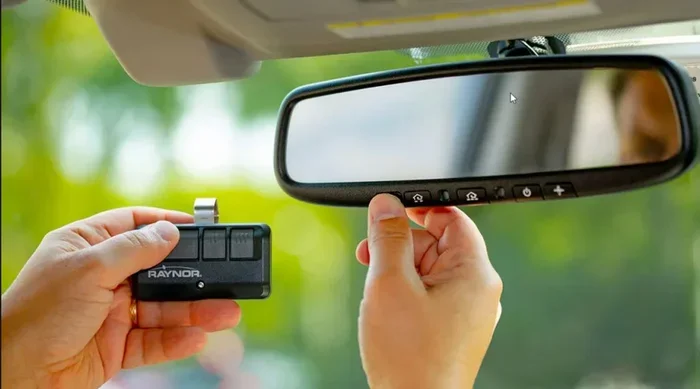
- The driver’s side mirror (some cars hide the transmitter there)
- The center console near the climate controls
You are looking for three small buttons grouped together. They often have a symbol that looks like a garage door. If you find these buttons, your car has a built-in programming system. If you do not see them, your car may need a universal remote adapter instead.
Step 2: Locate the Garage Door Opener Receiver
Next, you need to access the garage door opener motor. This is the box mounted on your garage ceiling. You will need a ladder to reach it safely. On the receiver unit, look for a “Learn” button or a “Smart” button. It is usually colored — often red, orange, green, or purple. Press this button once. A small light will start blinking. This tells the receiver it is ready to pair with a new remote.
If your garage door opener does not have a learn button, check the manual. Some older models use a different pairing method. You may also find the learn button hidden under a light cover or behind a small panel on the motor unit.
Step 3: Program the Car to the Garage Door Opener
Now comes the actual programming. Follow these steps carefully:
- Press and hold the outer two buttons on your car’s garage door control panel simultaneously.
- Keep holding them until the indicator light on the panel starts blinking (this usually takes about 20 seconds).
- Release the buttons.
- Go back to your garage door opener motor and press the “Learn” button once.
- Quickly return to your car and press and hold the programmed button on the console.
- Hold it for about two seconds, then release.
- The garage door should move. If it does, the programming worked.
If the door does not move, wait a few seconds and try again. Some garage door openers need a longer pause between pressing the learn button and holding the car button.
Step 4: Test the System
Once programming is complete, test the system at least three times. Press the car button to open the door, then press it again to close it. Make sure the door responds smoothly every time. Also test from different spots in your driveway to ensure the signal reaches the receiver reliably.
You should also check the 12v to 230v car inverter if you are using any additional power accessories in your vehicle. Sometimes electrical interference from inverters or other devices can disrupt the garage door signal. For more on this, you can read our guide on 12V to 230V car inverters and how they affect your car’s electrical system.
Common Problems When Programming a Car Garage Door Opener
Even though the process is straightforward, things do not always go smoothly the first time. Here are the most common problems people run into and how to fix them.
Signal Interference
Signal interference is the number one reason programming fails. Other garage door openers, security systems, and even neighboring remotes can operate on the same frequency. If you live in a neighborhood with many homes close together, this is especially common. To reduce interference:
- Move your car closer to the garage door opener motor during programming
- Turn off other electronic devices nearby
- Try programming during off-peak hours when fewer neighbors are using their remotes
Dead or Weak Batteries
A weak battery in your car’s garage door control module can cause pairing failures. Similarly, a dead battery in your handheld remote can make it seem like the car programming did not work. Always replace batteries in both the car system and the handheld remote before you start programming.
Frequency Mismatch
Garage door openers operate on specific frequencies, usually 300 MHz or 310 MHz in the United States. Some car transmitters only work with certain frequencies. If your car transmitter and garage door opener are on different frequencies, they will not communicate. Check both devices for their frequency specifications before attempting to pair them.
Rolling Code vs Fixed Code Confusion
If your garage door opener uses a rolling code system (most modern ones do), you must follow the exact sequence of pressing the learn button and the car button. Fixed code systems are more forgiving. If you are unsure which type you have, check the garage door opener manual or look up the model number online.
For more on car electrical components that can affect your garage door signal, check out our article on 12V car socket to 3 pin adapters and how they interact with your vehicle’s electrical system.
Which Cars Support Garage Door Opener Programming?
Most modern vehicles support some form of garage door remote programming. However, the system and quality vary by brand and model. Here is a quick overview of what to expect from popular car manufacturers:
| Brand | System Name | Typical Location | Ease of Programming |
|---|---|---|---|
| Ford | HomeLink | Driver console or mirror | Very Easy |
| Toyota | HomeLink | Driver console | Very Easy |
| Honda | HomeLink | Driver console | Very Easy |
| Chevrolet | HomeLink | Driver console or mirror | Easy |
| BMW | Integrated System | Center console | Moderate |
| Jeep | HomeLink | Driver console | Very Easy |
| RAM | HomeLink | Driver console | Very Easy |
If your car does not have a built-in system, you can still add one. Aftermarket universal garage door transmitters are widely available and affordable. These plug into your car’s existing systems and give you the same convenience. Some models even work with your car’s existing power outlets, like the ones you would find in a 12v car socket to 3 pin conversion setup. For more details, visit our guide on 12V car socket to 3 pin adapters.
Expert Tips for a Smooth Programming Experience
Here are some expert-backed tips that will save you time and frustration:
- Read your car manual first. Every car model has slight differences in the programming process. The manual will have the exact steps for your specific vehicle.
- Have your garage door opener manual handy. You need to know where the learn button is and what color it is.
- Work in a well-lit area. You will be climbing a ladder and looking at small buttons on the ceiling motor unit.
- Have a friend help. One person can press the car button while the other watches the garage door response. This makes troubleshooting much faster.
- Be patient with rolling code systems. These require precise timing between pressing the learn button and the car button.
- Reset if needed. If programming fails, reset both the car system and the garage door opener, then try again from scratch.
Another important tip: keep your car’s electrical system in good shape. A healthy 12v car battery and clean power connections ensure your garage door transmitter works reliably. If you are planning any electrical upgrades, make sure they do not interfere with your garage door signal.
Safety Considerations When Using a Car Garage Door Opener
Convenience is great, but safety must come first. Here are important safety points to keep in mind:
- Always verify the door is clear before pressing the car button. A car remote is just as powerful as a handheld one, so the door will close on anything in its path.
- Use the safety reverse feature. Most modern garage door openers have an auto-reverse sensor. Test this regularly to make sure it works.
- Do not program multiple cars to the same garage door without a plan. If multiple family members have programmed their cars, everyone needs to know the door will respond to any of their vehicles.
- Keep your garage door opener manual accessible. If you ever need to reset the system or change the frequency, you will need this information.
- Update your rolling code periodically. Some systems allow you to change the security code. Doing this adds an extra layer of protection.
When to Call a Professional
Most car-to-garage-door programming is a DIY task. But there are times when calling a professional makes sense:
- If your garage door opener is very old and does not have a learn button
- If the car system and garage door opener use completely incompatible frequencies
- If you have tried multiple times and the system will not pair
- If you are uncomfortable working on a ladder or accessing the garage door motor
A garage door technician can quickly diagnose the issue and get your car connected. Many offer same-day service for programming and setup. The cost is usually reasonable, especially compared to the convenience you gain.
Conclusion
Programming a car to a garage door opener remote is one of the most satisfying DIY upgrades you can make to your vehicle. It takes less than half an hour, requires no special tools, and delivers daily convenience for years to come. Whether your car has a built-in HomeLink system or you use a universal transmitter, the process is well within reach for any car owner.
Start by checking your car for the garage door control buttons. Then follow the step-by-step programming guide we shared above. If you hit a snag, refer to the troubleshooting section for help with the most common issues. Remember to test the system thoroughly and keep safety as your top priority.
The feeling of pressing your car button and hearing the garage door open is something you will appreciate every single day. Once you set it up, you will wonder how you ever lived without it. So grab your ladder, find that learn button, and give it a try. You have got this.
Frequently Asked Questions
Can any car be programmed to a garage door opener remote?
Most cars made after 2000 have a built-in garage door control system, usually HomeLink. If your car does not have one, you can use a universal aftermarket transmitter that plugs into the car’s power socket or diagnostic port. Check your car manual to confirm what your vehicle supports.
How long does it take to program a car to a garage door opener?
The entire process usually takes about 15 to 30 minutes. This includes finding the control buttons in your car, accessing the garage door opener motor, and completing the pairing sequence. If you run into signal interference or frequency issues, it may take a little longer.
Why won’t my car connect to my garage door opener?
The most common reasons are signal interference, dead batteries, frequency mismatch, or incorrect programming sequence. Try moving closer to the garage door motor, replacing batteries in both the car system and the handheld remote, and following the exact steps for your specific garage door opener model.
Is it safe to use the car garage door opener while driving?
Yes, it is safe. The car transmitter sends the same signal as a handheld remote. However, you should always make sure the garage door area is clear before activating it. Most modern garage door openers also have safety reverse sensors that stop the door if an obstacle is detected.
Can I program multiple garage doors to my car?
Yes, most car garage door control systems have three buttons, and each can be programmed to a different garage door. This is very useful if you have a main garage, a side gate, or a secondary garage. Simply repeat the programming process for each button.
Do I need special equipment to program my car to a garage door opener?
No special equipment is needed if your car has a built-in system. You just need a ladder to access the garage door motor and the learn button on the opener. If your car lacks a built-in system, a universal garage door transmitter is an affordable option that plugs right into your car.