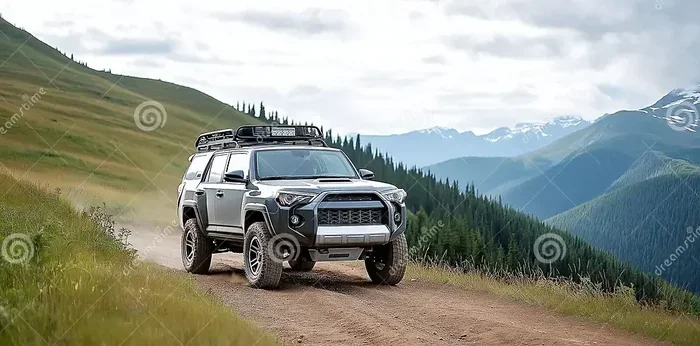
Do 4Runners Roll Over Easily on Rough Mountain Roads
The Toyota 4Runner has a solid reputation for off-road toughness, but many drivers wonder about rollover risks on steep mountain roads. While the 4Runner’s high center of gravity does create some rollover potential, modern safety features and proper driving techniques make rollovers rare in everyday situations. Understanding the real risks and how to manage them keeps you safe on any trail.
The Toyota 4Runner has been a favorite among off-road enthusiasts and daily drivers alike for decades. Its rugged build, impressive ground clearance, and legendary reliability make it a go-to choice for anyone who loves exploring rough terrain. But there is one question that keeps popping up in forums and tailgate conversations: do 4Runners roll over?
The short answer is yes, but the full picture is more nuanced than most people think. A 4Runner can roll over under specific conditions, but it does not happen easily or often in normal driving situations. Understanding what actually causes rollovers helps you stay safe whether you are cruising down a forest trail or navigating a steep mountain pass.
In this article, we break down everything you need to know about 4Runner rollover risk. We look at the vehicle’s design, the role of the 4WD system, real-world scenarios, and practical tips to keep you and your passengers safe. Whether you own a 4Runner or are thinking about buying one, this guide covers the facts you need.
Let us get into it. No fluff, no scare tactics, just honest information about one of Toyota’s most beloved trucks.
Key Takeaways
- 4Runner Rollover Risk Is Low in Normal Conditions: The 4Runner’s design and safety systems make rollovers uncommon during regular driving and moderate off-roading.
- High Center of Gravity Matters on Mountain Roads: Sharp turns and steep inclines on rough terrain increase rollover potential, especially at speed.
- 4WD Systems Improve Stability: Knowing how to engage and use your 4WD setup, whether you check your 4WD status or use 4WD-2 mode, helps maintain control on tricky trails.
- Modern Safety Features Reduce Rollover Danger: Vehicle Stability Control, traction control, and roll-sensing technology work together to keep the 4Runner planted.
- Driving Behavior Is the Biggest Factor: Speed, tire condition, and load distribution play a bigger role in rollover risk than the vehicle itself.
- Rollover Crashes Are Rare but Serious: When rollovers do happen, they tend to be severe, so prevention is critical.
📑 Table of Contents
Understanding the 4Runner’s Design and Stability
Why the 4Runner Has a High Center of Gravity
Every vehicle has a center of gravity, and the 4Runner sits higher than most sedans and crossovers. This elevated ride height gives the truck excellent ground clearance for tackling rocks, logs, and uneven mountain trails. But it also means the vehicle carries more weight higher up, which affects stability during sharp turns or sudden maneuvers.
Think of it like a tall glass standing on a table. If you push it gently, it stays put. But if you shove it sideways at speed, it tips over easily. The same principle applies to any tall vehicle, including the 4Runner.
The good news is that Toyota engineers the 4Runner with this in mind. The frame is wide, the suspension is tuned for stability, and the weight distribution is carefully balanced. These design choices reduce rollover risk significantly compared to many other body-on-frame SUVs in the same class.
Body-on-Frame Construction: Strength and Stability
The 4Runner uses a body-on-frame design, which means the body sits on a separate, sturdy steel frame. This construction is the same type used in most traditional trucks and off-road SUVs. It provides exceptional structural rigidity and durability.
A rigid frame helps the 4Runner handle rough terrain without flexing or bending. This strength translates to better handling on uneven surfaces, which indirectly reduces the chance of a rollover. The frame also absorbs impact energy during a collision, adding another layer of safety.
However, body-on-frame vehicles are generally heavier than unibody cars. The 4Runner weighs around 4,300 to 4,700 pounds depending on the trim and configuration. Heavier vehicles tend to be more stable in straight-line driving but can feel less nimble in tight corners. This trade-off is important to keep in mind when driving on narrow mountain switchbacks.
Real Rollover Risk Factors on Mountain Roads
What Actually Causes a 4Runner to Roll Over?
Rollovers do not happen randomly. They are almost always caused by a combination of factors working together. Understanding these factors helps you avoid dangerous situations before they develop.
The most common causes of 4Runner rollovers include:
- Excessive speed in sharp turns: Taking a curve too fast shifts the vehicle’s weight to the outside wheels. If the speed is high enough, the tires lose grip and the vehicle starts to tip.
- Uneven terrain: Driving on a steep slope with one wheel on soft ground and the other on solid rock creates an imbalance. The tire with less traction lifts, and the vehicle can roll.
- Overloading the roof or bed: Adding heavy cargo on top raises the center of gravity even higher. A 4Runner loaded with gear on the roof rack is more prone to tipping than one with weight distributed low and inside the cabin.
- Worn tires or improper tire pressure: Tires that are bald or underinflated cannot grip the road properly. On a wet or loose mountain surface, this dramatically increases rollover risk.
- Driver error or distraction: Overcorrecting steering, panicking on a steep incline, or misjudging a turn can all lead to a rollover situation.
Mountain Road Scenarios That Increase Risk
Mountain roads present unique challenges that can make any vehicle, including the 4Runner, more vulnerable to rollover. Here are a few scenarios to watch for.
First, loose gravel roads are a major concern. When tires lose traction on gravel, the vehicle can slide sideways. If the slide happens at an angle on a slope, the rollover risk spikes quickly. Second, steep off-camber trails, where the road tilts away from you, put the 4Runner’s weight on the wrong side. Third, sudden elevation changes, like dropping off a ledge or hitting a sharp ditch, can catch even experienced drivers off guard.
The 4Runner handles most of these situations well when driven carefully. But no vehicle is immune to physics. Respect the terrain and drive at a pace that matches conditions.
How 4WD Systems Affect Rollover Risk
The 4Runner comes with a capable four-wheel-drive system that significantly improves traction on rough surfaces. When all four wheels are pulling, the vehicle maintains better grip and stability. This reduces the chance of sliding or losing control, which are precursors to rollovers.
Knowing how your 4WD system works matters. If you are unsure whether your truck is currently in 4WD, you should learn how to check your 4WD status before hitting the trail. Driving in the wrong mode can affect handling and stability.
For less demanding terrain, the 4Runner offers a 4WD-2 mode that sends power primarily to the rear wheels. You can learn more about 4WD-2 mode and when to use it. Using the correct 4WD setting for the terrain helps maintain optimal traction and reduces unnecessary strain on the drivetrain.
Safety Features That Help Prevent Rollovers
Vehicle Stability Control and Traction Control
Modern 4Runners come equipped with Vehicle Stability Control (VSC) and Traction Control. These electronic systems work behind the scenes to keep the vehicle stable during challenging driving conditions.
VSC monitors wheel speed, steering angle, and yaw rate. If it detects that the vehicle is starting to slide or rotate unexpectedly, it automatically applies the brakes to individual wheels and reduces engine power. This intervention happens in fractions of a second and can prevent a rollover before the driver even reacts.
Traction control works similarly by preventing wheel spin on slippery surfaces. When one wheel starts to slip, the system brakes that wheel and sends power to the wheels with better grip. Together, these systems form a powerful safety net that significantly reduces rollover risk.
Roll-Sensing Technology and Side Curtains
Toyota has also added rollover-sensing technology to newer 4Runner models. If the system detects an imminent rollover, it triggers the side curtain airbags to deploy. These airbags provide critical head protection for both the driver and passengers in the event of a rollover crash.
The side curtain airbags are one of the most important safety features in any SUV. They create a protective cushion between the occupants and the roof, window, or ground during a rollover. While they do not prevent the rollover itself, they dramatically reduce the risk of serious injury.
It is worth noting that older 4Runner models may not have these advanced features. If you own or are considering an older model, aftermarket roll bars and upgraded airbag systems can add extra protection.
Rollover Prevention: What the 4Runner Does Right
The 4Runner has several built-in features that actively help prevent rollovers. The wide track width (the distance between the left and right wheels) provides a stable base. The heavy-duty suspension keeps the vehicle level on uneven terrain. And the electronic locking rear differential ensures both rear wheels spin together, maintaining traction even when one wheel lifts off the ground.
These features work together to make the 4Runner one of the more stable off-road SUVs in its class. But no electronic system can override the laws of physics. Safe driving habits remain the single most important factor in preventing rollovers.
How to Drive a 4Runner Safely on Rough Terrain
Essential Tips for Mountain Driving
Driving a 4Runner on rough mountain roads is one of life’s great pleasures. But it comes with responsibility. Here are practical tips to keep you safe and in control.
- Slow down on turns: Speed is the enemy of stability. Reduce your speed before entering any sharp turn, and avoid braking mid-corner.
- Check your tires: Make sure your tires are properly inflated and have adequate tread depth. All-terrain tires are ideal for mountain driving.
- Distribute weight evenly: Keep heavy items low and centered in the vehicle. Avoid overloading the roof rack, and secure all cargo so it cannot shift during a turn.
- Use the right 4WD mode: Engage 4WD when traction drops, and switch back to 2WD on paved roads to save fuel and reduce drivetrain wear.
- Watch for soft spots: Mountain trails often have hidden soft shoulders or loose gravel. Stay alert and avoid sudden steering inputs on uncertain surfaces.
- Never drink and drive: Alcohol impairs reaction time and judgment, both of which are critical when navigating rough terrain.
What to Do If Your 4Runner Starts to Slide
Even careful drivers can find themselves in a slide. If your 4Runner starts to slide on a mountain road, stay calm. Do not slam the brakes. Instead, ease off the accelerator and steer gently in the direction you want the front of the vehicle to go. This technique, known as countersteering, helps you regain control.
If the vehicle starts to tip, do not try to fight it with sharp steering inputs. This can make the situation worse. Instead, slow down as much as possible and let the vehicle settle. Most modern 4Runners have stability systems that will intervene automatically if the slide becomes severe.
After any slide or near-miss, pull over safely and check your vehicle. Inspect the tires, suspension, and undercarriage for damage. Continuing to drive on a damaged vehicle increases the risk of a more serious incident.
Common Mistakes That Lead to Rollovers
Many 4Runner rollovers are preventable. Here are the most common mistakes drivers make on mountain roads.
- Overestimating the vehicle’s capabilities: A 4Runner is tough, but it is not indestructible. Respect the limits of the vehicle and the terrain.
- Ignoring weather conditions: Rain, snow, and ice dramatically reduce traction. What is safe on a dry trail can become dangerous on a wet one.
- Following too closely: On narrow mountain roads, you need extra stopping distance. Keep a generous gap from the vehicle ahead.
- Not knowing the trail: Research the route before you go. Unfamiliar trails can hide sharp drop-offs, loose rocks, and unexpected obstacles.
- Carrying too much weight: Overloading the 4Runner affects handling, braking, and stability. Keep loads within the vehicle’s rated capacity.
4Runner Rollover Statistics and Comparisons
How the 4Runner Compares to Other SUVs
Rollover statistics vary by vehicle model, but the 4Runner generally performs better than many competitors in its class. The National Highway Traffic Safety Administration (NHTSA) rates vehicles based on their rollover resistance, and the 4Runner typically scores in the moderate-to-low risk range for a body-on-frame SUV.
Vehicles with a lower center of gravity, like unibody crossovers, tend to have lower rollover rates. But the 4Runner’s body-on-frame design gives it an advantage in terms of structural strength during a rollover event. The frame is designed to maintain cabin integrity even in a severe crash.
When compared to similar off-road SUVs like the Jeep Wrangler and Ford Bronco, the 4Runner holds its own in terms of rollover safety. Each vehicle has its strengths, and the 4Runner’s combination of stability control, strong frame, and proven reliability makes it a solid choice for safety-conscious off-roaders.
What Rollover Crashes Look Like in Real Life
It is important to understand what happens during a rollover crash. When a 4Runner rolls over, the roof may deform, the doors may jam, and the windows can shatter. Injuries can range from minor cuts and bruises to life-threatening trauma.
This is exactly why wearing your seatbelt is non-negotiable. In rollover crashes, unbelted occupants are far more likely to be ejected from the vehicle, which dramatically increases the risk of fatal injury. The 4Runner’s roll-sensing curtain airbags provide critical protection, but they work best when combined with proper seatbelt use.
The vast majority of 4Runner drivers never experience a rollover. In fact, most 4Runner owners use the vehicle primarily for commuting and light off-roading, where rollover risk is minimal. The fears of rolling over should not keep you from enjoying what is an incredibly capable and fun truck to drive.
Final Thoughts on 4Runner Rollover Risk
The Toyota 4Runner is a remarkable vehicle that offers an unmatched blend of off-road capability, reliability, and safety. While the question “do 4Runners roll over” has a technical answer of yes, the practical answer is that rollovers are rare and almost always preventable with proper driving habits and awareness.
The 4Runner’s high center of gravity demands respect, but the vehicle’s modern safety features, strong frame, and advanced 4WD systems work hard to keep you stable on any surface. By understanding the real risk factors, using the right driving techniques, and maintaining your vehicle properly, you can enjoy everything the 4Runner offers with confidence.
Remember, the best rollover is the one that never happens. Drive smart, respect the terrain, and your 4Runner will reward you with years of safe adventures on and off the beaten path.
If you ever find yourself in a situation where your vehicle turns over or stalls on a trail, knowing the causes and solutions can help you respond quickly. Understanding vehicle behavior on rough terrain is part of being a responsible 4Runner owner.
Stay safe out there, and keep exploring. The mountains are waiting.
Frequently Asked Questions
Can a 4Runner roll over on a normal highway road?
It is extremely unlikely. The 4Runner’s stability control system, wide track, and heavy weight make highway rollovers very rare. Rollovers almost always happen during off-road driving or sharp maneuvers at high speed on uneven surfaces.
What year 4Runner is the safest from rollover risks?
Newer 4Runner models from 2010 and later include advanced Vehicle Stability Control, roll-sensing curtain airbags, and improved suspension tuning. These features make them significantly safer than older models in terms of rollover prevention and crash protection.
Does adding a roll bar reduce 4Runner rollover risk?
A roll bar does not prevent a rollover, but it does help protect the occupants if one occurs. The roll bar maintains cabin space and provides anchor points for seat belts and harnesses, reducing the risk of injury during a rollover event.
Is the 4Runner more likely to roll over than a standard SUV?
The 4Runner is slightly more prone to rollover than a low-profile crossover SUV because of its higher center of gravity. However, it is comparable to other body-on-frame SUVs in its class, and its safety features bring the risk down significantly.
What should I do if my 4Runner starts to tip on a trail?
Stay calm and do not make sudden steering or braking inputs. Ease off the accelerator, keep the wheels straight, and let the vehicle stabilize. If the tipping continues, brace yourself and prepare for impact. Always wear your seatbelt.
Do mud flaps help with rollover prevention on mountain roads?
Mud flaps do not directly prevent rollovers, but they do protect the vehicle from debris that could damage tires or suspension components on rough trails. Keeping your tires and suspension in good condition indirectly supports overall vehicle stability and safety.