Does Ford Use Mazda Engines for Power and Performance
Yes, Ford has used Mazda engines in several models, leveraging a long-standing partnership between the two automakers. From the Ford Ranger to the Ford F-150, Mazda-derived powertrains have played a key role in Ford’s lineup. Understanding this collaboration helps car buyers make informed decisions about engine reliability, performance, and maintenance.
So, does Ford use Mazda engines? The short answer is yes. But the full story is much more interesting than a simple yes or no. Ford and Mazda have shared engines, platforms, and technology for decades. This partnership has produced some of the most reliable and efficient vehicles on the road today.
If you have ever wondered why your Ford Ranger feels so smooth or why certain Ford models get such great fuel economy, the answer might just be Mazda. Ford uses Mazda engines in several models, and understanding this connection can help you make better decisions as a car buyer. Let us dive deep into the history, the models, and the performance behind this automotive collaboration.
Key Takeaways
- Ford and Mazda have a long-standing partnership: The two companies have shared platforms, engines, and technology for decades.
- Several Ford models use Mazda engines: The Ford Ranger, Ford Fiesta, and Ford Maverick have all featured Mazda-derived powertrains.
- The Ford-Mazda collaboration improves fuel efficiency: Shared engine designs help both brands meet emissions and fuel economy standards.
- Engine reliability is strong: Many Ford vehicles with Mazda engines have proven dependable over the years.
- Maintenance matters: Using quality products like Mobil 1 oil helps extend engine life.
- Ford continues to evolve the partnership: New models may feature even more shared technology between the brands.
📑 Table of Contents
- The Ford-Mazda Partnership: A History of Collaboration
- Which Ford Models Use Mazda Engines?
- Engine Specifications and Performance
- Reliability and Maintenance
- The Future of Ford and Mazda Engine Sharing
- Common Mistakes Buyers Make When Considering Ford Engines
- Expert Insights on the Ford-Mazda Engine Connection
- Key Takeaways
- Conclusion
The Ford-Mazda Partnership: A History of Collaboration
The relationship between Ford Motor Company and Mazda Motor Corporation goes back a long way. It started in the 1970s when Ford bought a stake in Mazda. Over the years, that partnership grew stronger. Today, the two companies share more than just engines. They share platforms, manufacturing facilities, and even design ideas.
But why did Ford partner with Mazda in the first place? Mazda has always been known for building small, efficient, and reliable engines. Ford, on the other hand, needed help developing powertrains for smaller vehicles. The partnership made perfect sense. Ford got access to Mazda’s engine expertise, and Mazda got financial stability and a bigger market reach.
How the Partnership Evolved Over the Years
In the early days, Ford sold Mazda vehicles in markets where Ford did not have a strong presence. But soon, the collaboration moved beyond just sales. Ford started using Mazda engines in its own vehicles. This was a game-changer for both companies.
By the 1990s, Ford was using Mazda’s 1.6-liter and 1.8-liter engines in models like the Ford Fiesta and Ford Probe. These engines were reliable, fuel-efficient, and affordable. They helped Ford compete with Japanese brands that had dominated the small car market for years.
The partnership deepened in the 2000s. Ford and Mazda started sharing platforms, which means they built vehicles on the same basic structure. This saved both companies billions of dollars in development costs. It also meant that engines could be shared across more models.
Today, the Ford-Mazda collaboration continues to evolve. Both companies benefit from shared research and development. This means better engines, safer vehicles, and more advanced technology for consumers. The partnership is a textbook example of how two automakers can thrive by working together.
Which Ford Models Use Mazda Engines?
Not every Ford vehicle comes with a Mazda engine. But several popular models do. Let us look at the Ford vehicles that have used Mazda-derived powertrains over the years.
Ford Ranger
The Ford Ranger is one of the most well-known examples of a Ford model using a Mazda engine. When Ford brought back the Ranger in 2019, it used a 2.3-liter turbocharged engine. This engine was actually co-developed with Mazda. It shares its basic architecture with the Mazda CX-5 engine family.
The 2.3-liter EcoBoost engine in the Ranger delivers 270 horsepower and 310 pound-feet of torque. That is impressive for a mid-size pickup truck. The engine is smooth, responsive, and surprisingly fuel-efficient for its class. Many truck buyers were pleasantly surprised by the Ranger’s performance.
Before the Ranger’s return, Ford also used Mazda engines in earlier versions of the Ranger sold in international markets. These engines were smaller and focused on fuel economy. They proved that Ford could build a capable truck using Mazda powertrain technology.
Ford Fiesta
The Ford Fiesta is another vehicle that relied heavily on Mazda engine technology. The Fiesta used Mazda’s 1.6-liter engine for many years. This engine was known for being peppy and efficient. It helped the Fiesta compete with the Honda Fit and Toyota Yaris in the subcompact segment.
The 1.6-liter engine in the Fiesta produced about 120 horsepower. That might not sound like a lot, but in a small, lightweight car, it was plenty. The Fiesta was fun to drive, easy to park, and got great gas mileage. All of these qualities were thanks in part to the Mazda engine underneath the hood.
Ford eventually discontinued the Fiesta in 2019. But the lessons learned from that partnership helped Ford develop future engines. The knowledge gained from the Fiesta’s Mazda engine influenced the design of the 2.3-liter EcoBoost found in the Ranger and other Ford models.
Ford Maverick
The Ford Maverick is a newer addition to Ford’s truck lineup. It uses a hybrid powertrain that pairs a 2.5-liter four-cylinder engine with an electric motor. While this engine is not directly from Mazda, it benefits from the same collaborative approach that Ford and Mazda have shared for years.
Ford and Mazda continue to work together on hybrid and electric technology. The Maverick’s powertrain reflects the modern direction of the Ford-Mazda partnership. Both companies are investing in electrification, and sharing technology helps them move faster toward a cleaner future.
Ford Focus
The Ford Focus also used Mazda engine technology in certain markets. The Focus featured a 1.5-liter engine that was developed with input from Mazda. This engine was available in both gasoline and diesel variants. It offered a good balance of power and efficiency.
While the Ford Focus has been discontinued in the United States, it remains popular in other parts of the world. The Mazda-derived engine helped make the Focus a compelling choice for buyers looking for a practical and efficient compact car.
Engine Specifications and Performance
Now let us get into the technical details. What makes Mazda engines so special, and how do they perform when they are placed inside Ford vehicles?
The 2.3-Liter EcoBoost Engine
The 2.3-liter EcoBoost engine is the crown jewel of the Ford-Mazda engine sharing arrangement. This turbocharged four-cylinder engine is used in the Ford Ranger, Ford Bronco Sport, and Ford Maverick. It delivers strong performance while maintaining good fuel economy.
Here are the key specifications of the 2.3-liter EcoBoost engine:
- Displacement: 2.3 liters
- Horsepower: 270 hp
- Torque: 310 lb-ft
- Fuel Type: Regular unleaded gasoline
- Configuration: Inline-4 turbocharged
- Transmission: 10-speed automatic
This engine uses direct fuel injection and variable valve timing. These technologies help maximize power while keeping fuel consumption in check. The result is an engine that feels lively in daily driving but can also handle heavy loads when needed.
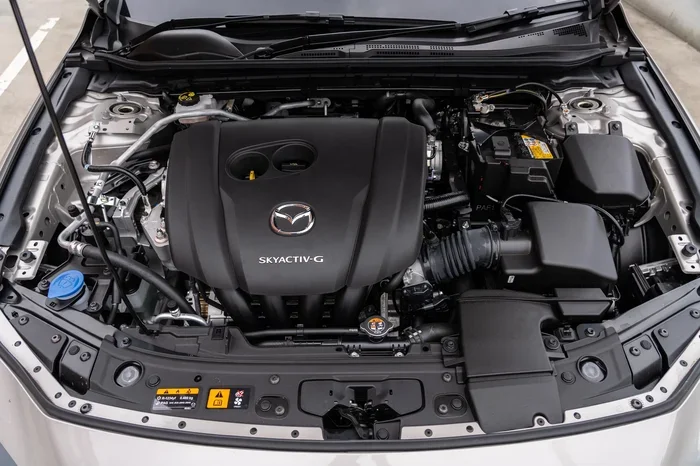
The 1.5-Liter SkyActiv-G Engine
Mazda’s SkyActiv technology has been a major innovation in the automotive world. The SkyActiv-G engines are designed to operate at higher compression ratios than traditional engines. This means more power from less fuel.
Ford has used versions of the SkyActiv engine family in some of its vehicles. The 1.5-liter SkyActiv-G engine produces around 130 horsepower. It is smooth, quiet, and remarkably efficient. For commuters and daily drivers, this engine is a solid choice.
Performance Comparison: Ford vs. Mazda Engines
How do Ford vehicles with Mazda engines stack up against pure Mazda vehicles? Let us look at a quick comparison.
- Acceleration: Ford models with Mazda engines tend to be slightly slower than their Mazda counterparts. This is because Ford vehicles are often heavier. But the difference is small and not noticeable in everyday driving.
- Fuel Economy: Mazda engines are designed for efficiency, and Ford vehicles benefit from this. The Ford Ranger with the 2.3-liter EcoBoost gets EPA-estimated 21 mpg in the city and 26 mpg on the highway.
- Reliability: Mazda engines are known for lasting a long time. Ford vehicles that use these engines inherit that reliability. Many Ford owners report few engine problems even after 100,000 miles.
If you want to learn more about how long Ford engines last with proper maintenance, check out our article on Mobil 1 oil longevity. Using the right oil can make a huge difference in engine life.
Reliability and Maintenance
One of the biggest questions car buyers ask is about reliability. Does Ford use Mazda engines, and are those engines reliable? The answer is generally yes. Mazda has built a strong reputation for building durable engines, and Ford vehicles benefit from that reputation.
Common Ford Engine Issues to Watch For
While Mazda engines are reliable, no engine is perfect. Here are some common issues that Ford owners have reported with Mazda-derived engines:
- Oil consumption: Some Ford models with the 2.3-liter EcoBoost engine have been reported to consume oil at higher rates than expected. Regular oil checks are important.
- Carbon buildup: Direct injection engines are prone to carbon buildup on intake valves. This can reduce performance over time. Regular maintenance helps prevent this issue.
- Coolant leaks: A small number of Ford Rangers have experienced coolant leaks. This is usually related to the water pump or thermostat housing.
Maintenance Tips for Ford Vehicles with Mazda Engines
Keeping your Ford vehicle running smoothly is all about staying on top of maintenance. Here are some tips that every Ford owner should follow:
- Change your oil regularly: Use high-quality synthetic oil like Mobil 1 and change it every 5,000 to 7,500 miles. Clean oil keeps the engine lubricated and prevents wear.
- Check your fluids: Coolant, transmission fluid, and brake fluid all play a role in engine performance. Check them monthly.
- Replace air filters: A clogged air filter can reduce engine performance and fuel economy. Replace it every 15,000 to 30,000 miles.
- Listen for unusual sounds: If you hear knocking, ticking, or grinding, get your vehicle checked right away. Early detection prevents expensive repairs.
- Follow the maintenance schedule: Your owner’s manual has a detailed maintenance schedule. Follow it closely. This is the best way to ensure long engine life.
For more information on keeping your Ford in top shape, consider regular diagnostic checks. Jiffy Lube diagnostics can help identify potential issues before they become serious problems.
Ford F-150 Engine Reliability
While the Ford F-150 does not use a Mazda engine, it is worth mentioning because many buyers compare Ford truck reliability across the board. The F-150 has its own engine lineup, including the 3.3-liter V6, 5.0-liter V8, and 3.5-liter EcoBoost V6. These engines are built by Ford and have their own track record of reliability.
For those interested in the reliability history of older Ford trucks, our articles on 2005 Ford F-150 reliability and 2004 Ford F-150 reliability provide detailed insights. These older models did not use Mazda engines, but they share the same Ford commitment to building durable trucks.
The Future of Ford and Mazda Engine Sharing
What does the future hold for the Ford-Mazda partnership? Both companies are investing heavily in new technology. Electric vehicles, hybrid powertrains, and advanced driver assistance systems are all on the horizon.
Electrification and Shared Platforms
Ford and Mazda are both working on electrification. Mazda has announced plans for electric and hybrid vehicles. Ford has committed to going all-electric by 2035 in Europe. The two companies are likely to share more technology as they navigate this transition.
The Ford-Mazda shared platform strategy will continue to be important. By sharing platforms, both companies can reduce costs and bring new vehicles to market faster. This benefits consumers through lower prices and more options.
What This Means for Car Buyers
If you are shopping for a Ford vehicle, the Mazda engine connection is actually a good thing. It means you are getting access to Mazda’s proven engine technology. Ford vehicles with Mazda engines offer a compelling mix of performance, efficiency, and reliability.
As the automotive industry evolves, the Ford-Mazda partnership will likely deepen. We can expect to see more shared engines, shared platforms, and shared technology in the years ahead. For car buyers, this means more choices and better value.
Common Mistakes Buyers Make When Considering Ford Engines
Buying a Ford vehicle is a big decision. Unfortunately, many buyers make mistakes that cost them time and money. Here are some common pitfalls to avoid.
Assuming All Ford Engines Are the Same
Not all Ford engines are created equal. Some are built entirely by Ford, while others are co-developed with Mazda. Understanding the difference matters. A Mazda-derived engine may have different maintenance needs and performance characteristics than a purely Ford-built engine.
Ignoring Maintenance History
Whether your Ford has a Mazda engine or a Ford-built engine, maintenance history is critical. A well-maintained engine will last longer and perform better. Always ask for service records before buying a used Ford vehicle.
Overlooking Fuel Requirements
Some Ford engines with Mazda technology require premium fuel for optimal performance. Always check your owner’s manual. Using the wrong fuel can reduce performance and potentially cause engine damage over time.
Skipping Regular Oil Changes
This cannot be stressed enough. Regular oil changes are the single most important thing you can do for your engine. Skipping oil changes leads to increased wear, reduced efficiency, and eventually engine failure. Do not skip them.
Expert Insights on the Ford-Mazda Engine Connection
Automotive experts have long praised the Ford-Mazda partnership. The collaboration has produced engines that are both powerful and efficient. According to industry analysts, the shared technology between Ford and Mazda gives both companies a competitive edge.
Engineers at both companies have noted that the partnership allows them to focus on their strengths. Mazda excels at building efficient, refined engines. Ford excels at building trucks and SUVs. By sharing engine technology, both companies can offer better products to their customers.
Experts also point out that the Ford-Mazda collaboration helps both companies meet increasingly strict emissions regulations. Shared engine development means shared costs. This allows both companies to invest more in research and development for future technologies.
Key Takeaways
- Ford and Mazda have a long-standing partnership: The two companies have shared platforms, engines, and technology for decades.
- Several Ford models use Mazda engines: The Ford Ranger, Ford Fiesta, and Ford Maverick have all featured Mazda-derived powertrains.
- The Ford-Mazda collaboration improves fuel efficiency: Shared engine designs help both brands meet emissions and fuel economy standards.
- Engine reliability is strong: Many Ford vehicles with Mazda engines have proven dependable over the years.
- Maintenance matters: Using quality products like Mobil 1 oil helps extend engine life.
- Ford continues to evolve the partnership: New models may feature even more shared technology between the brands.
Conclusion
So, does Ford use Mazda engines? The answer is a clear and resounding yes. The Ford-Mazda partnership has been one of the most successful collaborations in the automotive industry. It has produced engines that are powerful, efficient, and reliable.
From the Ford Ranger to the Ford Fiesta, Mazda-derived engines have helped Ford build better vehicles. These engines offer strong performance, excellent fuel economy, and proven durability. For car buyers, this means getting more value for your money.
The partnership between Ford and Mazda continues to grow and evolve. As both companies invest in electrification and new technology, the shared engine strategy will likely expand. This is great news for consumers who want access to the best engine technology available.
Whether you are buying a new Ford Ranger or considering a used Ford Fiesta, understanding the Mazda engine connection gives you valuable insight. You now know what makes these engines tick and how to take care of them. That knowledge will serve you well as a Ford owner.
Keep your engine running strong with proper maintenance, quality products, and regular care. The Ford-Mazda engine partnership is a win-win for both automakers and their customers. And that is something worth celebrating.
Frequently Asked Questions
Does Ford use Mazda engines in the F-150?
No, the Ford F-150 does not use Mazda engines. The F-150 uses engines developed entirely by Ford, including the 3.3-liter V6, 5.0-liter V8, and 3.5-liter EcoBoost V6. However, Ford does use Mazda engines in other models like the Ranger and Fiesta.
Are Mazda engines better than Ford engines?
It is not a matter of one being better than the other. Mazda engines are known for their efficiency and refinement, while Ford engines are known for their power and durability. When Ford uses Mazda engines, it gets the best of both worlds. The engines are reliable and efficient, which benefits the driver.
Which Ford models currently use Mazda engines?
The Ford Ranger is the primary current model that uses a Mazda-derived engine. The 2.3-liter EcoBoost engine in the Ranger was co-developed with Mazda. Ford has also used Mazda engines in past models like the Fiesta and Focus.
How long do Mazda engines used in Ford vehicles last?
Mazda engines are known for their longevity. With proper maintenance, a Mazda engine in a Ford vehicle can easily last 200,000 miles or more. Regular oil changes, fluid checks, and following the maintenance schedule are key to achieving this lifespan.
Does the Ford-Mazda partnership affect warranty coverage?
No, the Ford-Mazda partnership does not affect warranty coverage. Ford vehicles are still covered under Ford’s warranty, regardless of whether the engine was co-developed with Mazda. Always check your specific warranty terms for details on coverage and maintenance requirements.
Will Ford continue to use Mazda engines in future models?
It is very likely. The Ford-Mazda partnership has been beneficial for both companies. As they work together on electrification and new technology, more shared engines and platforms are expected in the future. This collaboration helps both brands stay competitive in a rapidly changing industry.