Situations When You Should Not Use Adaptive Cruise Control
Adaptive cruise control is a great tool, but it is not safe in every driving situation. You should turn it off in heavy rain, fog, construction zones, and on winding roads. Knowing when not to use adaptive cruise control can save your life and keep your car running at its best.
Adaptive cruise control has changed the way we drive on highways. It uses radar sensors and cameras to keep a safe distance from the car ahead of you. The system adjusts your speed automatically, so you do not have to keep tapping the brakes. For many drivers, it makes long road trips less tiring and more comfortable.
But here is the truth that not everyone talks about. Adaptive cruise control is not a magic safety button. There are real situations where using it can put you at risk. In fact, relying on it in the wrong conditions is one of the most common mistakes drivers make today. The system has limits, and understanding those limits is just as important as knowing how to use it.
This article will walk you through every situation where you should turn off adaptive cruise control. We will cover bad weather, tricky road conditions, and driving scenarios that even the best driver assistance systems cannot handle safely. By the end, you will know exactly when to let the system take a break and when you need to be fully in control.
Key Takeaways
- Bad Weather Is a No-Go: Rain, fog, ice, and snow can trick the radar sensors, making adaptive cruise control unreliable and potentially dangerous.
- Construction Zones Demand Your Full Attention: Frequent stops, lane changes, and workers on the road mean you need manual control at all times.
- Winding and Mountain Roads Are Not a Fit: Sharp curves and steep inclines require constant steering input that the system cannot handle safely.
- Stop-and-Go Traffic Can Overwhelm the System: In very slow or congested traffic, the system may not respond fast enough to sudden stops.
- Always Stay Alert: Adaptive cruise control is a driver assistance tool, not a replacement for active driving and full attention.
- Know Your Vehicle Limits: Older or basic systems may lack the sensors and software needed for complex driving environments.
- When in Doubt, Take Over: If anything feels off, disengage the system and drive manually. Your instincts are your best safety feature.
📑 Table of Contents
- What Is Adaptive Cruise Control and How Does It Work?
- When Should You Not Use Adaptive Cruise Control?
- How Weather Affects Your Cruise Control Sensors
- Adaptive Cruise Control vs. Traditional Cruise Control: Key Differences
- Common Mistakes Drivers Make with Adaptive Cruise Control
- Expert Tips for Safe Adaptive Cruise Control Use
- Is Adaptive Cruise Control Worth Using?
- Conclusion
What Is Adaptive Cruise Control and How Does It Work?
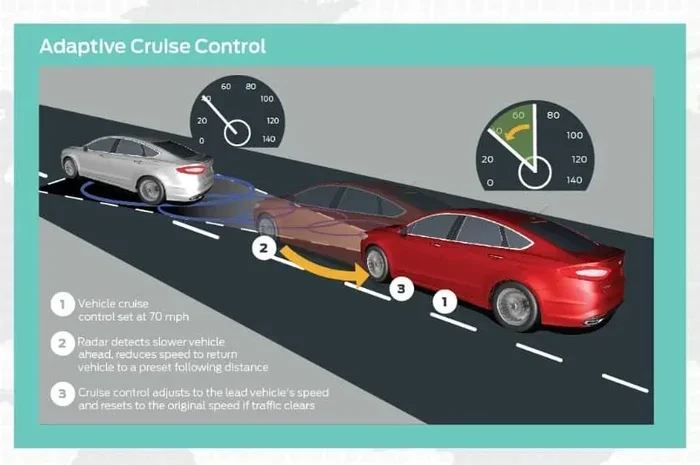
Before we dive into when not to use the system, let us quickly cover what it actually does. Adaptive cruise control, often called ACC, is an advanced driver assistance feature. It uses radar, lasers, or cameras to detect the vehicle in front of you. Once it locks onto that car, it maintains a preset following distance.
When the car ahead slows down, your car slows down too. When the road clears, the system accelerates back to your set speed. This is different from traditional cruise control, which only maintains a fixed speed no matter what happens ahead.
Most modern vehicles come with adaptive cruise control as part of a broader driver assistance package. This can include features like lane keeping assist, collision warning, and automatic emergency braking. Together, these systems create a semi-automated driving experience. But semi-automated does not mean fully automatic.
The radar sensor on your car is the brain of the system. It constantly scans the road ahead. If the sensor gets blocked or confused, the system may not work properly. This is exactly why certain driving situations are off-limits for adaptive cruise control.
When Should You Not Use Adaptive Cruise Control?
Now let us get to the heart of the matter. There are specific situations where turning off your adaptive cruise control is the smartest thing you can do. Some of these may surprise you.
1. Bad Weather Conditions
Rain, snow, ice, and fog are the biggest enemies of adaptive cruise control. The radar sensors and cameras that the system relies on can get confused by heavy precipitation. Water droplets on the sensor can send false readings. In fog, the cameras may not be able to see the car ahead clearly.
On icy roads, the system may tell your car to brake too late. The tires lose grip, and the automatic braking response may not be fast enough to prevent a slide. Snow can completely cover the radar sensor, rendering the system blind.
Here is a simple rule of thumb. If you cannot see clearly, the sensors cannot see clearly either. Turn off adaptive cruise control whenever weather conditions are less than ideal. Manual driving gives you the ability to react based on what you actually see on the road.
Heavy rain is especially tricky. The water creates a reflective surface on the road, which can bounce the radar signal in the wrong direction. This may cause the system to either brake suddenly for no reason or fail to detect a slower vehicle ahead. Neither outcome is safe.
2. Construction Zones and Road Work Areas
Construction zones are chaotic. There are lane shifts, sudden stops, workers on the shoulder, and temporary signs everywhere. Adaptive cruise control is designed for predictable driving environments. A construction zone is the opposite of predictable.
The system follows the car in your lane, but in a work zone, lanes change frequently. Cone barrels appear out of nowhere. A worker might step into the road unexpectedly. The adaptive cruise control system cannot read construction signs or understand detour patterns.
Many drivers have reported that their system did not slow down in time when approaching a construction zone. The radar sensor may have locked onto a vehicle that changed lanes suddenly, leaving the system confused about what to do next. This is exactly the kind of situation where your human judgment matters most.
Always reduce your speed and take manual control when you see orange cones or construction signs ahead. It is better to arrive a few minutes late than to risk a serious accident.
3. Winding and Mountain Roads
Adaptive cruise control works best on straight, flat highways. When the road curves sharply, the system struggles. The radar sensor is pointed forward, so it may lose track of the vehicle ahead when you are going around a bend.
On mountain roads, the elevation changes add another layer of complexity. The system may accelerate on downhill slopes when it should be slowing down. On steep inclines, it may not have enough power to maintain speed, causing you to fall behind unsafely.
Sharp curves demand constant steering adjustments. When you are using adaptive cruise control, your hands may be off the wheel. This is dangerous on any road with frequent turns. The system is not designed to steer for you, even on vehicles that offer lane centering as part of the package.
If you are driving through a mountain pass or a road with tight switchbacks, disengage the cruise control and drive manually. Keep both hands on the wheel and your full attention on the road ahead.
4. Very Slow or Stop-and-Go Traffic
Some people think adaptive cruise control works great in traffic jams. For certain vehicles with a full stop-and-go feature, this can be true. But not all systems are created equal.
Older or basic adaptive cruise control systems may not bring your car to a complete stop. They may only slow down to a certain speed and then require you to take over. In heavy urban traffic, this can lead to rear-end collisions if the car ahead stops suddenly and your system does not respond in time.
Even systems with stop-and-go capability can struggle in very dense traffic. The sensors may lose track of the vehicle ahead if the gap between cars closes too quickly. The system might also re-accelerate unexpectedly when traffic briefly opens up, catching you off guard.
In congested city traffic or bumper-to-bumper highway conditions, it is safer to drive manually. Keep a close eye on the brake lights ahead of you and be ready to stop at any moment.
5. Poorly Marked or Unfamiliar Roads
Adaptive cruise control depends on clear road markings and consistent lane structures. If the road is poorly marked, the system may not know where the lanes are. This can cause it to drift or make incorrect adjustments to your speed.
Unfamiliar roads add another risk factor. You may not know about a sharp curve, a steep drop, or a low bridge coming up. The adaptive cruise control system only sees the car ahead of you, not the road geometry. It cannot anticipate hazards that your eyes can spot early.
When you are driving in a new area or on a road you do not know well, always stay in manual control. Pay attention to road signs, curves, and any changes in the driving surface. Your eyes and brain are still the best safety tools you have.
6. Emergency Situations and Sudden Hazards
No matter how advanced the system is, adaptive cruise control cannot handle every emergency. A deer jumping onto the road, a tire blowing out in front of you, or a sudden obstacle in your lane are all scenarios the system is not programmed to handle.
The adaptive cruise control system focuses on the vehicle ahead. It does not scan the entire road for hazards. If something appears in your lane that the car in front of you did not cause, the system may not react at all.
In an emergency, your reflexes are faster than any computer algorithm. When you are driving manually, you can swerve, brake, or take evasive action in a fraction of a second. With adaptive cruise control engaged, there is a slight delay while the system processes the situation and responds.
Always keep your hands near the wheel and be ready to take over. The system is a helper, not a replacement for an attentive driver.
7. Driving Fatigue and Long Highway Stretches
This one might sound counterintuitive. You might think that using adaptive cruise control when you are tired helps keep you safe. But the truth is more complicated.
When you rely too much on driver assistance systems, your alertness drops. You may stop scanning the road as actively. Your reaction time slows because you are not actively engaged in the driving task. This is called automation complacency, and it is a real danger on long highway drives.
Studies show that drivers who use cruise control for extended periods tend to pay less attention to the road. They trust the system too much and let their guard down. If something unexpected happens, they may not react quickly enough.
Instead of relying on adaptive cruise control when you are tired, pull over and take a break. A short nap or a walk can do more for your safety than any driver assistance feature. Save the cruise control for when you are well-rested and fully alert.
How Weather Affects Your Cruise Control Sensors
Let us take a closer look at how different weather conditions impact the sensors that power adaptive cruise control. Understanding this helps you make smarter decisions behind the wheel.
Radar sensors work by sending out radio waves and measuring the bounce-back signal. When those waves hit water droplets, snowflakes, or ice crystals, they can scatter or reflect in the wrong direction. This creates noise in the system. The sensor may interpret this noise as a real object, causing unnecessary braking.
Camera-based systems face their own challenges. Heavy rain or snow on the camera lens can blur the image. Fog reduces visibility to the point where the camera cannot distinguish a vehicle ahead from the surrounding mist. Even dirt and mud on the sensors can degrade performance.
Here are some quick tips for protecting your sensors in bad weather:
- Keep the front of your car clean, especially around the radar sensor area.
- After a snowstorm, clear any snow covering the sensors before driving.
- Use your defroster to keep the camera lens clear during rain or fog.
- If your vehicle has a sensor warning light on the dashboard, pay attention to it.
- When in doubt, turn off adaptive cruise control and drive manually until conditions improve.
Your vehicle manual will tell you where the sensors are located. Take a moment to find them. Knowing their position helps you understand why certain weather conditions can interfere with the system.
Adaptive Cruise Control vs. Traditional Cruise Control: Key Differences
It is easy to confuse adaptive cruise control with traditional cruise control. Both systems maintain your speed on the highway, but they work very differently. Understanding the difference helps you know when each one is appropriate.
Traditional cruise control simply keeps your car at a set speed. It does not adjust for traffic ahead. If the car in front of you slows down, you still have to hit the brakes yourself. This system works fine on open, clear highways with light traffic.
Adaptive cruise control adds a layer of intelligence. It detects the vehicle ahead and adjusts your speed to maintain a safe gap. This makes it much more useful in moderate traffic. But it also introduces new limitations that traditional cruise control does not have.
Here is a simple comparison to help you understand the differences:
- Traditional Cruise Control: Maintains set speed, no automatic braking, works in all conditions (but still requires driver attention), best for light traffic and open roads.
- Adaptive Cruise Control: Maintains set speed and following distance, includes automatic braking up to a certain speed, limited by weather and road conditions, best for highway and moderate traffic driving.
Neither system replaces the driver. Both require you to stay alert and ready to take control at any moment. The key difference is that adaptive cruise control adds more automation, which means more situations where the system can fail or behave unpredictably.
Common Mistakes Drivers Make with Adaptive Cruise Control
Even experienced drivers make mistakes when using adaptive cruise control. Here are some of the most common errors and how to avoid them.
Mistake 1: Treating the System as Fully Autonomous. The biggest mistake is assuming the car can drive itself. Adaptive cruise control is a Level 1 or Level 2 driver assistance feature, depending on your vehicle. It does not steer for you (unless paired with lane centering), and it cannot handle every road situation. You are always the driver.
Mistake 2: Setting the Following Distance Too Short. Many drivers set the following distance to the minimum setting. This leaves almost no room for the system to react if the car ahead stops suddenly. Always use at least a three-second following distance, and more in bad weather or at higher speeds.
Mistake 3: Ignoring Warning Lights. If your dashboard shows a warning about the cruise control or radar sensor, do not ignore it. The system may not be working correctly, and using it anyway is a safety risk. Have the sensors checked and cleaned before you rely on the system again.
Mistake 4: Using It in Every Driving Situation. Just because your car has adaptive cruise control does not mean you should use it everywhere. City streets, residential areas, and steep mountain roads are not appropriate settings for the system. Know when to turn it off.
Mistake 5: Falling Asleep or Zoning Out. The system keeps your car at speed and at a safe distance, but it does not keep you awake or focused. If you are not actively engaged in driving, you are a danger to yourself and everyone else on the road.
Expert Tips for Safe Adaptive Cruise Control Use
To get the most out of your adaptive cruise control system while staying safe, follow these expert tips:
- Read Your Owner Manual. Every vehicle is different. Your manual explains exactly what your system can and cannot do. Take 20 minutes to read the relevant section. It could save your life.
- Practice in Safe Conditions First. If you are new to adaptive cruise control, try it out on a clear, empty highway during daylight hours. Get a feel for how the system accelerates, brakes, and responds to traffic.
- Keep Your Sensors Clean. A dirty sensor is a blind sensor. Wash the front of your car regularly, especially in winter when road salt and grime build up quickly.
- Stay Hands-On. Even when the system is working perfectly, keep your hands on the wheel. Most vehicles have a timeout that warns you if your hands are off the wheel for too long. Take these warnings seriously.
- Update Your Software. Many modern vehicles receive over-the-air updates that improve the cruise control system. Keep your software up to date for the best performance and safety features.
- Know When to Override. If the system brakes too hard, accelerates at the wrong time, or feels unstable, take manual control immediately. Trust your instincts over the algorithm.
Is Adaptive Cruise Control Worth Using?
The short answer is yes, with a big caveat. Adaptive cruise control is a valuable tool when used correctly. It reduces driver fatigue on long highway trips, helps maintain a safe following distance, and can even improve fuel efficiency by smoothing out your acceleration and braking.
But it is not worth using if you do not understand its limitations. The system works best in ideal conditions on well-marked highways with steady traffic. In any other situation, your manual driving skills are safer and more reliable.
The key is balance. Use adaptive cruise control when it makes sense, and turn it off when it does not. Think of it as a helpful co-pilot, not an autopilot. The responsibility for safe driving always stays with you.
As vehicle technology continues to evolve, these systems will become more capable. But for now, they still need a human behind the wheel who is paying attention, staying alert, and making smart decisions about when to use them and when not to.
Conclusion
Adaptive cruise control is a fantastic feature that makes driving easier and safer in the right conditions. But knowing when not to use it is just as important as knowing how to use it. Bad weather, construction zones, winding roads, heavy traffic, and emergency situations all call for your full attention and manual control.
Take the time to understand your vehicle’s specific system. Read the manual, keep the sensors clean, and never let the technology make you less attentive. The road demands your best, and that means knowing exactly when to engage adaptive cruise control and when to turn it off.
Drive smart, stay alert, and remember that no cruise control system can replace the judgment and reflexes of a focused driver. Use the technology to your advantage, but always keep your hands on the wheel and your eyes on the road.
Frequently Asked Questions
Can I use adaptive cruise control in the rain?
It depends on the intensity of the rain. Light drizzle may not affect the system much, but heavy rain can interfere with the radar sensors and cameras. Water on the road can also cause the sensors to send false readings. When rain is heavy or visibility is low, turn off adaptive cruise control and drive manually.
Does adaptive cruise control work in fog?
Most adaptive cruise control systems struggle in foggy conditions. The cameras and radar sensors rely on clear sightlines to detect the vehicle ahead. Fog scatters the signals and reduces visibility for both the sensors and the driver. It is safest to disable the system and drive manually when fog is thick.
Can adaptive cruise control handle construction zones?
No. Construction zones are unpredictable, with sudden lane changes, cones, workers, and varying speeds. Adaptive cruise control is designed for consistent driving patterns. In a work zone, you need full manual control to navigate safely and respond to unexpected changes.
Will adaptive cruise control bring my car to a complete stop?
Some systems with a full stop-and-go feature can bring the car to a complete stop in traffic. However, older or basic systems may only slow down to a certain speed and then require you to take over. Check your vehicle manual to understand what your specific system can do.
Is it safe to sleep while adaptive cruise control is on?
No. Absolutely not. Adaptive cruise control is a driver assistance feature, not an autopilot system. You must remain alert and keep your hands on the wheel at all times. Falling asleep or zoning out while the system is engaged is extremely dangerous and in many places, illegal.
What should I do if the adaptive cruise control warning light comes on?
A warning light means the system has detected a problem, often with the sensors. Pull over safely, check the front of your car for dirt or obstructions on the sensors, and clean them if needed. If the light stays on, have the system inspected by a qualified mechanic before using adaptive cruise control again.
=== CONCLUSION ===
Adaptive cruise control is a great tool, but only when you know how and when to use it. The situations covered in this article represent the most common and dangerous scenarios where the system can fail or create risk. By turning off adaptive cruise control in bad weather, construction zones, winding roads, heavy traffic, and emergency situations, you take control of your safety.
Stay informed, stay alert, and always remember that the best safety feature in any car is the driver behind the wheel. Use the technology wisely, and it will make your driving experience better. Ignore its limits, and it can become a hazard.