What Is the Size of a Car in Feet and Why It Matters
The size of a car in feet refers to its length, width, and height measurements. Understanding these dimensions helps you choose the right vehicle, plan parking, and ensure your garage fits. This guide covers every car size category with real-world examples and practical tips.
Have you ever wondered what the size of a car in feet really means? It is a simple question, but the answer opens up a lot of important details about every vehicle on the road. Whether you are buying a new car, parking in a tight spot, or just curious, knowing car dimensions in feet makes a big difference.
When we talk about car size in feet, we are looking at three key measurements: length, width, and height. These numbers tell you how much space a vehicle takes up on the road and in your garage. Understanding car size in feet helps you make smarter choices about what vehicle fits your life best.
This guide breaks down car dimensions by type, explains why size matters, and gives you practical tips you can use right away. We will cover everything from tiny compacts to big trucks. By the end, you will know exactly how to think about vehicle length and width in real-world terms.
Key Takeaways
- Car size in feet typically ranges from about 10 feet for mini cars to over 20 feet for full-size trucks.
- Vehicle length is the most commonly referenced dimension when people ask about car size.
- Knowing your car’s dimensions helps with parking, garage planning, and choosing the right vehicle class.
- Compact cars are around 14 feet long, while SUVs and trucks can exceed 18 feet.
- Car width and height also matter for garage fit, lane navigation, and interior space.
- Measuring your car is simple with a tape measure and a flat surface.
- Car size directly affects fuel efficiency, maneuverability, and overall driving comfort.
📑 Table of Contents
Understanding Car Size in Feet
Every car has a unique set of dimensions measured in feet. These numbers define how big or small a vehicle is. Let us look at what each measurement means and why it matters.
What Does Car Length Mean?
Car length is the distance from the front bumper to the rear bumper. It is the first number most people think of when they hear “how big is a car in feet.” Length affects parking, garage fit, and how the car handles on the road. A shorter car is easier to maneuver in tight spaces, while a longer one offers more interior room.
What Does Car Width Mean?
Car width is the widest point of the vehicle, usually across the mirrors. Width matters for lane driving, garage parking, and fitting through narrow openings. A wider car feels more stable on the highway but can be harder to park in tight spots.
What Does Car Height Mean?
Car height is measured from the ground to the top of the roof. Height affects garage clearance, bridge clearances, and aerodynamics. Taller vehicles like SUVs and trucks have more headroom inside but may not fit in low-clearance parking garages.
Average Car Length by Category
Not all cars are the same size. Car size categories help us group vehicles by their dimensions. Here is a breakdown of common categories and their average car size in feet.
Mini and Subcompact Cars
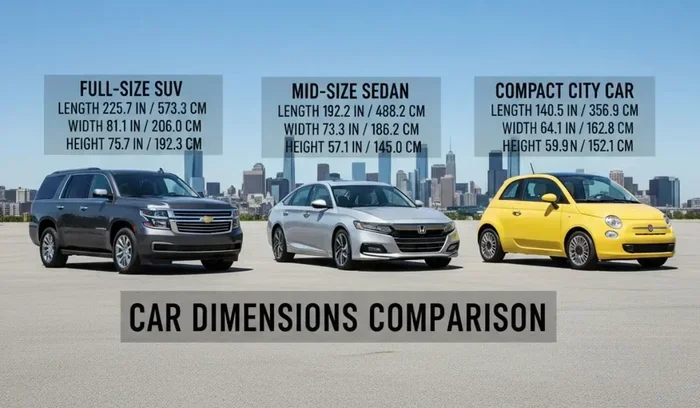
Mini cars like the Fiat 500 and smart fortwo are the smallest on the road. These tiny vehicles are about 8 to 10 feet long. They are perfect for city driving and easy parking. Their small footprint makes them great for narrow streets and tight garages.
Compact Cars
Compact cars like the Honda Civic and Toyota Corolla sit in the middle of the small-car range. They typically measure 14 to 15 feet long. These vehicles offer a good balance of interior space and easy handling. Most families find compacts comfortable for daily driving.
Mid-Size Sedans
Mid-size sedans like the Toyota Camry and Honda Accord are around 15 to 16 feet long. They provide more legroom and cargo space than compacts. These cars are popular for their comfort and versatility on long drives.
Full-Size Sedans and SUVs
Full-size vehicles like the Toyota Avalon or a large SUV can stretch to 17 to 19 feet long. They offer generous interior space and a commanding road presence. These vehicles are ideal for large families or road trips with lots of gear.
Trucks and Large SUVs
Full-size trucks like the Ford F-150 and large SUVs like the Chevrolet Tahoe can be 18 to 22 feet long. These are the biggest vehicles on most roads. They offer maximum cargo capacity and towing power but require more space to park and drive.
Car Size Comparison Table
| Vehicle Category | Length (Feet) | Width (Feet) | Height (Feet) |
|---|---|---|---|
| Mini / Subcompact | 8 – 10 | 5.5 – 6 | 4.5 – 5 |
| Compact Car | 14 – 15 | 6 – 6.5 | 5 – 5.5 |
| Mid-Size Sedan | 15 – 16 | 6.5 – 7 | 5.5 – 6 |
| Full-Size Sedan | 17 – 19 | 7 – 7.5 | 5.5 – 6 |
| Mid-Size SUV | 16 – 18 | 7 – 7.5 | 6.5 – 7 |
| Full-Size Truck | 18 – 22 | 7.5 – 8 | 7 – 8 |
This car size comparison table gives you a quick reference for average vehicle dimensions in feet. Keep in mind that exact measurements vary by model and year. Always check the specific dimensions of any car you are considering.
Why Car Size in Feet Matters
Knowing your car size in feet is not just trivia. It has real impact on your daily driving life. Here are the main reasons vehicle dimensions matter.
Parking and Maneuverability
Shorter cars fit into tight parking spots easily. If you live in a busy city, a compact car around 14 feet long will save you headaches. Longer vehicles need more space and can be tricky in crowded lots. Car width also matters when squeezing into parallel parking spots.
Garage Fit
Before buying a car, measure your garage. A standard single car garage is about 12 feet wide and 20 feet deep. A vehicle that is 18 feet long will leave very little room to open the doors. Understanding car dimensions in feet helps you avoid a bad fit.
Fuel Efficiency
Smaller cars are generally more fuel-efficient. Their lighter weight and smaller vehicle footprint mean less energy is needed to move them. If fuel economy matters to you, choosing a smaller car size in feet can save money over time.
Safety and Visibility
Car size affects how well you can see the road around you. Smaller vehicles may have blind spots that larger cars do not. On the other hand, taller vehicles give better forward visibility but can feel top-heavy in sharp turns. Understanding your car’s dimensions helps you drive more safely.
Interior Space and Comfort
Longer and wider cars usually offer more interior room. If you have a family or carry lots of gear, a larger vehicle size in feet will be more comfortable. Think about how you use your car every day before deciding on a size.
How to Measure a Car in Feet
Measuring your car is easier than you might think. You do not need fancy tools. Here is a simple step-by-step guide to finding your car dimensions in feet.
What You Need
- A tape measure (at least 25 feet long)
- A flat, level surface
- A helper (optional but helpful)
- A notepad to record measurements
Step-by-Step Measurement Process
Step 1: Measure the length. Place the tape measure at the front bumper and extend it to the rear bumper. Make sure the car is on flat ground. Record the number in feet.
Step 2: Measure the width. Find the widest point of the vehicle, which is usually the mirrors. Measure from one side to the other. Record this number too.
Step 3: Measure the height. Start from the ground and measure up to the highest point of the roof. Be careful with any roof racks or antennas that might add extra height.
Quick Tip: Always measure twice to make sure your numbers are accurate. A small error can lead to a bad parking or garage fit. Taking a few extra minutes saves a lot of trouble later.
Common Mistakes to Avoid
Many people make mistakes when measuring their car. Do not measure on a slope, as this throws off the height reading. Do not forget to include mirrors in the width measurement. And do not guess — always use a real tape measure for accurate vehicle dimensions in feet.
Car Size and Your Garage
One of the most practical reasons to understand car size in feet is garage planning. A car that is too long or too wide for your garage creates daily frustration.
Standard Garage Sizes
A typical single car garage is about 12 feet wide by 20 feet deep. A double car garage is usually 20 to 24 feet wide by 20 feet deep. These are standard sizes, but older garages may be smaller. Always measure your actual garage before buying a vehicle.
Tips for Fitting Your Car in the Garage
- Leave at least 2 feet of clearance on each side for door opening.
- Keep 1 to 2 feet of space in front of the car for easy entry.
- Consider the height clearance, especially if you have a tall SUV.
- Use a garage depth guide or floor markings to park consistently.
Expert Insight: Many people buy a car without checking if it fits their garage. This is a common and costly mistake. Take 10 minutes to measure both your garage and the car size in feet before making a purchase. It will save you time, money, and frustration.
Choosing the Right Car Size for Your Needs
Now that you understand car dimensions in feet, how do you pick the right size? The answer depends on your lifestyle, budget, and daily needs.
Consider Your Daily Use
If you drive alone or with one passenger in the city, a compact car around 14 feet long works great. If you have a family of four or more, consider a mid-size SUV or full-size sedan. Think about how many passengers and how much cargo you carry regularly.
Think About Where You Drive
City drivers benefit from a smaller vehicle footprint. Narrow streets and tight parking spots favor compact cars. Highway drivers and rural road users may prefer a larger vehicle for comfort and stability. Car size in feet should match where and how you drive most often.
Budget Matters Too
Larger cars usually cost more to buy and more to fuel. A smaller car saves on gas and often has lower insurance costs. Weigh the practical benefits of vehicle size against your budget to find the best balance.
Future-Proofing Your Choice
Think about your life in the next few years. Will your family grow? Will you need more cargo space? Choosing a slightly larger car size in feet now can save you from upgrading later. But do not buy more vehicle than you truly need.
Key Takeaway: The best car size is the one that fits your life. Measure your needs, consider your driving environment, and use vehicle dimensions in feet to make a confident choice.
Conclusion
The size of a car in feet is one of the most important things to understand before buying or parking any vehicle. From mini compacts under 10 feet to full-size trucks over 20 feet, every vehicle category has its own set of dimensions. Knowing these numbers helps you park better, fit your car in the garage, save on fuel, and choose a vehicle that truly suits your life.
We covered car length, width, and height in detail. We looked at average sizes by vehicle category and gave you practical tips for measuring your own car. We also explored why car size in feet matters for parking, safety, and comfort. Use this knowledge to make smarter decisions every time you think about a vehicle.
Next time someone asks you “how big is a car in feet,” you will have a clear and confident answer. Share this guide with friends who are car shopping or garage planning. Understanding vehicle dimensions is a simple skill that pays off every single day.
Frequently Asked Questions
What is the average size of a car in feet?
The average car size in feet is about 14 to 15 feet long. This applies to most compact and mid-size sedans. Width is typically around 6 to 7 feet, and height ranges from 5 to 6 feet. However, exact measurements vary by vehicle type and model year.
How do I find the exact dimensions of my car in feet?
Check your vehicle owner’s manual or the manufacturer’s website. You can also measure your car yourself using a tape measure. Measure from bumper to bumper for length, mirror to mirror for width, and ground to roof for height. Always measure on a flat surface for accuracy.
What is the smallest car size in feet?
The smallest cars, like the smart fortwo, are about 8 feet long and 5 feet wide. These micro-cars are designed for city driving and easy parking. Their tiny vehicle footprint makes them perfect for tight urban spaces.
Does car size in feet affect fuel economy?
Yes, smaller cars generally get better fuel economy. A lighter, more compact vehicle needs less energy to move. If fuel efficiency is important to you, choosing a smaller car size in feet can lead to significant savings at the pump over time.
Can I fit a 16-foot car in a standard single garage?
A standard single car garage is about 20 feet deep, so a 16-foot car will fit. However, you will have limited space for opening doors and moving around. It is best to leave at least 2 feet of clearance on each side for comfortable access.
Why does knowing car dimensions in feet matter for parking?
Knowing your car size in feet helps you judge whether a parking spot will fit. It also helps you navigate tight spaces, garages, and narrow streets confidently. Accurate dimension knowledge prevents scratches, dents, and awkward parking situations.