How Do I Know If My Car Key Needs a New Battery Today
Knowing when your car key battery is dying can save you from frustrating lockouts and starting problems. Common signs include a weak remote signal, reduced range, and the need to press buttons multiple times. This guide walks you through every warning sign, the replacement process, and expert tips to keep your key fob running strong.
Your car key works every single day. You press the button. The door locks. You press it again. The engine starts. It is easy to take this convenience for granted until something goes wrong. One morning you step out to your car, press the button, and nothing happens. That sinking feeling hits fast.
The good news is that a dead key battery is one of the simplest and cheapest fixes on your vehicle. But how do you know how do I know if my car key needs a new battery before it leaves you stranded? This guide covers every sign, every step, and every tip you need to stay ahead of the problem.
Whether you drive a sedan, SUV, or truck, the key fob battery follows the same basic rules. Understanding these rules helps you act fast and avoid unnecessary trips to the mechanic. Let us break it all down.
Key Takeaways
- Weak signal and reduced range are the earliest signs your key battery is fading.
- Replacing the battery is simple and costs just a few dollars in most cases.
- Common warning signs include unresponsive buttons, intermittent function, and dashboard warnings.
- A worn-out battery can mimic bigger car problems, so always check the battery first.
- Most car key batteries last 2 to 4 years with normal daily use.
- Keeping a spare battery in your glove box is a smart and easy habit.
📑 Table of Contents
- Why Your Car Key Battery Matters
- Warning Signs Your Car Key Battery Is Dying
- How to Replace Your Car Key Battery
- Common Mistakes Drivers Make With Key Batteries
- When to See a Professional Instead of DIY
- Tips to Extend Your Car Key Battery Life
- How Key Battery Health Connects to Overall Car Starting Issues
- Key Battery Replacement Cost and Where to Buy
- Final Thoughts
Why Your Car Key Battery Matters
Modern car keys do much more than unlock doors. They contain tiny computers, radio transmitters, and sensors. All of these components need power to work. That power comes from a small coin cell battery, usually a CR2032 or similar model. Without it, your key becomes nothing more than a piece of plastic.
The key fob battery powers several critical functions:
- Remote locking and unlocking from a distance
- Push-button start systems in newer vehicles
- Trunk release commands
- Keyless entry alerts and proximity detection
- Panic alarm activation
When any of these functions start to fail, the battery is usually the first place to look. Many drivers ignore early warning signs because the key still works sometimes. That intermittent behavior is actually the biggest clue that something is wrong.
How Long Does a Car Key Battery Last?
Most car key batteries last between two and four years. However, usage patterns play a big role. If you press your key fob dozens of times a day, the battery will drain faster. Extreme temperatures also shorten battery life. Hot summer days and freezing winter nights both put stress on the small cell inside your key.
Some drivers go five years without changing the battery and never have a problem. Others find themselves replacing it every 18 months. It depends on your vehicle model, how often you use remote features, and the quality of the battery you choose.
Warning Signs Your Car Key Battery Is Dying
Your car key gives you plenty of notice before it fully dies. The trick is knowing what to look for. Here are the most common car key battery warning signs that every driver should recognize.
1. Reduced Remote Range
This is the number one early warning sign. You used to unlock your car from 30 feet away. Now you need to stand right next to the door. If you find yourself walking closer and closer to your vehicle before pressing the button, your battery is losing strength.
Think of it like your phone battery. When it drops below 20 percent, apps start lagging. Your key fob works the same way. The signal weakens before it disappears completely.
2. Intermittent Function
Sometimes the remote works perfectly. Other times, you press the button three or four times before it responds. This inconsistency is a classic sign of a failing key fob battery. The remaining charge is enough for some signals but not all. Temperature changes and humidity can make this worse.
If your key works fine in the morning but struggles in the afternoon, take note. That pattern often points to a battery that is on its last legs.
3. Dashboard Warning Lights
Many newer vehicles have a dashboard message that reads something like “Key Battery Low” or “Replace Key Fob Battery.” If you see this warning, do not ignore it. Your car is telling you exactly what is wrong, and the fix is simple.
Even if the key still works after seeing this message, replace the battery soon. Waiting too long could leave you with a completely dead key at the worst possible moment.
4. Key Not Detected by the Car
Modern push-button start systems rely on the key being detected inside the cabin. If you press the start button and the car says “Key Not Detected” or “Smart Key Not Found,” a weak battery is often the cause. The car cannot pick up the signal from the key.
In many vehicles, you can still start the car by placing the key directly against the start button or a hidden sensor. This is a backup feature designed for exactly this situation. But it is a clear sign that your car key needs a new battery very soon.
5. Buttons Feel Different or Sticky
When a battery is dying, the electrical current becomes unstable. You might notice that some buttons require a harder press or feel less responsive. This is especially common with the lock and unlock buttons. If the tactile feedback changes, check the battery.
Do not confuse this with a physically damaged key. If the key has been dropped or stepped on, the issue might be mechanical rather than electrical. But if the key looks fine and the buttons feel off, the battery is likely the problem.
6. Lock or Unlock Only One Function
Some drivers notice that their key locks the car but will not unlock it, or vice versa. This uneven behavior happens because the battery has just enough power for one direction of the signal but not the other. It is a clear indicator that replacement time is near.
7. The Key Works Only When Held Close
If you must press the unlock button while holding the key right against the door handle, your signal is severely weakened. Most modern keys have a range of at least 10 to 20 feet. If you are within arm’s reach, the battery needs attention.
How to Replace Your Car Key Battery
Replacing a car key battery is one of the easiest maintenance tasks you can do at home. You do not need special tools or technical skills. Most replacements take less than five minutes.
What You Will Need
- A replacement battery (usually CR2032, but check your owner manual)
- A small flathead screwdriver or coin
- A clean, soft cloth
- A well-lit workspace
Step-by-Step Replacement Process
Follow these steps to swap out your old battery quickly and safely:
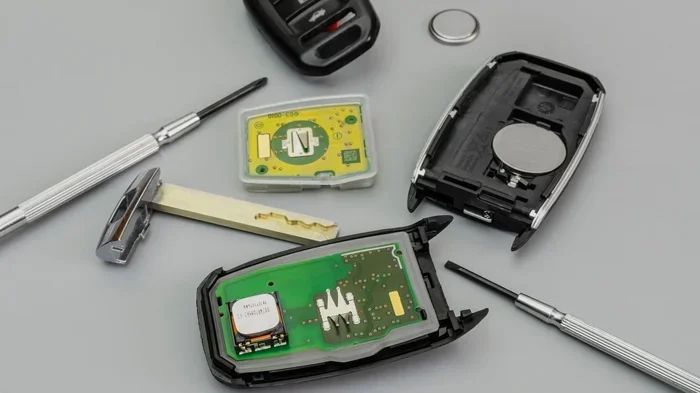
- Find the key casing seam. Most key fobs have a small groove or notch along the side. This is where the two halves of the casing separate.
- Insert a flathead screwdriver or coin into the seam. Gently twist to pop the casing open. Work slowly to avoid damaging the plastic.
- Note the battery orientation. Before removing the old battery, look at which side faces up. Take a photo with your phone if you are unsure. The positive side usually faces up.
- Remove the old battery carefully. Use a non-metallic tool like a plastic spudger or your fingernail. Metal tools can short-circuit the internal electronics.
- Insert the new battery. Make sure the positive and negative sides match the original orientation. Press it firmly into place.
- Snap the casing back together. Align both halves and press until you hear the click. Make sure no gaps remain.
- Test all functions. Stand a few feet from your car and try locking, unlocking, and starting. Confirm everything works before putting the key away.
Which Battery Type Does Your Key Use?
The most common car key battery is the CR2032. It is a 3-volt lithium coin cell that you can find at any grocery store, pharmacy, or auto parts shop for about two to five dollars. However, some vehicles use different models. Always check your owner manual or look up your specific key fob model online before purchasing.
Using the wrong battery type can damage the key fob or cause it to malfunction. Even if the size looks similar, the voltage or chemistry might be different. When in doubt, bring the old battery to the store and match it exactly.
Can You Recharge a Car Key Battery?
Most car key batteries are not rechargeable. They are designed as single-use, disposable cells. Some newer high-end vehicles use rechargeable key fobs that charge through USB or wireless pads. If your vehicle has this feature, the battery will last the life of the key with proper vehicle key maintenance.
For the vast majority of drivers, a simple battery swap is all you need. Keep a spare battery in your glove box. It costs almost nothing and takes zero time to have one ready when you need it.
Common Mistakes Drivers Make With Key Batteries
Even though replacing a key battery is simple, people still make mistakes. Here are the most common ones you should avoid.
Ignoring Early Warning Signs
The biggest mistake is waiting until the key completely stops working. By that point, you could be locked out of your car or stranded in an inconvenient location. The car key battery replacement should happen at the first sign of weakness, not after total failure.
Using the Wrong Battery
As mentioned above, using the wrong battery type can cause problems. Even a battery that fits physically might have the wrong voltage or discharge rate. Always match the exact model number.
Touching the Battery Contacts with Metal Tools
When you open the key fob, avoid using metal screwdrivers or tweezers. These can create a short circuit and damage the internal circuit board. Use plastic tools or your fingers instead.
Forgetting to Reset the Key After Replacement
Some vehicles require you to reset or reprogram the key after a battery change. Check your owner manual for any post-replacement steps. In most cases, simply pressing the lock and unlock buttons once is enough. But certain models have a specific reset procedure.
Throwing Away the Old Battery Improperly
Coin cell batteries contain materials that should be disposed of properly. Many recycling centers and electronics stores accept used batteries. Do not toss them in the regular trash, especially if you have children or pets at home.
When to See a Professional Instead of DIY
Replacing the battery solves most key problems. But sometimes, the issue goes deeper than a dead cell. Here are situations where you should consult a professional.
If you replace the battery and the key still does not work, the problem might be with the internal electronics. Water damage, physical cracks, or worn-out circuitry can all cause key failure. A locksmith or dealership can test the key and determine whether repair or replacement is needed.
Similarly, if your key fob not responding persists even with a brand-new battery, the car’s receiver module might be the culprit. This is a more complex issue that requires diagnostic equipment and professional expertise.
Also, if you have a newer vehicle with a smart key system that requires programming, a DIY battery swap might not be enough. Some vehicles need the key re-synced to the car’s computer after any battery change. A dealer or qualified locksmith can handle this quickly.
One thing to keep in mind: a worn-out key can also prevent a car from starting even with a fresh battery. If you have replaced the battery and still experience starting problems, it might be worth checking this common issue with worn-out keys to rule out mechanical problems with the key itself.
Tips to Extend Your Car Key Battery Life
You cannot make a key battery last forever, but you can take steps to stretch its lifespan. Here are practical tips that actually work.
- Avoid extreme temperatures. Do not leave your key fob on the dashboard in direct summer sun or in a freezing car overnight. Heat and cold both drain batteries faster.
- Press buttons gently. Slamming the buttons wears out the internal contacts over time and can cause inconsistent power draw.
- Keep the key dry. Moisture inside the fob can corrode the battery contacts and shorten the battery’s life.
- Remove the battery if the key will sit unused. If you have a backup key that stays in a drawer for months, take the battery out to prevent slow drain.
- Buy quality batteries. Name-brand batteries like Energizer or Duracell tend to last longer and perform more consistently than cheap generic brands.
- Store the key away from electronics. Other electronic devices can cause interference and make the key work harder, which drains the battery faster.
How Key Battery Health Connects to Overall Car Starting Issues
A weak car key battery can cause problems that look like bigger car issues. For example, if your key cannot signal the car to start, you might think the engine has failed. This is especially true for vehicles with push-button start systems that rely entirely on key detection.
Before you assume the worst, always check the key battery first. Many drivers have called tow trucks or mechanics for starting problems that turned out to be a dead key battery. This is why understanding car key troubleshooting basics is so valuable for every driver.
If you have already replaced the battery and the car still will not start, the issue might lie elsewhere. Problems like a dead car battery, a faulty starter motor, or ignition switch failure can all mimic key-related symptoms. In those cases, checking common car starting issues can help you narrow down the real cause and save time and money.
Additionally, some drivers wonder whether they can still drive or start their car if the key battery dies entirely. In most modern vehicles, there is a backup method. You can place the key against the start button or hold it near the ignition cylinder. But this backup only works temporarily. You should still replace the battery as soon as possible to avoid getting stuck.
Key Battery Replacement Cost and Where to Buy
The cost of replacing a car key battery is almost nothing. A single CR2032 battery costs between two and five dollars at most retail stores. If you visit a dealership or locksmith for the replacement, you might pay a service fee of twenty to fifty dollars. For most drivers, doing it yourself is the clear winner.
You can buy replacement batteries at grocery stores, pharmacies, gas stations, and online retailers. Keep one or two spares in your home and one in your vehicle at all times. This small habit prevents a lot of stress when a battery dies unexpectedly.
Final Thoughts
Your car key battery is a small component with a big impact. When it works, you never think about it. When it fails, it can ruin your entire day. The good news is that knowing how do I know if my car key needs a new battery puts you ahead of the problem. You can spot the warning signs, act quickly, and fix the issue in minutes.
Pay attention to reduced range, intermittent function, dashboard warnings, and unresponsive buttons. These are your car’s way of telling you the battery is low. Replace it promptly, use the right battery type, and keep a spare on hand. These simple habits keep your key working reliably for years.
If you ever find yourself in a situation where the key battery dies and you need to get into your car or start it, remember that most vehicles have a backup method. But the real solution is prevention. Stay on top of your key battery health, and you will never have to worry about being locked out or stranded.
Taking care of your key fob is part of basic car ownership. It is easy, inexpensive, and makes a real difference in your daily driving experience. Do not wait for the warning signs to become a full-blown problem. Replace that battery today and keep your key running like new.
And if you ever wonder whether a key issue could be preventing your car from starting at all, remember that even a keyless car can still be started with a physical key in many situations, giving you a reliable backup when the fob battery fails.
Frequently Asked Questions
How do I know if my car key battery is low?
The most common signs are reduced remote range, intermittent button response, and dashboard warnings that say “Key Battery Low.” If you find yourself standing closer to your car before the remote works, the battery is likely fading and needs replacement soon.
What type of battery does a car key use?
Most car keys use a CR2032 lithium coin cell battery. However, some models use different types, so always check your vehicle owner manual or look at the old battery before purchasing a replacement to ensure the correct match.
How much does it cost to replace a car key battery?
A replacement CR2032 battery costs between two and five dollars at most stores. If you have a dealership or locksmith do the replacement, expect a service fee of twenty to fifty dollars. Doing it yourself is quick, easy, and saves money.
Can a dead key battery prevent my car from starting?
Yes, in vehicles with push-button start systems, a dead key battery can prevent the car from detecting the key and starting the engine. Most vehicles have a backup method, such as placing the key against the start button, but the battery should be replaced immediately.
How often should I replace my car key battery?
Most car key batteries last between two and four years depending on usage and climate. If you notice any warning signs like weak signal or intermittent function, check the battery right away rather than waiting for complete failure.
Is it safe to touch the key battery contacts with a metal tool?
No, using metal tools on the key fab contacts can create a short circuit and damage the internal electronics. Always use a plastic spudger, a coin, or your fingernail to open the key casing and handle the battery carefully.
=== CONCLUSION ===
Knowing how do I know if my car key needs a new battery is one of the most useful skills every driver can have. It saves time, money, and the frustration of being locked out or stranded. The warning signs are clear once you know what to look for, and the fix is simple enough to do at home in minutes.
Keep an eye on your key’s signal strength, button responsiveness, and any dashboard messages. Replace the battery at the first sign of trouble, keep a spare on hand, and your key will continue to work reliably day after day. Stay proactive, stay prepared, and let your key do what it was designed to do: make your life easier.