How Can I Get A Replacement Title For My Car?
How Can I Get a Replacement Title for My Car? is an essential topic that provides valuable insights and practical knowledge for anyone interested in learning more about this subject.
Key Takeaways
- Gather required documents first: Bring ID, registration, and proof of ownership to your local DMV office.
- Fill out the application accurately: Errors cause delays, so double-check every detail before submitting your form.
- Pay the replacement fee upfront: Fees vary by state, so check your local DMV website for exact costs.
- Apply online when possible: Many states offer digital title replacement services that save you a trip.
- Expect a processing wait: Replacement titles typically take a few days to several weeks to arrive.
- Store your new title safely: Keep the duplicate in a secure location to prevent future loss or damage.
📑 Table of Contents
- What Is a Car Title and Why Do You Need a Replacement?
- Common Reasons You Might Lose Your Car Title
- How to Apply for a Replacement Car Title
- What Documents You Will Need for a Title Replacement
- How Long Does It Take to Get a Replacement Title?
- Tips to Keep Your Car Title Safe and Organized
- What If You Cannot Get a Standard Replacement Title?
- Final Thoughts on Getting Your Replacement Title
What Is a Car Title and Why Do You Need a Replacement?
Your car title is one of the most important documents you will ever own. It proves that you are the legal owner of your vehicle. Think of it as the birth certificate for your car. Without it, you cannot sell your vehicle, register it in a new state, or even prove that it belongs to you.
So what happens when you lose it? You need a replacement title for car paperwork. A duplicate car title works exactly the same as the original. It gives you all the same legal rights and proof of ownership. The process is straightforward, but it does take some time and effort.
Many people put their car title in a drawer and forget about it. Then one day, they need it and it is gone. This happens more often than you might think. Whether it slipped out of your wallet, got lost during a move, or was damaged in a flood, losing your title can feel stressful. The good news is that getting a car title replacement is something you can handle yourself. You do not need a lawyer. You do not need to spend a fortune. You just need to know the right steps.
This guide walks you through everything you need to know. From understanding what a title is to filling out the application and tracking your shipment. By the end, you will feel confident and ready to get your replacement title for car without any headaches.
Common Reasons You Might Lose Your Car Title
Losing a car title is more common than most people admit. Life gets busy. Papers get shuffled. Accidents happen. Here are the most frequent reasons drivers find themselves searching for a duplicate title for car:
- Moving homes. When you relocate, boxes get mixed up. Important documents can end up in the wrong pile or get tossed by accident.
- Selling or transferring a vehicle. Sometimes the title gets lost during the handoff process. This is especially common in private sales.
- Damage from water, fire, or wear. A title that has been in your glove box for years can become unreadable. Ink fades. Paper deteriorates.
- Never receiving it after a purchase. If you bought a car and the seller never mailed the title, you may need to request a duplicate.
- Theft. Unfortunately, some people have their wallets or documents stolen, which includes their vehicle title.
- Bank or lienholder holds the title. If you still owe money on your car loan, the lienholder may have the original title. You cannot get a replacement directly until the loan is paid off.
No matter the reason, the solution is the same. You apply for a car title replacement through your local Department of Motor Vehicles or equivalent agency. Each state has its own process, but the general steps are very similar across the country.
How to Apply for a Replacement Car Title
The process to get a replacement title for car is simpler than most people expect. You have a few different options depending on your state. Let me walk you through each one.
Option 1: Apply In Person at Your Local DMV
This is the most traditional method. You visit your nearest DMV office, fill out a duplicate title application, and pay the required fee. You will need to bring a valid photo ID, such as your driver’s license. Most states also require you to provide your vehicle identification number, or VIN. You can find this on your dashboard or on your registration card.
One big advantage of going in person is that you can ask questions on the spot. The staff can help you fill out forms correctly. They can also tell you if anything is missing before you submit. This saves you from having your application rejected and delayed.
Option 2: Apply Online Through Your State Portal
Many states now offer online title replacement services. This is a huge time-saver. You do not need to take a day off work or sit in a waiting room. You simply visit your state’s official DMV website, fill out the digital form, and pay the fee with a credit card.
For example, if you are looking into how to handle other car paperwork online, you can check out Can I Get My Car Tags Online to see what digital services are available for vehicle documents.
Keep in mind that not all states allow online title replacements. Some require you to apply by mail or in person. Check your state’s DMV website to confirm what options are available to you.
Option 3: Apply By Mail
If you cannot visit the DMV in person and your state does not offer online applications, mailing in your request is a solid backup plan. You will need to download and print the application form from your state’s DMV website. Fill it out completely, include a copy of your ID, and send it along with your payment.
Applying by mail takes longer than the other methods. Processing times can range from two to six weeks. If you need your replacement title for car quickly, this might not be the best option.
What Documents You Will Need for a Title Replacement
Before you start your application, gather everything you need. Showing up unprepared will only delay the process. Here is a checklist of the most commonly required documents:
- Valid government-issued photo ID. A driver’s license or state ID card works in most cases.
- Vehicle Identification Number (VIN). You can find this on your dashboard, door jamb, or previous registration documents.
- License plate number. Have this handy just in case.
- Proof of registration. Your current registration card or a renewal notice can serve this purpose.
- Completed application form. Each state has its own form for duplicate title requests. Download it from the official DMV website.
- Payment for the title fee. Fees vary by state but typically range from $15 to $50.
Some states also require a notarized signature on the application. Others may ask for a lien release if there is still an outstanding loan on the vehicle. Always double-check your state’s specific requirements before you submit anything.
If you recently purchased a car and are dealing with title issues related to the sale or return, you might also find Can I Return A Car I Just Bought helpful for understanding your options.
How Long Does It Take to Get a Replacement Title?
Nobody wants to wait weeks for a piece of paper. The good news is that most car title replacement requests are processed relatively quickly. But the timeline depends on several factors.
In-person applications are usually the fastest. You can often walk out with a temporary title the same day. The permanent duplicate typically arrives by mail within two to four weeks. Online applications are also quick. Many states process them within seven to fourteen business days.
Mail applications take the longest. You should expect to wait anywhere from three to six weeks. If you are in a rush, look for expedited processing options. Some states offer expedited title services for an additional fee. This can cut your wait time in half or more.
Here is a quick comparison of processing times across different application methods:
| Application Method | Typical Processing Time | Best For |
|---|---|---|
| In Person | Same day (temporary), 2-4 weeks (permanent) | Urgent needs, questions on the spot |
| Online | 7-14 business days | Convenience, saving time |
| By Mail | 3-6 weeks | Those who cannot visit or apply online |
| Expedited Service | 3-7 business days | Time-sensitive situations |
Keep in mind that these are general estimates. Holiday seasons, staffing shortages, and high application volumes can all affect processing times. If you need your replacement title for car urgently, apply as early as possible and consider paying for expedited service if your state offers it.
Tips to Keep Your Car Title Safe and Organized
Once you get your duplicate title for car, you do not want to lose it again. Here are some simple tips to keep your title safe and easy to find when you need it:
- Store it in a fireproof document box. This protects it from damage and keeps it in one dedicated spot.
- Take a photo or scan it. Keep a digital copy on your phone and in cloud storage. If the physical copy is ever lost or damaged, you have a backup.
- Do not carry it in your wallet. Wallets get lost, stolen, or damaged. Your title is too important to risk in a place where it can easily slip out.
- Keep it with your registration. Many people store their title and registration together in the glove box. This makes both documents easy to find during traffic stops or inspections.
- Consider a title holding service. Some states offer electronic title storage through their DMV portals. Check if your state participates.
Taking five minutes to organize your car documents now can save you hours of stress later. A little prevention goes a long way when it comes to important paperwork like your vehicle ownership certificate.
If you are dealing with other car ownership challenges, such as selling your vehicle while managing government benefits, you might want to read Can I Sell My Car While On Medicaid for additional guidance on navigating title and ownership questions.
What If You Cannot Get a Standard Replacement Title?
In most cases, getting a car title replacement is a smooth and simple process. But there are situations where things get complicated. Here are a few scenarios and what you can do:
You Have a Lien on Your Vehicle
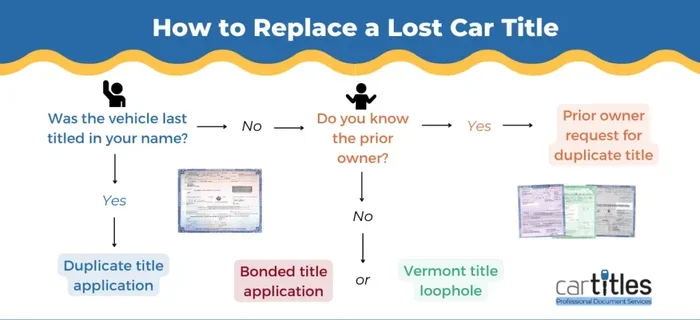
If you still owe money on your car, the lender holds the original title. You cannot get a replacement until the loan is fully paid. Once the loan is settled, the lender will release the lien and send you the title. If the lender has lost the title, you may need to work with them to request a duplicate from the DMV.
You Bought a Car Without a Title
Buying a vehicle without a title is risky. If you are in this situation, you may need to apply for a bonded title. This is a special type of title that requires you to purchase a surety bond. It protects the state in case someone else claims ownership. Bonded titles are available in most states, but the process and requirements vary.
If you are considering surrendering your vehicle entirely, you can learn more about the process at Can I Surrender My Car to understand your options fully.
Your Title Was Stolen or Fraudulently Obtained
If your title was stolen, report it to your local police department. You will need a police report when you apply for a replacement. The DMV takes title theft seriously, and having documentation helps speed up the process.
Final Thoughts on Getting Your Replacement Title
Getting a replacement title for car does not have to be a stressful experience. The process is designed to be accessible and straightforward. Whether you apply in person, online, or by mail, the key is to come prepared. Have your documents ready. Know your VIN. Bring your payment. And be patient with processing times.
Losing your car title happens to good people every day. It does not mean you have done anything wrong. It just means you need to take the next step and request a duplicate car title. Once you have it in hand, store it safely and make a digital copy for peace of mind.
The most important thing to remember is that you are not alone in this. Thousands of drivers go through the same process every month. The DMV handles these requests daily, and the staff is there to help. Take a deep breath, follow the steps in this guide, and you will have your replacement title for car in no time.
Frequently Asked Questions
How Long Does It Take to Get a Replacement Title?
Processing times vary by state, but most departments of motor vehicles issue a replacement title within two to four weeks. Some states offer expedited services for an additional fee, which can cut the wait time down to just a few business days. You can check your state’s DMV website for specific timelines and rush options.
How Much Does a Replacement Title Cost?
The cost of a replacement title typically ranges from $10 to $50, depending on your state’s fees. Some states charge a little extra if you request expedited processing or if there are additional liens on the vehicle. It’s always a good idea to check your local DMV’s fee schedule before you apply so there are no surprises.
What Documents Do I Need to Apply for a Replacement Title?
Most states require a valid photo ID, your vehicle identification number, and proof of registration. You may also need to fill out a specific application form for a replacement title and pay the applicable fee. If your title was stolen, you might need to file a police report first, so check your state’s requirements ahead of time.
Can I Apply for a Replacement Title Online?
Many states now allow you to request a replacement title through their online DMV portal, which is much more convenient than visiting an office in person. You’ll typically need your driver’s license number, plate number, and payment method ready. Not all states support online title replacements yet, so verify eligibility on your state’s official website.
What Should I Do If My Car Title Is Lost or Damaged?
If your title is lost, stolen, or physically damaged, you should apply for a replacement title as soon as possible to avoid complications when selling or transferring the vehicle. Start by contacting your local DMV or visiting their website to find the exact steps for your situation. Acting quickly helps protect your ownership rights and keeps you from getting stuck later.
Can Someone Else Pick Up the Replacement Title for Me?
Yes, in most states you can authorize someone else to collect your replacement title on your behalf. You’ll usually need to provide a signed authorization letter, a copy of your ID, and the representative’s ID. Check with your state’s DMV for their specific rules on third-party title pickups to make sure you have everything in order.