How Much Free Charge Do You Get from Regenerative Braking
Regenerative braking is a smart technology that captures energy usually lost when you slow down. Electric vehicles and hybrid cars use this energy recovery system to recharge the battery while you drive. You can gain anywhere from 10 to 30 percent of your total EV range through regenerative braking, depending on how and where you drive.
Most drivers never think twice about what happens when they hit the brake pedal. They just press it and stop. But inside electric vehicles, something remarkable happens every single time you slow down. Regenerative braking captures energy that would normally be lost and turns it into usable power for your car. This clever energy recovery system is one of the biggest reasons why electric vehicles can travel farther on a single charge.
If you own an electric vehicle or are thinking about buying one, understanding regenerative braking is essential. It directly affects your EV range, your driving efficiency, and even how often you need to visit a charging station. In this article, we will break down exactly how much charge you get from regenerative braking, what factors influence it, and how you can make the most of it every time you drive.
The truth is, regenerative braking is not magic. It is science. And once you understand the basics, you can use it to your advantage. Whether you commute through city traffic or cruise on highways, the way you drive affects how much free energy your car recovers. Let us dive into everything you need to know about this incredible technology.
Key Takeaways
- Regenerative braking recovers kinetic energy: Instead of wasting energy as heat, your electric motor acts as a generator to recharge the battery.
- You can gain 10 to 30 percent more range: The actual charge depends on driving conditions, speed, and battery size.
- Driving habits matter a lot: Frequent stop-and-go traffic gives you the best results for energy recovery.
- Regen braking reduces brake pad wear: Less friction means your traditional brake pads last longer.
- Battery capacity affects charging: A larger battery capacity means more room to store recovered energy.
- Temperature and terrain play a role: Cold weather and steep hills change how much charge you actually get.
- You can maximize regen efficiency: Simple driving adjustments can boost your driving efficiency significantly.
📑 Table of Contents
What Is Regenerative Braking?
When you drive a traditional car, hitting the brakes creates friction. That friction slows the car down, but all the energy from your motion turns into heat. That energy is gone forever. Regenerative braking works completely differently.
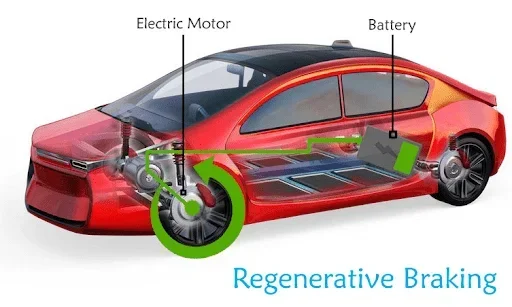
In an electric vehicle, the electric motor that powers your wheels can also work in reverse. When you take your foot off the accelerator or press the brake pedal, the motor switches roles and becomes a motor generator. Instead of using electricity to spin the wheels, it uses the spinning wheels to create electricity. This electricity then flows back into the battery for later use.
This process is called energy recovery, and it is a game-changer for driving efficiency. Every time you coast, slow down, or come to a stop, your car is quietly replenishing its battery capacity. Think of it like filling up a gas tank while you drive, except the fuel is free and comes from your own motion.
How Does the Electric Motor Act as a Generator?
Here is a simple way to think about it. An electric motor and a motor generator are basically the same device. The difference is the direction of energy flow. When you accelerate, electricity from the battery goes to the motor, which turns the wheels. When you decelerate, the wheels turn the motor, which produces electricity that goes back to the battery.
This energy conversion happens almost instantly. Your car does not need any extra parts to make it work. The same electric motor handles both tasks. This is one reason why electric vehicles have fewer moving parts and require less maintenance than traditional cars with internal combustion engines.
How Regenerative Braking Converts Energy
Understanding how regenerative braking converts energy helps you appreciate why it is so effective. The whole process follows basic physics principles that have been known for a long time.
When your electric vehicle is moving, it has kinetic energy. Kinetic energy depends on the mass of the car and its speed. The faster you go, the more kinetic energy you have. When you brake, that kinetic energy needs to go somewhere. In a traditional car, it becomes heat. In an electric vehicle, it becomes electricity.
The Energy Recovery Process Step by Step
Here is what happens during energy recovery:
- Step 1: You lift your foot off the accelerator or press the brake pedal.
- Step 2: The electric motor switches to generator mode.
- Step 3: The wheels spin the motor, which creates electrical current.
- Step 4: That electrical current flows into the battery for storage.
- Step 5: Your car slows down safely while gaining charge.
This entire process happens in seconds. The amount of power output depends on how fast you are slowing down and how much kinetic energy your car has at that moment. Regenerative braking is most effective when you are slowing down from higher speeds, because there is more kinetic energy to recover.
Why Is Energy Recovery So Efficient?
Energy recovery through regenerative braking is efficient because it uses energy that would otherwise be wasted. Traditional friction brakes turn motion into heat, and that heat disappears into the air. Regen braking captures that energy and puts it to good use.
The energy conversion rate of modern systems is impressive. Most electric vehicles can recover between 60 and 70 percent of the kinetic energy during braking. That is a remarkable improvement over traditional systems where zero energy is recovered. This is why electric vehicles have better fuel economy and longer mileage per charge compared to gasoline-powered cars.
How Much Charge Can You Really Get from Regenerative Braking?
This is the big question. How much free charge do you actually get from regenerative braking? The honest answer is, it depends. But let us look at the numbers so you have a clear picture.
On average, regenerative braking can recover enough energy to add between 10 and 30 percent to your total EV range. That means if your car can travel 300 miles on a full charge, regen braking could effectively give you an extra 30 to 90 miles of range over the course of your driving. That is a significant boost.
Real-World Examples of Charge Recovery
Let us look at some practical examples to make this more concrete.
If you drive through a hilly city with lots of stops, like San Francisco or New York, your regenerative braking system works overtime. Every stoplight, every hill descent, every slow-down gives your battery a little boost. In these conditions, you might recover enough energy to gain 25 to 30 percent of your total range.
On the highway at steady speeds, regen braking has fewer opportunities to work. You are mostly cruising, so there are fewer moments of deceleration. In this case, you might only recover 10 to 15 percent of your range through regenerative braking.
For hybrid cars that combine a gasoline engine with an electric motor, the benefits are similar but slightly different. The hybrid car uses regenerative braking to recharge a smaller battery, which then assists the gas engine. This improves fuel economy and can boost mileage by 10 to 20 percent in city driving.
Does Speed Affect How Much Charge You Get?
Yes, speed plays a big role. Regenerative braking is more effective at higher speeds because there is more kinetic energy to capture. When you are driving at 60 mph and slow down to 30 mph, there is a lot of energy to recover. When you are driving at 25 mph and slow to a stop, there is less energy to capture.
However, there is a limit. Most electric vehicles have a maximum power output for their regen braking system. Once the battery is nearly full, the system cannot accept more charge. At that point, the car switches to traditional friction brakes to slow down safely.
Factors That Affect Regenerative Braking Efficiency
Not all regenerative braking experiences are the same. Several factors determine how much charge you actually get. Understanding these factors can help you drive smarter and recover more energy.
Driving Conditions and Terrain
Stop-and-go traffic is the best friend of regenerative braking. Every time you slow down for traffic or a red light, your car recovers energy. This is why electric vehicles often perform better in cities than on highways when it comes to overall efficiency.
Hilly terrain also helps. Driving down mountains or hills gives your regen braking system plenty of opportunities to recover energy. The steeper the hill, the more kinetic energy your car has, and the more charge you can recover. This is why many EV range estimates are higher for drivers in hilly areas compared to flat terrain.
Battery State of Charge
Your battery capacity and current charge level matter. If your battery is already nearly full, it cannot accept as much recovered energy. The regenerative braking system will automatically reduce the amount of energy it sends to the battery to protect the battery capacity and prevent overcharging.
This is something many new electric vehicle owners do not realize. If you arrive at a charging station with a full battery, you have already missed opportunities to capture free energy along the way. It is often better to keep your battery between 20 and 80 percent for optimal regen braking performance.
Temperature and Weather Conditions
Cold weather can reduce the effectiveness of regenerative braking. When temperatures drop, the battery becomes less receptive to incoming charge. The chemical reactions inside the battery slow down in cold conditions, which means less energy can be recovered during braking.
Hot weather is generally better for energy recovery, but extreme heat can also cause issues. Most modern electric vehicles have battery thermal management systems that help maintain optimal temperatures. Still, extreme cold can reduce your regen braking efficiency by 20 to 30 percent in some cases.
Vehicle Weight and Load
A heavier vehicle has more kinetic energy at any given speed. This means a fully loaded electric vehicle or hybrid car carrying passengers and cargo can potentially recover more energy during braking. More mass equals more energy to capture when you slow down.
However, a heavier vehicle also requires more energy to accelerate. The net effect depends on your specific driving patterns. If you carry heavy loads but drive gently, the extra energy recovery from braking can partially offset the extra energy needed for acceleration.
Regenerative Braking vs Traditional Braking
It is helpful to compare regenerative braking with traditional friction braking. This comparison shows why regen braking is such a valuable feature for electric vehicles and hybrid cars.
| Feature | Regenerative Braking | Traditional Friction Braking |
|---|---|---|
| Energy Recovery | Yes, converts kinetic energy to electricity | No, energy lost as heat |
| Brake Pad Wear | Minimal, extends pad life | Significant wear over time |
| Effect on Range | Increases EV range by 10-30% | No benefit to range |
| Maintenance Needs | Lower, less brake service | Regular pad and rotor replacement |
| Driving Efficiency | Boosts overall driving efficiency | No efficiency gain |
| Best Conditions | Stop-and-go traffic, hilly roads | Works in all conditions |
As you can see from the table, regenerative braking has clear advantages over traditional friction braking. It not only recovers free energy but also reduces wear on your brake pads and rotors. This means fewer trips to the mechanic and lower maintenance costs over the life of your electric vehicle.
That said, traditional brakes are still necessary. Regen braking cannot bring your car to a complete stop on its own in all situations. Emergency stops and low-speed maneuvering still rely on friction brakes. Most electric vehicles use a blend of both systems to provide safe and efficient stopping power.
Do You Still Need Brake Pads with Regen Braking?
Yes, you still need brake pads, but they last much longer. Because regenerative braking handles most of your everyday slowing down, the friction brakes get used far less often. Many electric vehicle owners report that their original brake pads last well over 100,000 miles. In a traditional car, brake pads might need replacement every 25,000 to 50,000 miles.
This is one of the hidden financial benefits of regenerative braking. Less wear on your brake pads means lower maintenance costs and less waste. It is another way that electric vehicles save you money over the long term.
Tips to Maximize Your Regenerative Braking Charge
Now that you understand how regenerative braking works and how much charge you can get, let us look at practical tips to maximize your energy recovery.
1. Drive in Stop-and-Go Traffic When Possible
City driving with frequent stops gives your regen braking system the most opportunities to work. If you have the option to take surface streets instead of highways for your daily commute, you will recover more energy. Every red light and traffic jam is a chance to add free charge to your battery.
2. Anticipate Traffic and Coast Early
One of the best driving habits for maximizing regenerative braking is to look ahead and anticipate stops. Lift your foot off the accelerator early and let your car coast. The regen braking system will start recovering energy as soon as you take your foot off the gas. This smooth, anticipatory driving style also improves your overall driving efficiency.
3. Use B-Mode or Regen Level Settings
Most electric vehicles come with a B mode or adjustable regen braking levels. Switching to B mode increases the strength of your regen braking, which means more energy recovery and less use of friction brakes. On highways, you might prefer a lower regen setting for a smoother ride, but in the city, max regen is your friend.
4. Keep Your Battery Between 20 and 80 Percent
Your battery accepts charge most efficiently when it is not completely full or completely empty. Keeping your battery capacity in the 20 to 80 percent range gives your regenerative braking system the most room to send recovered energy. It also helps extend the overall lifespan of your battery.
5. Take Advantage of Downhill Drives
Hills are free energy. When you drive downhill, gravity gives your car speed, and regenerative braking captures that energy as you slow down. If you live in a hilly area, you are already getting more free charge than someone driving on flat roads. Embrace the hills and let your regen braking do the work.
6. Avoid Hard Braking When Possible
While regenerative braking is great, there is a limit to how much energy it can recover at once. Hard, emergency braking engages the friction brakes and wastes the opportunity for energy recovery. Smooth, gradual braking allows the regen system to capture the maximum amount of energy.
Common Mistakes That Reduce Regen Braking Efficiency
There are a few common mistakes that electric vehicle owners make that reduce the effectiveness of regenerative braking:
- Leaving regen braking off: Some drivers disable their regen system because it feels unfamiliar. This is the single biggest mistake you can make.
- Keeping the battery at 100 percent: A full battery cannot accept as much recovered energy, so you miss out on free charging opportunities.
- Riding the brakes: Resting your foot on the brake pedal activates friction brakes and reduces the time your regen system can recover energy.
- Ignoring weather conditions: Not adjusting your expectations for cold weather can lead to frustration when regen braking feels less effective.
Conclusion
Regenerative braking is one of the most impressive features of modern electric vehicles. It turns wasted energy into free electricity, extends your EV range, and reduces maintenance costs. On average, you can gain 10 to 30 percent more range through regenerative braking, with the exact amount depending on your driving conditions, habits, and vehicle.
The key to getting the most from regenerative braking is understanding how it works and adjusting your driving habits accordingly. Drive smoothly, anticipate stops, use B mode in the city, and keep your battery in the optimal range. These simple changes can make a real difference in how much free charge your car recovers every day.
As electric vehicles continue to evolve, regenerative braking systems are becoming even more sophisticated. Future electric vehicles will recover even more energy and offer better driving efficiency than ever before. For now, the technology we have is already remarkable. Embrace it, use it, and enjoy the free energy your car gives you every time you slow down.
Regenerative braking is not just a feature. It is a smarter way to drive. And once you make it part of your routine, you will wonder how you ever drove without it.
Frequently Asked Questions
Can regenerative braking fully charge my electric vehicle?
No, regenerative braking alone cannot fully charge your electric vehicle. It recovers a portion of the energy you would otherwise lose during braking, typically adding 10 to 30 percent to your overall range. You still need to plug in your car or use external charging to get a full battery. Think of regen braking as a supplement to your charging routine, not a replacement.
Does regenerative braking work at all speeds?
Regenerative braking works best at moderate to high speeds where there is significant kinetic energy to recover. At very low speeds, below about 5 to 10 mph, the system becomes less effective and traditional friction brakes take over. This is why you still need functional brake pads even in a fully electric vehicle.
How does cold weather affect regenerative braking?
Cold weather can reduce the effectiveness of regenerative braking by 20 to 30 percent in some cases. Low temperatures slow down the chemical reactions inside the battery, making it harder to accept a rapid charge. Many electric vehicles have battery warming systems that help, but regen efficiency is still lower in freezing conditions until the battery reaches its optimal temperature.
Can you turn off regenerative braking?
Yes, most electric vehicles allow you to adjust or turn off regenerative braking. Some models have a regen level slider, while others offer a simple on or off switch. However, turning it off means you lose the free energy recovery and rely entirely on friction brakes, which increases brake pad wear and reduces your EV range.
Does regenerative braking reduce brake pad wear?
Yes, regenerative braking significantly reduces brake pad wear. Because the electric motor handles most of the deceleration, the traditional friction brakes get used much less frequently. Many electric vehicle owners find that their original brake pads last over 100,000 miles, compared to the 25,000 to 50,000 miles typical in gasoline-powered cars.
Is regenerative braking the same for all electric vehicles?
No, the amount of charge recovered through regenerative braking varies by vehicle. Factors like battery capacity, motor power, regen braking software calibration, and vehicle weight all affect performance. Some electric vehicles are tuned for maximum regen feel, while others prioritize a smoother, more traditional driving experience. It is worth testing different regen levels in your car to find what works best for your driving habits.