Do I Need a Cargo Net Here is What You Need to Know
If you frequently haul gear, luggage, or equipment in your SUV or hatchback, a cargo net is one of the smartest automotive accessories you can own. It keeps your load secure, protects your vehicle interior, and boosts driving safety on long road trips. In this guide, we break down everything you need to know about whether do I need a cargo net for your specific situation.
Key Takeaways
- Cargo nets prevent shifting loads: They keep your gear from sliding around, reducing accident risk and protecting your car interior from damage.
- Multiple types exist for different needs: Roof cargo nets, trunk cargo nets, and universal cargo nets each serve specific purposes depending on your vehicle and cargo type.
- Choosing the right size matters: A net that is too small or too large will not secure your load properly, so always measure your cargo area before buying.
- Installation is simple: Most cargo nets attach with hooks, bungee cords, or tie-down straps and can be set up in under 10 minutes.
- Common mistakes reduce effectiveness: Overloading the net, using worn-out hardware, or skipping regular inspections can compromise your load security.
- Cargo nets are affordable: Most quality options cost between $15 and $60, making them one of the cheapest yet most valuable automotive accessories you can buy.
📑 Table of Contents
- Do I Need a Cargo Net Here is What You Need to Know
- Why Cargo Nets Matter on the Road
- Types of Cargo Nets for Your Vehicle
- How to Choose the Right Cargo Net
- Installing Your Cargo Net: Step-by-Step Guide
- Common Mistakes When Using Cargo Nets
- Expert Tips for Maximizing Your Cargo Net’s Potential
- Conclusion
Do I Need a Cargo Net Here is What You Need to Know
You just packed your car for a weekend road trip. Suitcases are stacked high, coolers are wedged in tight, and your gear bag is sitting on top of everything. Everything feels packed, but something is off. As you pull out of the driveway, you notice your luggage shifting with every bump in the road. That is exactly the moment when you wish you had a reliable cargo net.
So, do I need a cargo net? The short answer is yes, if you regularly transport anything beyond the basics in your vehicle. Whether you drive an SUV, a hatchback, or even a sedan with a large trunk, a cargo net solves real problems. It keeps your items from sliding around, protects your trunk liner from scratches, and adds an extra layer of driving safety on every trip.
In this guide, we will walk you through everything you need to know. We will cover the different types available, how to pick the right one, how to install it, and common mistakes to avoid. By the end, you will have a clear answer to the question, do I need a cargo net, and you will know exactly which one to buy.
Why Cargo Nets Matter on the Road
Many drivers underestimate how much cargo movement can affect their trip. A few loose items might not seem like a big deal in the city. But on the highway or during a long road trip, things change fast. Your gear can shift unexpectedly, block your view, or even become a projectile inside the cabin.
The Safety Problem with Unsecured Loads
Studies on load security show that unsecured items cause thousands of accidents every year. A laptop sliding off the back seat can distract you at 60 miles per hour. A cooler rolling under the brake pedal can make you lose control. These are not rare events. They happen more often than most people think.
A cargo barrier or net acts like a wall between your gear and your driving area. It stops heavy objects from moving forward during sudden braking. It prevents lighter items from bouncing around and creating hazards. This simple addition can make a real difference in driving safety.
Protecting Your Vehicle Interior
Beyond safety, your car interior takes a beating without proper cargo protection. Suitcases with metal zippers scratch your trunk liner. Sports equipment chips paint on the wheel wells. Tools and gear leave scuff marks on the carpet.
A good cargo net holds everything in place and reduces contact between your gear and your vehicle surfaces. Pair it with a trunk liner or trunk organizer, and your car stays clean ride after ride. This is especially important if you want to maintain your vehicle resale value over time.
Types of Cargo Nets for Your Vehicle
Not all cargo nets are the same. Different vehicles, cargo types, and storage needs call for different solutions. Let us break down the most popular options so you can find the right fit.
Roof Cargo Nets
If you have a roof rack, a roof cargo net is a natural companion. These nets stretch across your roof-mounted gear and keep it locked in place during highway driving. They work great for large or oddly shaped items like kayaks, bikes, or camping gear that sit on top of your vehicle.
Most roof cargo nets use elastic netting with adjustable tie-down straps. They connect to the rack bars and form a tight cover. This setup is a staple for road trip essentials and outdoor adventure kits.
Trunk Cargo Nets
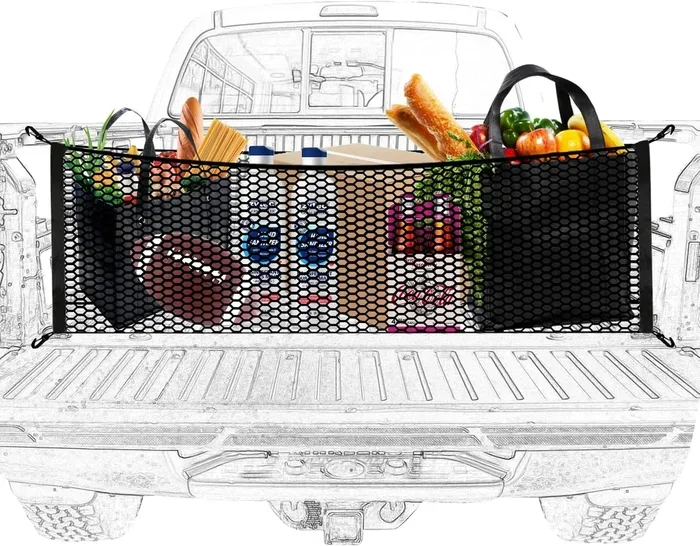
These are the most common type for everyday drivers. A trunk cargo net fits inside your trunk space or cargo area and creates a barrier between your gear and the rest of the vehicle. Many attach to existing anchor points in the car or use hooks that press into the carpet.
Trunk cargo nets work well with a cargo management system. They complement trunk organizers and cargo liners by adding an extra layer of hold. If you have a hatchback or SUV with a large open cargo area, this is the type you likely need.
Universal and Adjustable Cargo Nets
Universal cargo nets fit a wide range of vehicles. They use flexible frames or bungee-style edges that stretch to match different cargo openings. These are ideal if you switch vehicles often or need a solution that works in multiple situations.
Universal nets are popular as automotive accessories because of their versatility. They work in sedans, crossovers, vans, and even some trucks. Just make sure to check the weight capacity before loading them up.
Comparison Table: Cargo Net Types
| Feature | Roof Cargo Net | Trunk Cargo Net | Universal Net |
|---|---|---|---|
| Best For | Roof rack gear | Trunk and cargo area | Multiple uses |
| Vehicle Compatibility | Cars with roof racks | SUVs, hatchbacks, sedans | Most vehicles |
| Weight Capacity | Medium to high | Medium | Low to medium |
| Price Range | $25-$60 | $15-$45 | $15-$35 |
| Ease of Installation | Moderate | Easy | Very easy |
How to Choose the Right Cargo Net
Picking the perfect cargo net depends on a few key factors. Do not just grab the first one you see online. Take a moment to consider your actual needs, and you will get a better result every time.
Measure Your Cargo Area First
Before buying anything, grab a tape measure and check the dimensions of the area you want to cover. For trunk nets, measure the width and depth of your cargo opening. For roof nets, measure the span between your roof rack bars. Write these numbers down and compare them to the product specifications.
A net that is too small will not reach the anchor points. One that is too big will sag and leave gaps where items can slip through. Proper fit is the foundation of secure load management.
Consider the Cargo Type
Think about what you regularly carry. Soft luggage, like duffel bags and backpacks, works well with most net types. Hard-shell items, like suitcases or equipment cases, need a sturdier net with stronger tie-down straps.
If you carry sports gear, tools, or fragile items, look for nets with a tighter weave. Fine mesh provides more control over smaller objects. Open-weave nets work better for bulky items that need airflow, like fresh produce or camping equipment.
Check Weight Capacity and Durability
Every cargo net has a weight limit. This number tells you the maximum load the net can safely handle. Do not exceed it. Overloading a net causes stretching, tearing, and eventual failure.
Look for reinforced stitching, strong elastic materials, and solid hook attachments. Cheap materials may save money upfront but will likely need replacement after a few months. Quality vehicle storage accessories are built to last through many road trips.
Quick Tips for Choosing the Right Cargo Net
- Read reviews: Real user feedback tells you how a net holds up over time, not just in the first week.
- Look for warranty: A brand that stands behind its product often means better materials and craftsmanship.
- Match the color: This sounds minor, but a net that blends with your interior looks cleaner and more intentional.
- Buy from automotive specialists: They offer products designed for real vehicle dimensions, not generic one-size-fits-all claims.
Installing Your Cargo Net: Step-by-Step Guide
One of the best things about cargo nets is how easy they are to set up. Most drivers can install one in under ten minutes. Here is a general walkthrough that applies to most trunk cargo nets.
Step 1: Prepare Your Cargo Area
Remove any items from the trunk or cargo space. Wipe down the area if needed. This gives you a clean surface to work with and lets you check for any damage or loose anchor points before installation.
Step 2: Position the Net
Lay the net flat over the cargo area. Make sure the hook or attachment points line up with the existing anchors in your vehicle. Most cars have small hooks or loops on the sides of the trunk designed for this purpose. If your vehicle lacks these, you can use adhesive-mounted hooks as a simple fix.
Step 3: Attach the Hooks
Start with one side and hook the net securely. Then move to the opposite side. Pull the net gently to remove slack, but do not overstretch it. Continue attaching all the connection points along the perimeter. If your net uses tie-down straps, fasten them to the nearest anchor points and tighten firmly.
Step 4: Test the Net
Once everything is attached, give the net a firm push. It should feel taut but not rigid. Load a few items onto the net and press down. If the net holds firm and the attachments stay locked, you are good to go. If any hook feels loose, reposition it or try a different anchor point.
Expert Insight: According to automotive specialists, the most common installation error is attaching hooks to weak points that cannot handle load force. Always use factory-designated anchor points or reinforced aftermarket mounts. This single step makes the biggest difference in real-world performance.
Common Mistakes When Using Cargo Nets
Even a good cargo net can cause problems if used incorrectly. Here are the most frequent mistakes drivers make and how to avoid them.
Overloading the Net
It is tempting to pile as much as possible into your cargo area and let the net hold it all. But every net has a limit. Exceeding that limit stretches the material, weakens the hooks, and creates a dangerous situation. Always check the manufacturer weight guidelines and stay well below the maximum.
Think of a cargo net as a safety device, not a storage bin. It works best when it supplements a proper trunk organizer or cargo management system rather than replacing one entirely.
Ignoring Regular Inspections
Your net goes through stress every time you drive. Over time, elastic components lose tension, stitching weakens, and hooks can bend. Many drivers install a net once and forget about it entirely.
Make it a habit to inspect your net before long trips. Check for torn threads, stretched mesh, and loose hardware. A quick five-minute check can prevent a much bigger problem down the road. Adding this to your road trip essentials checklist is a smart move.
Using the Wrong Net Type
A roof cargo net does not work well inside a trunk. A trunk net is not built to handle highway wind forces on a roof rack. Using the wrong type for the wrong location leads to frustration and poor performance. Always match the net to its intended application.
Neglecting Cargo Weight Distribution
Even with a net, how you pack matters. Heavy items should go low and close to the vehicle floor. Lighter items can stack on top. Uneven weight distribution causes pressure points on the net and increases the chance of items sliding past the barrier. Good packing habits make your cargo net far more effective.
Expert Tips for Maximizing Your Cargo Net’s Potential
Getting the most out of your cargo net comes down to a few smart practices. These tips go beyond the basics and help you build a truly secure and organized vehicle storage setup.
Pair Your Net with Complementary Accessories
A cargo net works best as part of a complete system. Consider adding a trunk liner to protect the floor, a cargo tray to corral small items, and a trunk organizer for bins and bags. Together, these accessories create a layered approach to car organization that keeps everything in its place.
For SUV owners, a cargo barrier between the passenger cabin and the cargo area adds another level of protection, especially when kids are in the back seat. Think of each accessory as one layer of defense for your vehicle and your gear.
Adjust for Weather Conditions
Hot weather can loosen elastic components over time. Cold weather makes them stiff. In rainy conditions, wet gear can add unexpected weight and shift during braking. Adjust your packing and net tension based on the season and conditions you expect to face.
For winter drivers who carry ski gear or snow equipment, a reinforced net with cold-resistant elastic holds up much better than a standard option. This small adjustment keeps your load security strong all year long.
Keep a Backup Net in Your Vehicle
This is a tip many overlook. If you frequently transport different types of gear, having a second net in the car gives you flexibility. A compact, foldable universal net takes up almost no space and can save the day when you suddenly need to secure unexpected purchases or borrowed equipment.
Pack Smart, Net Smart
The way you place items inside the net changes how well it performs. Follow these guidelines for better results:
- Place heavy, hard items at the bottom and against the sides of the cargo area.
- Wrap fragile items in soft bags or clothing before placing them in the net.
- Use smaller bags and containers to create uniform shapes that the net can grip effectively.
- Avoid placing items with sharp edges directly against the netting material.
- Distribute weight evenly from side to side to prevent leaning during turns.
Real-World Example: A Weekend Camping Trip
Imagine you are heading out for a weekend camping trip. You have a cooler, a tent bag, sleeping bags, a camp chair, and a box of cooking supplies. Without a cargo net, all of this shifts during the drive. The cooler slides forward, the tent bag blocks your rear view, and the chair rolls under the brake pedal.
With a trunk cargo net installed, you pack the heavy cooler at the bottom, stack the sleeping bags and tent bag on top, and secure the chair to the side. The net pulls everything together into a single, stable unit. You drive confidently, and when you arrive at camp, everything is exactly where you left it. This is the power of proper cargo protection in action.
Conclusion
If you have been asking yourself, do I need a cargo net, the evidence strongly points to yes. A cargo net is an affordable, practical, and highly effective tool that improves safety, protects your vehicle interior, and keeps your gear organized on every trip. Whether you drive a daily commute or tackle long road trips across the country, this simple accessory makes a noticeable difference.
We covered the different types available, how to choose the right one, how to install it properly, and the common mistakes that trip up even experienced drivers. The key is to match the net to your specific vehicle and cargo needs, maintain it regularly, and use it as part of a broader cargo management system.
Do I need a cargo net? For most drivers, the answer is a confident yes. Pick one that fits, install it correctly, and enjoy a safer, cleaner, and more organized driving experience. Your future self, standing in a parking lot with everything still perfectly packed, will thank you.
Frequently Asked Questions
Do I need a cargo net if I only drive short distances?
Even on short trips, sudden stops or unexpected turns can cause unsecured items to shift and create hazards. A cargo net adds protection on every drive, no matter the distance. It is a small investment that pays off in safety and interior protection every single time you hit the road.
Can a cargo net damage my car interior?
If installed correctly with proper anchor points, a cargo net should not damage your interior. However, using cheap hooks or attaching to weak spots can cause scratches or pressure marks. Always use padded hooks or adhesive-mounted anchors designed for automotive use to keep your trunk liner and carpet safe.
What is the best cargo net for an SUV with a large trunk?
For SUVs with spacious cargo areas, a trunk cargo net with reinforced edges and multiple anchor points works best. Look for options with adjustable tie-down straps and a tight weave to handle larger loads. Pairing it with a trunk organizer creates the ultimate vehicle storage setup for family trips and daily errands.
Are cargo nets waterproof or water-resistant?
Most cargo nets are made from nylon or polyester, which dries quickly and resists moisture well. They are not fully waterproof but handle rain and damp gear without issue. If you need full waterproofing for your items, consider placing a waterproof trunk liner underneath the net for added protection.
How much weight can a typical cargo net hold?
Most standard trunk cargo nets support between 50 and 100 pounds, depending on the brand and materials. Roof cargo nets may handle slightly more due to their construction. Always check the manufacturer weight rating before loading your net, and never exceed the maximum capacity for safe load security.
Can I use a cargo net on a roof rack with a soft-top vehicle?
Soft-top vehicles require extra care when using roof cargo nets. The net must attach firmly to the roof rack bars without pressing too hard on the soft material. Use padded tie-down straps and avoid over-tightening. A universal net with adjustable tension works well for these setups, providing secure cargo protection without risking damage to your roof.