Car AC Parts Name Guide To Identify All Components
Knowing the car AC parts name list is essential for every car owner who wants to understand how their vehicle cools down in summer. This guide covers every component from the compressor to the evaporator, so you can identify, troubleshoot, and maintain your car air conditioning system like a pro. Whether you are a DIY mechanic or just curious, you will find practical tips and clear explanations inside.
Have you ever hopped into your car on a scorching summer day, cranked the air conditioning, and wondered what exactly is happening under the hood to keep you cool? Your vehicle’s air conditioning system is a marvel of engineering, and every single piece plays a role. If you have ever searched for the car AC parts name list, you know how confusing it can be. There are compressors, condensers, evaporators, and a whole alphabet of other components that might as well be in a foreign language.
Here is the good news. By the time you finish reading this guide, you will know every car AC component name and understand what it does. We will walk through the entire car air conditioning system piece by piece, using simple language and real-world examples. No jargon overload, no confusing diagrams, just clear and practical information you can actually use.
Whether you are troubleshooting a broken vehicle cooling system, trying to save money on car AC repair, or simply want to be a smarter car owner, this guide has you covered. Let us dive into the world of automotive AC components and make sense of it all.
Key Takeaways
- The compressor is the heart of your car AC system and keeps refrigerant flowing through all the components.
- The condenser and evaporator handle heat exchange, making the air inside your car cool and comfortable.
- Understanding each car AC part name helps you communicate better with mechanics and save money on repairs.
- Regular maintenance of your vehicle cooling system parts can extend the life of your AC system significantly.
- Common problems like refrigerant leaks often trace back to a few specific components you can learn to identify.
- Replacement costs vary widely depending on the part, so knowing what each piece does helps you make smart decisions.
- Familiarity with AC components empowers you to spot warning signs early and avoid costly breakdowns.
📑 Table of Contents
Understanding Your Car AC System
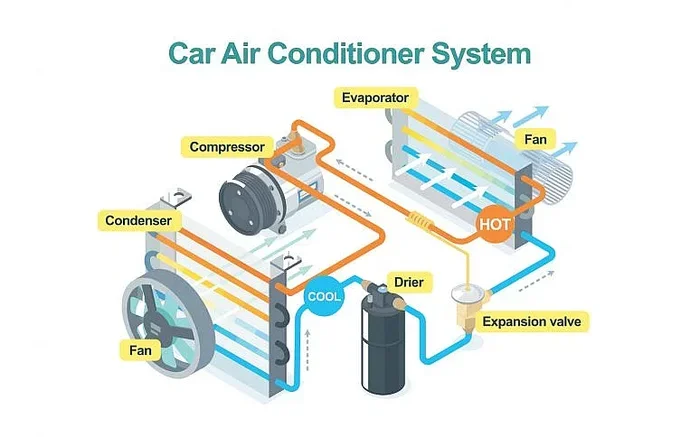
Before we list every car AC parts name, let us take a step back and look at the big picture. Your car air conditioning system works on a simple principle. It moves a special gas called refrigerant through a closed loop, changing it from a low-pressure gas to a high-pressure liquid and back again. Each change of state absorbs or releases heat, and that is how your car stays cool.
The system has four main jobs. First, it compresses the refrigerant. Second, it releases heat outside the car. Third, it absorbs heat inside the car. Fourth, it cycles the refrigerant back to the start. Every AC component you see under the hood is involved in one or more of these jobs.
The Refrigeration Cycle In Simple Terms
Think of your car AC system like a circle of life for a special fluid. The refrigerant starts as a low-pressure gas, gets squeezed into a hot high-pressure gas, cools down into a liquid, expands and gets cold, and then absorbs heat from your car’s interior. This cycle repeats over and over while you drive.
Here is the basic flow:
- Compressor pressurizes the refrigerant gas.
- Condenser releases heat and turns the gas into a liquid.
- Expansion valve or orifice tube drops the pressure and cools the liquid.
- Evaporator absorbs heat from the cabin air.
- The cycle starts over again.
Each step relies on a specific car AC part doing its job perfectly. When one part fails, the whole system suffers. That is why knowing the names and functions of each component matters so much.
The Core Components Of Car AC
Now let us get into the details. Below you will find the most important car AC parts name list along with clear explanations of what each part does. We have organized them by location and function so you can follow along easily.
The Compressor
The AC compressor is often called the heart of the air conditioning system. It sits at the front of the engine and is driven by a belt connected to the crankshaft. When you turn on the car air conditioner, the compressor kicks in and pressurizes the refrigerant gas.
The AC compressor clutch engages and disengages the compressor based on your temperature settings. When the clutch is engaged, the compressor pumps refrigerant. When it is off, the compressor sits idle. This clutch is an important AC part because it controls when the system is actively cooling.
Common signs of a failing compressor include strange noises, warm air from the vents, and fluid leaks near the front of the engine. If you notice any of these, it is time to investigate further.
The Condenser
The car AC condenser looks like a small radiator and sits right in front of the main radiator. Its job is to release the heat that the refrigerant picked up from inside your car. As hot, high-pressure gas flows through the condenser coils, it cools down and becomes a liquid.
Think of the condenser as a radiator for your refrigerant. Just like your engine radiator cools the coolant, the condenser cools the refrigerant gas. The condenser fan or cooling fan helps speed up this process by blowing air across the condenser coils.
Debris, bugs, and dirt can clog the condenser fins and reduce its efficiency. Regularly cleaning the front of your condenser can make a real difference in car AC performance.
The Evaporator
The AC evaporator is located inside your car’s dashboard, behind the glove box. This is where the actual cooling magic happens. As the cold, low-pressure refrigerant passes through the evaporator coils, it absorbs heat from the warm air blown across it by the blower motor.
The result is cool, dry air that flows through your vents and into the cabin. The evaporator also removes moisture from the air, which is why your car AC helps defog your windshield on humid days.
Because the evaporator sits inside the dashboard, it can be tricky and expensive to replace. Moisture buildup inside the evaporator can also lead to mold and unpleasant odors from your vents.
The Expansion Valve And Orifice Tube
These two parts serve the same basic purpose but work in slightly different ways. The thermal expansion valve and the orifice tube both regulate the flow of refrigerant into the evaporator. They drop the pressure of the liquid refrigerant, which causes it to cool down dramatically.
Most modern cars use an expansion valve, while some older or simpler systems use an orifice tube. The TXV (short for thermostatic expansion valve) is adjustable and responds to the temperature at the evaporator outlet. The orifice tube is a fixed restriction and works with an accumulator instead of a receiver dryer.
A clogged expansion valve or orifice tube can cause your car AC to blow warm air or freeze up entirely. This is one of the more common AC system problems that mechanics encounter.
The Receiver Dryer And Accumulator
The receiver dryer and AC accumulator both serve as storage and filtration devices for the refrigerant. The receiver dryer is used in systems with a thermal expansion valve, while the accumulator is used in systems with an orifice tube.
These components do three important things. They store excess refrigerant, they filter out moisture and debris, and they prevent liquid refrigerant from reaching the compressor. If moisture gets into the AC system, it can cause corrosion and ice formation, leading to serious damage.
Most manufacturers recommend replacing the receiver dryer or accumulator every time the system is opened for repair. This is a small part with a big impact on the longevity of your automotive AC components.
How Each Car AC Part Works Together
Understanding individual parts is great, but the real magic happens when you see how they work as a team. The car air conditioning system is a closed loop where every AC component depends on the others. Let us walk through a complete cooling cycle from start to finish.
When you turn on the car AC, the compressor clutch engages. The compressor pulls in low-pressure refrigerant gas and squeezes it into a high-pressure, high-temperature gas. This hot gas flows to the condenser, where it releases heat to the outside air and becomes a high-pressure liquid.
The liquid refrigerant then passes through the receiver dryer or accumulator, which removes any moisture and filters out contaminants. Next, it flows through the expansion valve or orifice tube, where the pressure drops sharply and the refrigerant becomes a cold, low-pressure mixture of liquid and gas.
This cold refrigerant enters the evaporator, where the blower motor pushes warm cabin air across the evaporator coils. The refrigerant absorbs the heat, and cool air flows out of your vents. The refrigerant, now warm again, turns back into a gas and returns to the compressor to start the cycle all over again.
Every single car AC parts name in this loop is essential. Remove or malfunction even one part, and the entire system breaks down. This interconnected design is why proper diagnosis is so important when troubleshooting car AC problems.
The Role Of Refrigerant
The refrigerant is the lifeblood of your air conditioning system. It is the fluid that actually carries the heat from inside your car to the outside. Older cars often use R-134a refrigerant, while newer vehicles may use R-1234yf, which is more environmentally friendly.
You should never handle refrigerant yourself without proper certification. It is a regulated substance, and releasing it into the atmosphere is harmful to the environment. Always have a certified technician handle refrigerant charging and recovery.
Common Car AC Problems And Their Parts
Now that you know the car AC parts name and how they work, let us talk about what goes wrong. Most AC system failures trace back to a few common culprits. Understanding these problems can help you catch issues early and save money on car AC repair.
Refrigerant Leaks
The most common reason a car AC stops blowing cold air is a refrigerant leak. Because the system is sealed, any loss of refrigerant means something is wrong. Leaks can occur at hose connections, the compressor shaft seal, the condenser, or the evaporator.
Signs of a refrigerant leak include a greasy residue around AC fittings, a gradual loss of cooling performance, and the AC clutch cycling on and off frequently. A technician can use a UV dye or electronic leak detector to find the exact source of the leak.
Compressor Failure
The AC compressor can fail for several reasons. Low refrigerant levels, lack of lubrication, electrical problems, and worn clutch bearings are all common causes. When a compressor fails, it often needs to be replaced entirely, which is one of the more expensive car AC repair jobs.
To prevent compressor failure, run your car air conditioner for at least ten minutes every week, even in winter. This keeps the seals lubricated and the system in good working order.
Clogged Condenser Or Evaporator
Debris can block the flow of air through the condenser, and moisture can clog the expansion valve or orifice tube. A clogged condenser will cause your car to overheat in the AC system, while a clogged evaporator or expansion device will reduce cooling performance or cause the system to freeze up.
Regular inspection and cleaning of the condenser area can help prevent these issues. And always address any warm air from your vents promptly before the problem gets worse.
Electrical Issues
Modern vehicle cooling system parts rely on sensors, pressure switches, and control modules. A faulty AC pressure switch can prevent the compressor from engaging. A blown fuse or bad relay can cut power to the entire system. Electrical problems are often the sneakiest because they do not always show obvious physical signs.
If your AC works intermittently or not at all, do not overlook the electrical side. A simple multimeter check can often reveal the problem quickly and save you from unnecessary part replacements.
Blower Motor Problems
The blower motor is the fan that pushes air through your vents. If it fails, you will get no airflow at all, even if the cooling system is working perfectly. Blower motor failures are usually caused by worn brushes, a bad resistor, or electrical connections that have corroded over time.
Replacing a blower motor is usually a straightforward and affordable repair compared to replacing the compressor or evaporator. If you have air but no flow, the blower motor is the first place to check.
Tips For Maintaining Your Car AC Parts
Prevention is always better than repair, and your car AC system is no exception. With a little regular care, you can keep all your automotive AC components working smoothly for years to come. Here are some practical tips every car owner should follow.
Run Your AC Year Round
It might seem counterintuitive to use the air conditioning in winter, but running your car AC for at least ten minutes every week keeps the system lubricated and the seals flexible. This simple habit can prevent many common AC system problems.
Change Your Cabin Air Filter
The cabin air filter traps dust, pollen, and debris before they enter the car interior. A clogged cabin filter restricts airflow and makes your vehicle cooling system parts work harder. Most manufacturers recommend replacing this filter every 12,000 to 15,000 miles.
Check For Leaks Regularly
Even a small refrigerant leak can reduce your car AC performance over time. If you notice your AC is not cooling as well as it used to, have a technician check the system pressure and look for leaks before the problem gets worse.
Keep The Condenser Clean
The condenser sits at the front of your car and is exposed to road debris, bugs, and dirt. Rinsing it gently with water during routine car washes can prevent clogs and keep your car cooling system running efficiently.
Address Strange Noises Immediately
Grinding, squealing, or clicking noises from the AC compressor area should never be ignored. These sounds often indicate worn bearings, low lubrication, or a failing clutch. Catching these problems early can save you from a full compressor replacement.
Get Professional Inspections
While you can handle basic maintenance yourself, having a certified technician inspect your car air conditioning system every year or two is a smart move. They can check refrigerant levels, inspect all AC components, and spot potential problems before they become expensive repairs.
When To Replace Car AC Components
Not every car AC part needs to be replaced at the same time. Some components last the life of the vehicle, while others wear out after a few years. Understanding when to replace each part can help you budget for repairs and avoid unexpected breakdowns.
The compressor typically lasts 10 to 15 years or more if the system is well maintained. The condenser and evaporator can also last the lifetime of the vehicle unless they are damaged by road debris or corrosion. The expansion valve, receiver dryer, and blower motor are more likely to need replacement during the life of the car.
As a general rule, if a repair costs more than half the value of a replacement part and the labor is reasonable, replacement is usually the better choice. Always get a second opinion for major car AC repair work, especially when the compressor or evaporator is involved.
Remember that replacing one AC component sometimes means replacing related parts too. For example, if your compressor fails due to contamination, the debris may have damaged the condenser and expansion valve as well. A thorough inspection after any major failure is always worth the investment.
Knowing the car AC parts name list gives you the confidence to have informed conversations with your mechanic. You will ask better questions, understand the estimates you receive, and make smarter decisions about your vehicle’s maintenance and repair needs.
Quick Tips For Car AC Health
- Run your AC weekly even in cold months to keep seals lubricated.
- Replace the cabin air filter on schedule to maintain airflow.
- Clean the condenser regularly to prevent debris buildup.
- Never ignore unusual noises or smells from the AC system.
- Have a professional check refrigerant levels annually.
- Address warm air immediately before the problem worsens.
Common Mistakes Car Owners Make
- Ignoring the AC in winter causes seals to dry out and refrigerant to leak.
- Topping off refrigerant without fixing leaks is a temporary fix at best.
- Using the wrong refrigerant can damage your AC system beyond repair.
- Skipping cabin air filter changes reduces airflow and strains the blower motor.
- DIY refrigerant charging without certification is illegal in many areas and dangerous.
Expert Insights
Experienced auto AC technicians agree that most car AC failures come down to just a few root causes. Refrigerant leaks, compressor wear, and electrical faults account for the vast majority of repairs. The best thing any car owner can do is stay proactive with regular maintenance and address small issues before they become big expenses.
One technician shared this insight. He says that simply running the AC for ten minutes every week, even during winter, can add years of life to the entire system. It keeps the compressor seals supple and ensures the refrigerant circulates properly. This one habit alone prevents more problems than most people realize.
Another expert emphasized the importance of using only factory-recommended parts when replacing automotive AC components. Aftermarket parts vary widely in quality, and a cheap replacement part can fail within months, leading to more damage and higher costs in the long run.
Final Thoughts
Your car’s air conditioning system is more than just a comfort feature. It is a complex network of carefully designed car AC parts that work together to keep you cool, dry, and comfortable on every drive. Understanding the car AC parts name list and what each component does puts you in a much better position as a car owner.
From the compressor that pressurizes the refrigerant to the evaporator that cools your cabin air, every AC part plays a vital role. Regular maintenance, prompt attention to warning signs, and smart decisions about repairs can keep your car air conditioning system running strong for years to come.
Now that you have this complete guide to car AC components, you are better equipped to handle the next time your AC acts up. Use this knowledge to communicate with your mechanic, make informed repair decisions, and keep your cool no matter how hot it gets outside.
Frequently Asked Questions
What are the main car AC parts name I should know?
The key parts of a car AC system include the compressor, condenser, evaporator, expansion valve or orifice tube, receiver dryer or accumulator, blower motor, cabin air filter, and refrigerant lines. Each of these car AC parts name plays a specific role in the cooling cycle, and understanding them helps you troubleshoot problems and communicate with mechanics more effectively.
How much does it cost to replace a car AC compressor?
The cost to replace an AC compressor typically ranges from $500 to $1,000 for the part alone, and another $200 to $500 for labor, depending on your vehicle model and location. Total car AC repair costs can vary significantly based on the severity of the issue and whether other components were damaged by the compressor failure.
Why is my car AC blowing warm air?
Warm air from the vents usually indicates a refrigerant leak, a failing compressor, a clogged condenser, or a problem with the expansion valve. These are among the most common AC system problems, and a professional diagnosis can quickly identify which specific car AC component is causing the issue.
Can I recharge my car AC refrigerant myself?
While DIY refrigerant recharge kits are available, handling refrigerant requires EPA certification in many regions because it is a regulated substance. Improper handling can damage your car AC system and harm the environment. It is always best to have a certified technician diagnose leaks and properly recharge the system.
How often should I have my car AC system inspected?
Most experts recommend having your vehicle cooling system parts inspected at least once a year, ideally before the summer season. Regular inspections help catch small problems like minor refrigerant leaks or worn belts before they turn into expensive car AC repair jobs.
What is the difference between a receiver dryer and an accumulator?
Both the receiver dryer and the accumulator store refrigerant and filter out moisture and debris. The receiver dryer is used in systems with a thermal expansion valve, while the accumulator is used in systems with an orifice tube. They serve the same basic purpose but are designed for different types of car AC systems.
=== CONCLUSION ===
Understanding the car AC parts name is one of the most valuable skills you can develop as a car owner. Your vehicle’s air conditioning system relies on a team of AC components working in perfect harmony, from the compressor to the evaporator and everything in between. When you know what each part does, you can spot problems earlier, communicate better with your mechanic, and make smarter decisions about maintenance and repairs.
This guide has walked you through every major car AC component name, explained how they work together, and shared practical tips for keeping your system in top shape. Use this knowledge to stay cool, save money, and keep your car air conditioning system running strong for miles to come.